This spring, a pump broke in one of the wells serving a property owners association. Some residents went weeks without running water and fetched water from a nearby stream to flush their toilets. By October, one condo owner told the local station WSOC that the yearly bill had jumped to $4,200, from about a thousand. The association's president said no reserve fund had been kept for years.
The pump was always going to fail. What was never in the dues was the day it did.
When HOA dues go up so much after one repair, it is usually because that repair was never priced into the dues: the item wore out on schedule, nothing was set aside for it, and the whole cost arrived at once as an increase or a special assessment. The fix is to price each item before it fails: its replacement cost today, divided by the years it has left, by the number of homes and by twelve.

The short answer
- One repair moves the dues when it was never priced in. The cost arrives in one bill instead of a hundred small ones.
- Every common item has a planning life. HUD publishes one for most of them, free.
- Price each item per home per month now: cost today, divided by years left, by homes, by twelve.
The pattern: Why one repair moves the whole budget
Most of what wears out on common property does so on a schedule. Pumps, pavement, fences and pool equipment all have an expected life a contractor can estimate for you today.
The surprise is in the budget. When the dues fund only this year's bills, the replacement has no line. So when the item fails, the board has two choices: raise the dues fast, or bill every owner at once.
That is what owners heard in the story above. "We had a 97% increase," another homeowner told the station. The association's president described the cause: "There has been a huge amount of deferred maintenance here over the last many years."

Nobody in that story is a villain. The villain is a number nobody computed.
The walk: What wears out on a schedule
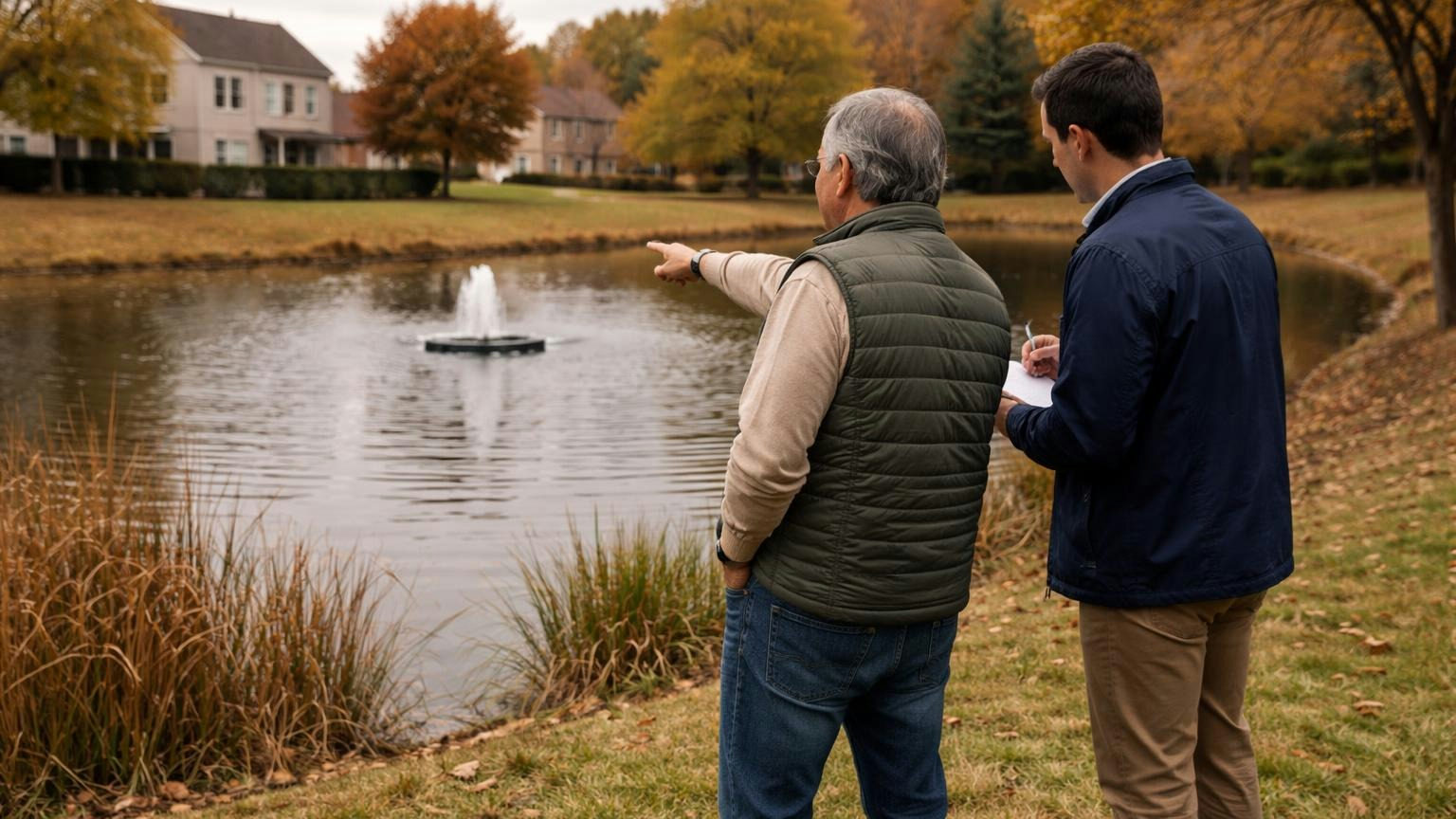
Walk the common property with this list. For each item, write down what it is, how old it is, and who would replace it.
The planning lives below come from HUD's Estimated Useful Life table, the standard figures HUD's capital needs assessment tool assigns to each component type (we use its family-housing column). They are planning figures, not promises: your contractor or reserve study decides the real number for your item.
| What to walk | What fails | HUD planning life |
|---|---|---|
| Pool pumps and equipment | Motors, seals, filters | 10 years |
| Pond fountain or aerator | The motor | 15 years |
| Pond outfall pipes, culverts, catch basins | Pipes and inlets | 50 years |
| Private road, seal coat | The surface layer | 5 years |
| Private road, asphalt | The pavement itself | 25 years |
| Fence: wood board · PVC · chain-link · wrought iron | Posts and panels | 20 · 15 · 40 · 60 years |
| Lift station | The station and its pumps | 50 years |
| Well pump | The pump and motor | Not in HUD's table: ask your well contractor |
Ask about the parts HUD lists a lift station at 50 years and does not give its pumps a separate life. Ask the contractor who services it how long the pumps inside will last.
The arithmetic: Turn each item into a monthly number
One item, one evening.
- Name it: Write the item down from the walk.
- Cost today: Get a written quote, not a guess.
- Years left: Ask the contractor, or take the planning life minus its age. Already past it? Price it as due now.
- Divide: By the years left, by the homes, by twelve.
- Give it a line: Its own line in next year's budget.
Here is a worked example for one community of 100 homes. Every cost is illustrative: swap in your own quotes.
| Item (example) | Cost today | Years left | Per year | Per home per month |
|---|---|---|---|---|
| Pool pumps and equipment | $12,000 | 3 | $4,000 | $3.33 |
| Pond aerator | $6,000 | 6 | $1,000 | $0.83 |
| Road seal coat | $18,000 | 5 | $3,600 | $3.00 |
| Road repaving | $240,000 | 12 | $20,000 | $16.67 |
| Wood board fence | $30,000 | 8 | $3,750 | $3.13 |
| Well pump | $15,000 | 5 | $3,000 | $2.50 |
| Total | $35,350 | $29.46 |
That is $29.46 per home per month, set aside every month, so that each of those bills is already paid for on the day it arrives.
This is the simple version. It leaves out costs rising over time and money the community has already set aside. The free reserve funding calculator handles both, and a reserve study does it properly.

The big one: The road, not the pump
The pump makes the news. In the example, the bigger bill is the road.
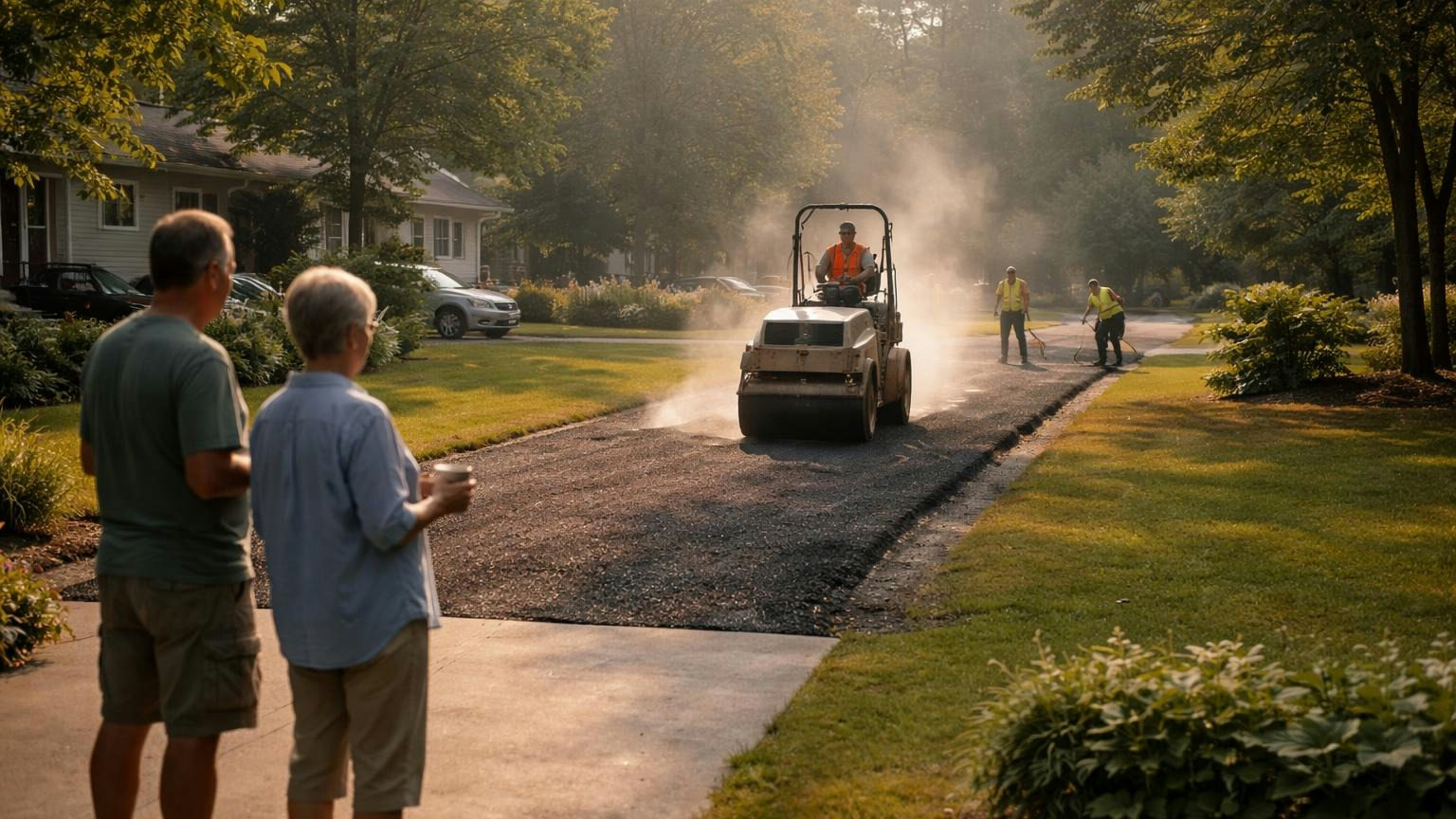
Repaving costs $240,000. Priced into the dues, it is $16.67 per home per month for 12 years. Unpriced, it is $2,400 per home on the day the pavement fails.
In the example: what the same road costs when nobody priced it.
- Year 1: Small cracks open in the surface
- Year 5: Potholes, patched one call at a time
- Year 12: The pavement fails
- The bill: $2,400 per home, at once
Whether your board can raise dues to close the gap, and by how much, depends on your governing documents and your state's law. Your documents and your attorney decide.
This week: Five things to do before the budget vote
- Walk the common property with the list above.
- Ask one contractor per item for a written replacement quote.
- Write down each item's age and the years it has left.
- Divide each one by years left, by homes and by twelve.
- Put the total on its own line in next year's budget draft.
Download the free Wear-Out Walk Sheet: one page to walk the property, write each item's cost and years left, and turn it into a per-home monthly number before the budget meeting. Then put the total beside your other lines in the free HOA dues calculator to see what each home pays per month.
Frequently asked questions
Why did our HOA dues go up so much after one repair? Usually because the repair was never priced into the dues. The item wore out on schedule, nothing was set aside, and the whole cost arrived in one budget instead of being spread across the years it was wearing out.
Is a special assessment the same as a dues increase? No. A dues increase changes the regular payment; a special assessment is a separate charge, usually for one cost. What your board may do, and with what vote or notice, depends on your governing documents and your state's law.
Where do life expectancy figures come from? Your reserve study first, then your contractor. Without either, HUD's Estimated Useful Life table gives a free planning figure for most common items. It is a starting point, not a promise.
What if we already have some money set aside? Then each item needs less per month. Subtract what is set aside for it before dividing, or use a reserve study or the free reserve funding calculator, which does it for you.