The short answer
- When an HOA annual meeting misses quorum, the board does not vanish. In the three states checked here (North Carolina, Florida, California), directors whose terms ended keep serving until successors are elected or appointed.
- What the board may do next is written down. North Carolina halves the quorum at a reconvened meeting (N.C.G.S. § 47F-3-109(c)), California drops it to 20 percent for electing directors (Cal. Civ. Code § 5115(d)(2)), Florida seats unopposed candidates without a quorum (Fla. Stat. § 720.306(9)(a)), and the remaining directors may fill seats that are truly empty.
- Read three things before the meeting, not after: your bylaws' quorum and election sections, your state's homeowners association statute, and the nonprofit corporation law your association was formed under.
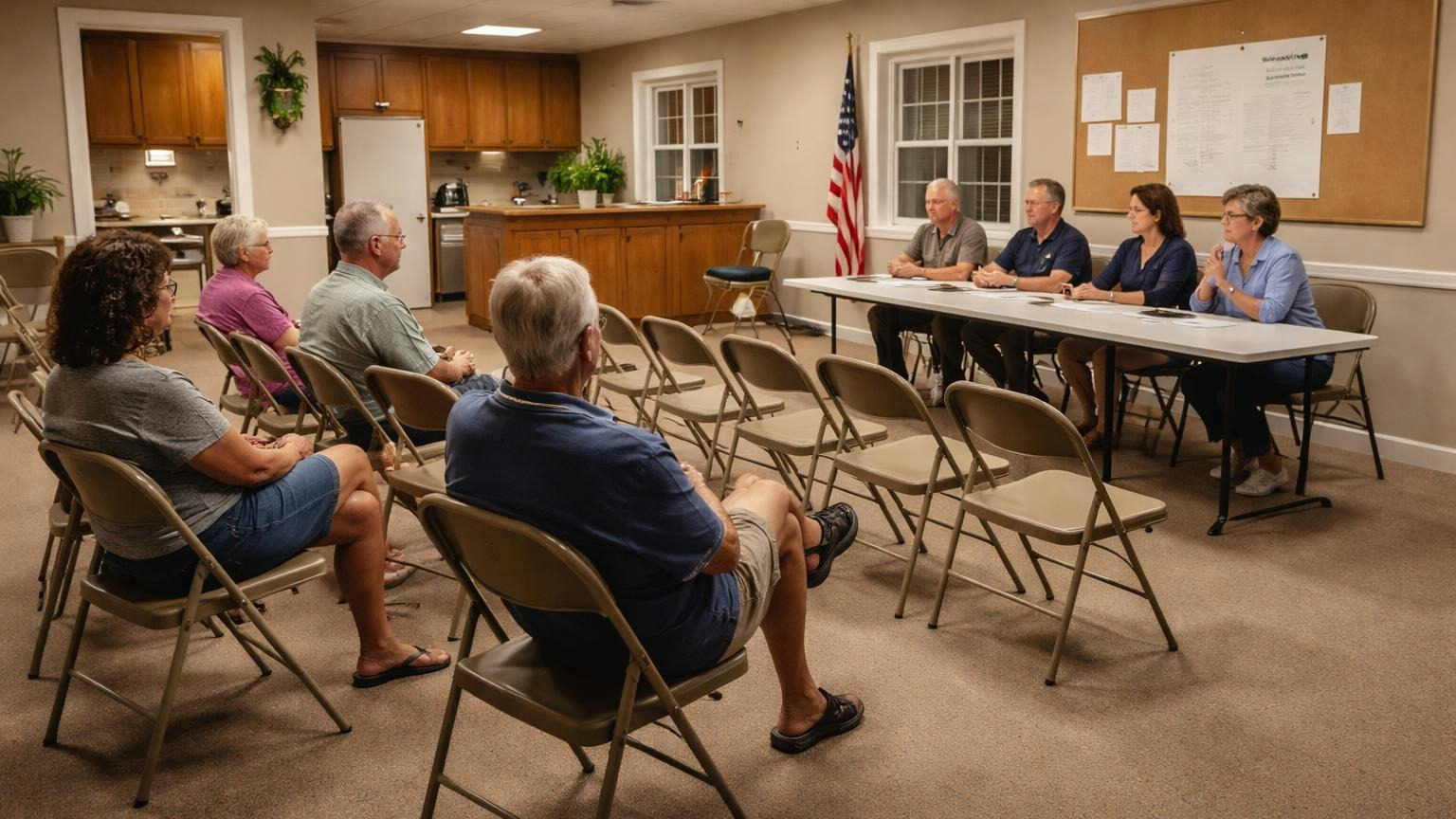
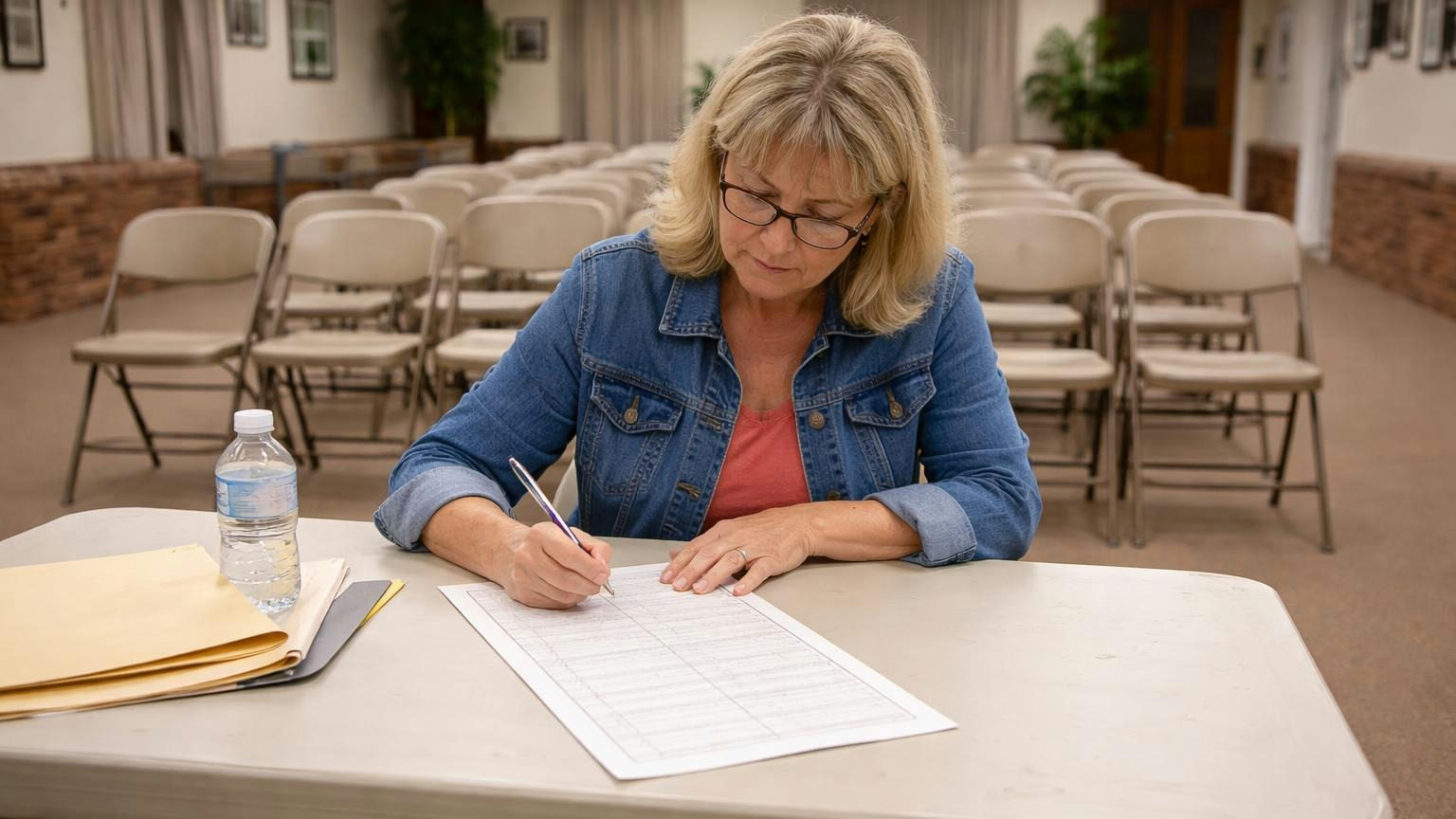
It is 7:40 on a Tuesday. The bylaws need 50 homes for a quorum. The sign-in sheet has 41.
Someone says the words every board dreads: "So we don't have a board anymore?"
You do. In the three states this piece checks, a missed quorum does not leave a community without anyone in charge. But what the sitting board may do the next morning is not up to the board. It is set by the documents your community signed and by your state's law, and the rules differ from state to state.
This piece walks through the four questions a board faces after a failed election, each answered from a statute read at its source. It is general information, not legal advice. Your governing documents and your association's attorney decide what applies to you.
Question one: Is anyone still on the board?
Usually, yes. The directors whose terms ran out keep their seats until someone replaces them. This is called holding over, and in each of the three states checked here it comes from the nonprofit corporation law your association was formed under, not the HOA statute.
North Carolina says it plainly: "Despite the expiration of a director's term, the director continues to serve until the director's successor is elected, designated, or appointed and qualifies, or until there is a decrease in the number of directors" (N.C.G.S. § 55A-8-05(d)). North Carolina associations created after the Planned Community Act took effect must be organized as nonprofit corporations (§ 47F-3-101).
Florida's nonprofit law has the same rule: each director serves for their term "and until his or her successor has been elected or appointed and qualified" (Fla. Stat. § 617.0806). A Florida HOA incorporated under that chapter is governed by it as well as by the HOA statute (§ 720.302(5)).
For an association incorporated as a California nonprofit mutual benefit corporation, the Corporations Code says each director holds office "until a successor has been elected and qualified, unless the director has been removed from office," except as the articles or bylaws provide (Cal. Corp. Code § 7220(b)).
Two things follow. A seat whose director is still serving is not ordinarily treated as a vacancy, so check with your attorney before appointing anyone to it. And California lets the articles or bylaws change the holdover rule (§ 7220(b)); the North Carolina and Florida holdover sentences carry no such exception. If your bylaws say something different, ask your attorney which one controls.
Question two: Can we try again with fewer people?
Sometimes, and two states write the number into law.
North Carolina halves it, and keeps halving it. If business cannot be conducted because a quorum is not present, a majority of those present in person or by proxy may vote to adjourn to a later date. Then: "Notwithstanding any provision to the contrary in the declaration or the bylaws, the quorum requirement at the next meeting shall be one-half of the quorum requirement applicable to the meeting adjourned for lack of a quorum" (N.C.G.S. § 47F-3-109(c)). If that meeting also falls short, the quorum halves again, until one is reached.
½ the quorum at a reconvened North Carolina HOA meeting, for communities the Planned Community Act fully covers, halved again each time a meeting adjourns for lack of a quorum, whatever the declaration or bylaws say. — N.C.G.S. § 47F-3-109(c)
One catch, and it is easy to miss. That section is part of the Planned Community Act, which applies in full to communities created on or after January 1, 1999, and not to those of 20 lots or fewer unless the declaration opts in. The quorum section is not on the list of sections that reach older communities (§ 47F-1-102). A community created before 1999 that has not amended its declaration to adopt the Act (§ 47F-1-102(d)) should ask its attorney whether the halving rule applies at all.
California drops it to 20 percent for electing directors. When an election misses the quorum the documents require, the association may adjourn to a date at least 20 days later, where "the quorum required for purposes of a reconvened meeting to elect directors shall be 20 percent of the association's members, voting in person, by proxy, or by secret ballot," unless the documents allow a lower one (Cal. Civ. Code § 5115(d)(2)). At least 15 days before, owners must get general notice of the date, time and place, the list of candidates, and a statement that 20 percent will be enough (§ 5115(d)(3)).
The default quorum If your bylaws are silent, North Carolina's Act sets quorum at 10 percent of the votes, present in person or by proxy (N.C.G.S. § 47F-3-109(a)). Florida sets it at 30 percent of the voting interests unless the bylaws set a lower number (Fla. Stat. § 720.306(1)(a)).
Everywhere else, look at your bylaws' section on adjourned meetings. If it says nothing, the honest answer is that your attorney decides, not a rule borrowed from another state.
Question three: Did we need a quorum for this at all?
This is the question that is easy to skip, and it can make the first two disappear.
Florida seats unopposed candidates without one. An election is not required unless more candidates are nominated than there are seats. If the qualified candidates are equal to or fewer than the vacancies, and floor nominations are not required by the statute or the bylaws, "such qualified candidates shall commence service on the board of directors, regardless of whether a quorum is attained at the annual meeting" (Fla. Stat. § 720.306(9)(a)).
Such qualified candidates shall commence service on the board of directors, regardless of whether a quorum is attained at the annual meeting. — Florida Statutes § 720.306(9)(a)
California counts every ballot as a person in the room. A quorum is required for an election only if the governing documents or other law say so. When the documents do require one, "each ballot received by the inspector or inspectors of elections shall be treated as a member present at a meeting for purposes of establishing a quorum" (Cal. Civ. Code § 5115(d)(1)). The owners who returned ballots count, even if they never came to the clubhouse.
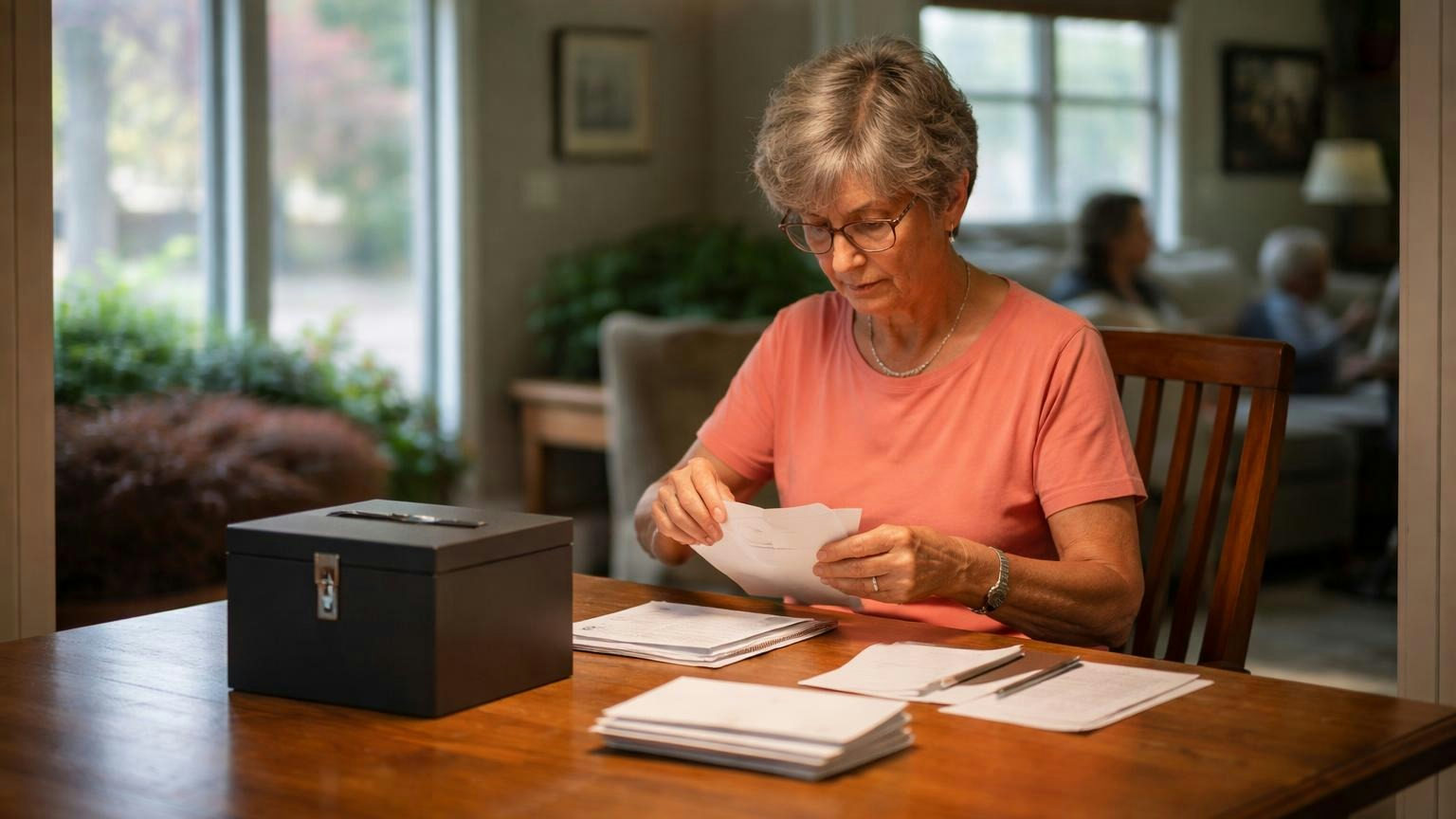
So before you call the election failed, ask two things. How many candidates were there for how many seats? And did you count the ballots that arrived, not just the people who signed in?
Question four: Can the board fill the empty seats itself?
For a seat that is truly empty, often yes. For electing itself, no.
- Florida: unless the bylaws say otherwise, a vacancy "may be filled by an affirmative vote of the majority of the remaining directors, even if the remaining directors constitute less than a quorum, or by the sole remaining director," and the appointee serves the unexpired term (§ 720.306(9)(c); see also § 617.0809(1)).
- California: unless the articles or bylaws say otherwise, the board may fill a vacancy, and when fewer directors remain than a quorum, by unanimous written consent, a majority at a properly noticed meeting, or a sole remaining director. A seat emptied by removing a director is different (Cal. Corp. Code § 7224(a)).
- North Carolina: the board "may unilaterally fill vacancies in its membership for the unexpired portion of any term," but it may not act on its own "to elect members of the executive board" (N.C.G.S. § 47F-3-103(b)). How long the appointee serves can differ between the Planned Community Act and North Carolina's nonprofit law (§ 55A-8-05(c)(1)); ask your attorney which governs. Like the halving rule, § 47F-3-103(b) does not reach a community created before 1999 by default; only subsection (f) of that section does (§ 47F-1-102(c)), so an older community reads its own bylaws.
The line in all three is the same: an appointment fills a seat that is actually empty. It is not a substitute for the election the documents require. In Florida, a challenge to the election process must be commenced within 60 days after the election results are announced (§ 720.306(9)(a)).
How to Run an HOA Board Meeting That Ends in Decisions
Before the meeting: Check your own documents
A short read of your bylaws now can save weeks of argument later.
- Our bylaws' quorum for an owners' meeting, as a number of homes, not just a percentage, and our state's default if the bylaws are silent.
- Whether mailed or electronic ballots count toward quorum, and who counts them.
- What our bylaws say about adjourning a meeting that misses quorum, and the quorum at the next one.
- Whether directors serve "until their successors are elected" (the holdover words).
- How many seats are open and how many candidates we have.
- Who may fill a vacancy, and for how long the appointee serves.
- Which state statute and which nonprofit law our association falls under, and the date our community was created.
Frequently asked questions
What happens if an HOA annual meeting doesn't reach quorum? The meeting cannot conduct business that needs a quorum, such as a contested election. In the three states checked here, the sitting directors keep serving until successors are elected (for example N.C.G.S. § 55A-8-05(d), Fla. Stat. § 617.0806, Cal. Corp. Code § 7220(b)), and the board usually reschedules. Some states lower the quorum for the next attempt, as North Carolina (§ 47F-3-109(c)) and California (Civ. Code § 5115(d)(2)) do.
Can an HOA board just appoint itself after a failed election? Not in place of the election. A board may fill a seat that is actually empty, as North Carolina (§ 47F-3-103(b)), Florida (§ 720.306(9)(c)) and California (Corp. Code § 7224) allow; in Florida and under North Carolina's Planned Community Act the appointee serves out the unexpired term. North Carolina says outright that the board may not elect board members on its own. A director whose term ended but who is still serving is not ordinarily treated as an empty seat.
Can we lower our HOA's quorum so this stops happening? Usually only by amending the bylaws, which takes the owner vote your documents require. In Florida, unless the documents or law say otherwise, a governing document may be amended by two-thirds of the voting interests (Fla. Stat. § 720.306(1)(b)). Ask your attorney to draft it, and check whether your state already lowers the quorum for you.
The bottom line: The board stays, the rules decide the rest
A missed quorum is not a crisis. The answers are already written down: who holds over, how the next meeting's quorum is figured, which candidates take their seats anyway, and which empty seats the board may fill. Put the checklist above on this month's board agenda and write each answer next to its bylaw section.
Then, if the sign-in sheet comes up short, the chair has one sentence ready: "We don't have a quorum tonight, so we can't elect anyone. The current directors continue under section [] of our bylaws, and we will reconvene on [date] under section []." That turns a short sign-in sheet into a Tuesday, not an emergency.