The short answer
- Who is responsible depends on who owns each pole. Many HOA streetlights are rented, not owned: the power company often owns the pole and fixture, and the association pays a monthly charge under a lighting agreement.
- On a private road, the report is often the association's job, and the utility will want the pole number.
- Keep a streetlight register: each light, its pole number, its owner, its account and how to report it, with one named board member and a backup.
The contract for your streetlights may not be in the power company's files. It may not be in yours either. In 2021, South Carolina property owners' associations asked the state's Office of Regulatory Staff to review how a power company charged them for neighborhood lights, and what the regulator found applies to any association that rents its lights.
The utility, Santee Cooper, "typically does not retain copies of signed Outdoor Lighting Program rental agreements" once the lights are installed, the term has expired and the customer is paying month to month. And the monthly bills, the regulator found, "do not provide sufficient detail as to the specific poles and fixtures for which customers are paying."
So the paper behind your lights may exist nowhere.
Daylight saving time ends at 2 a.m. on Sunday, November 1, 2026. The evenings go dark an hour earlier, and the light out by the mailboxes becomes the board's inbox. Read this before that email arrives.
This is general information, not legal advice. Your governing documents, your lighting agreement and your utility's own published terms decide what applies to you.
The finding: The paper may exist nowhere
The review reaches beyond one utility because the regulator also benchmarked Dominion Energy South Carolina and Duke Energy and found their lighting programs structured much the same way: a rental agreement with a set term, and a monthly fee covering design, installation and ongoing maintenance.
592 property and homeowner associations were renting outdoor lights from one South Carolina utility alone when the state reviewed its program. — South Carolina Office of Regulatory Staff, December 2021
Three findings describe a position many boards are in without knowing it:
- Nobody can see what is on the bill. The lighting bills carried generic lines such as "pole rental fees," "light fixture fees" and "lighting energy charge." To check which poles and fixtures it was paying for, a customer had to ask the utility for a screenshot of its billing database.
- The agreement can outlive its paper. After the first term, the lights roll onto a month-to-month basis, and that is when, the regulator found, the signed copy typically stopped being kept.
- The associations believed they had paid for the lights at least twice. The most significant recent complaints, the utility told the regulator, were about cost and that belief. The regulator checked the utility's records for two of them and found that neither lighting system was fully depreciated.
This process lacks transparency and creates barriers for customers to verify the accuracy of their bills. — South Carolina Office of Regulatory Staff
The regulator recommended that the utility break out the bill by pole type and fixture type. Your board does not have to wait: ask your own utility, in writing, for the list of fixtures and poles billed to the association's account, and keep it.
Three owners: The utility, the association, or the road
Before anyone calls, sort every light into one of three kinds. The sidewalk rarely tells you.
| Who owns the light | Who usually pays | Who reports an outage |
|---|---|---|
| The utility, on a public road maintained by the city, county or state | Typically not the association | Any resident, straight to the utility or the local government |
| The utility, rented to the association under a lighting agreement | The association, every month | Commonly the association, as the account holder |
| The association itself, installed and owned outright | The association: the electricity, the repairs and the replacements | The association, to whoever it hires |
The road often draws the first line. Fairfax County, Virginia tells residents that streetlights along its public roads are typically maintained by Dominion Virginia Power or the Northern Virginia Electric Cooperative, and then says plainly: "If a streetlight is located on a private road, it is the responsibility of the light's owner (the homeowner's association, for instance) to relay the report to the power supplier." The county's streetlight map adds a second clue: if a particular streetlight is not on the map, "it may be privately maintained by a homeowners association or other group."
The line between the second and third kinds is in the agreement. In the review, both Dominion's and Duke's rental agreements "explicitly state that each utility maintains ownership of all facilities necessary for service including fixtures and poles." If your board has been treating the poles as association property, a rented system says otherwise.
The agreement: Five lines to find
If any of your lights are rented, an agreement sits behind them. The examples below come from the Santee Cooper outdoor lighting schedule attached to the regulator's report (Rate Schedule OL-17, effective for bills from April 1, 2017). Your utility's terms will differ, so read them as the questions to ask, not the answers.
1. The term. That schedule ran the agreement for three years from the day the lights first operated, then until either side gave 30 days' notice. The regulator's report shows initial terms of three, five or seven years depending on the fixture: seven for LED.
2. What leaving costs. End the service early under that schedule and the customer owed the greatest of three amounts: every remaining monthly charge in the term, $50 for each fixture mounted on existing facilities, or $150 for each fixture and pole removed because of the termination. Once the term was complete, the utility could remove the lights at no charge.
3. Who protects the lights. The same schedule put on the customer "responsibility of providing reasonable protection to the lighting installation from accidental collision by motor vehicle" and against vandalism. If a truck takes out a pole, read your agreement before assuming the utility absorbs it.
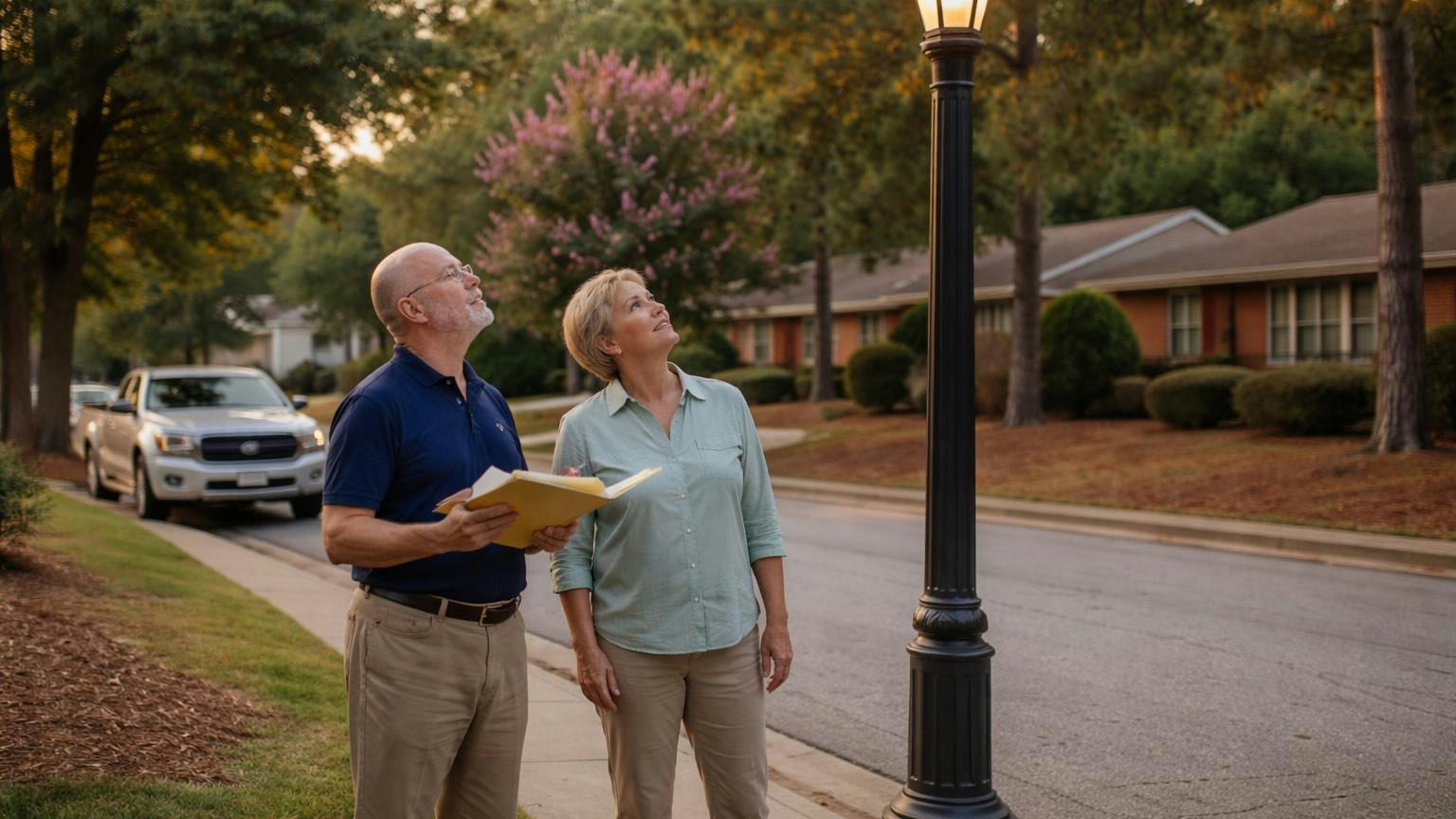
4. What the monthly charge covers. The utility's letter to a developer, attached to the report, said the monthly fee "covers any maintenance on the lights. All you need to do is contact Santee Cooper when a light needs to be repaired."
5. Who owns what. The regulator recommended that Santee Cooper's agreements state who owns the fixtures, poles and wiring, because they did not clearly say. Look for that sentence in yours.
Thinking of buying the lights? Duke told the regulator that associations who looked into buying their lighting system all chose not to once they learned what maintenance and upkeep would cost. Dominion described the association of one large Mount Pleasant subdivision that took the other road: Dominion removed its lights, left the underground conduit, and the association bought and installed its own.
The call: A pole number beats a street name
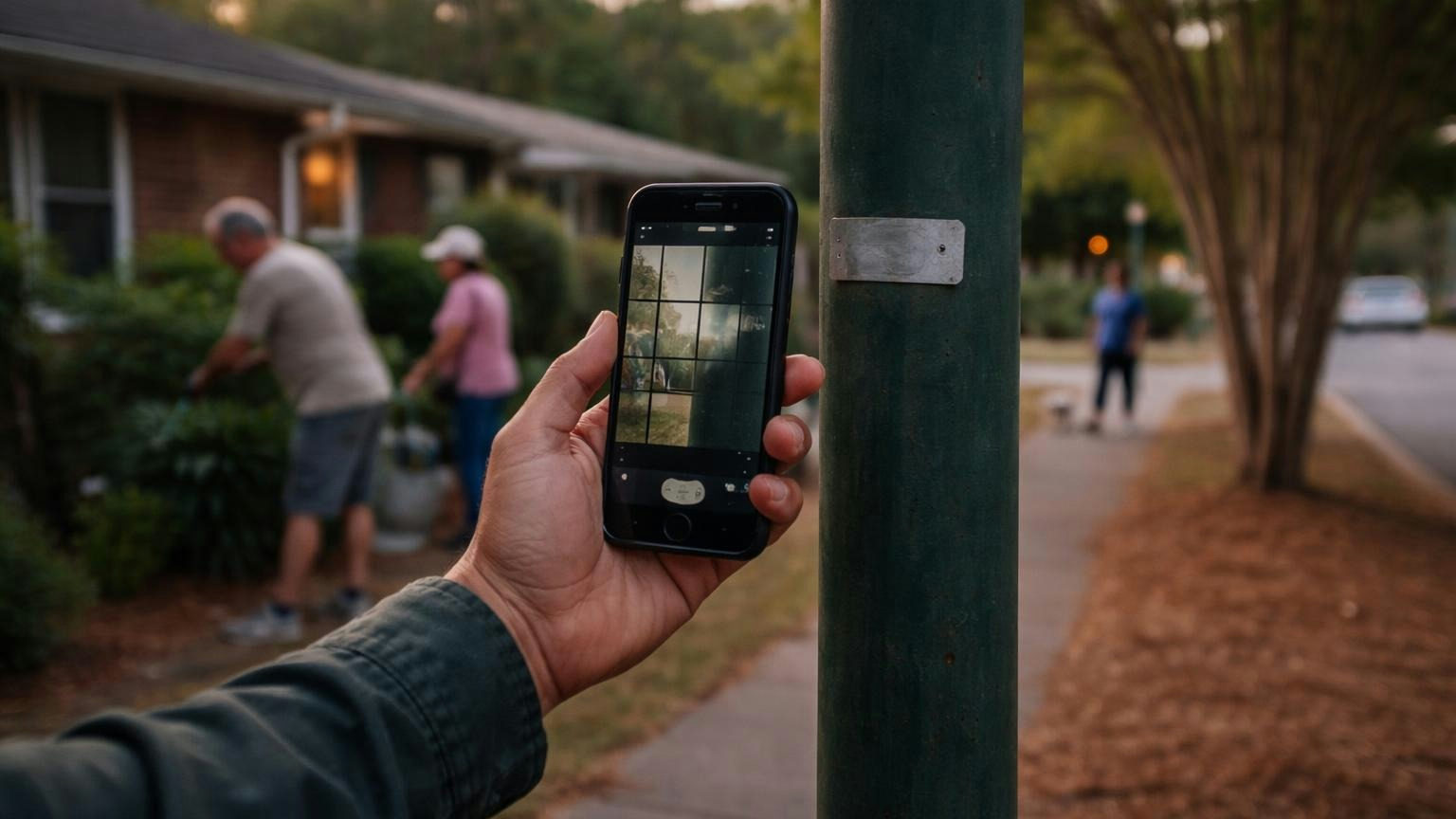
Fairfax County tells residents that when reporting an outage to Dominion Virginia Power or NOVEC, "you will need to have the location of the pole and the pole number." The City of Tavares, Florida tells Duke Energy customers that the pole ID number "is normally located 2 - 7 feet off the ground on the pole and will enable the technician to identify the exact streetlight." The City of Austell, Georgia, where most streetlights are serviced by Georgia Power, says many poles have an identification number "located on a metal tag."
Each asks for much the same details. Add the date, and the list is short:
A report a technician can act on the first time.
- Where: The nearest address or intersection, and which corner.
- Which: The pole number from the tag.
- What: Out, flickering, on all day, damaged.
- Who: A name and number for the call back.
- When: The date, written in the register.
Then follow up. Austell tells residents to ask its public works department for an update if a light is not repaired within 10 business days. Fairfax notes that Dominion wraps a colored tag around the post when a repair cannot be finished on the first visit: blue for overhead work, green for underground work, yellow for a damaged underground cable. If you see a wrap, a crew has been out and the job is not done: write the color and the date in the register.
The season: Why November is when this gets noticed
77 percent of pedestrians killed in U.S. traffic crashes in 2023 died in the dark, against 19 percent in daylight. — NHTSA, Traffic Safety Facts: Pedestrians, 2023 Data
In the fall months, September to November, 32 percent of those deaths happened between 6 and 8:59 p.m. These are national figures for every road, not a measure of any neighborhood, and a streetlight is one safeguard among many. They are still the reason to know, before November, who fixes the light at the corner.
The register: One row per light, one name on the job
Everything above fits in one table the board keeps.
| Light | Where | Pole number | Owner | Account or agreement | How to report | Last outage |
|---|---|---|---|---|---|---|
| 1 | Entrance, north side | From the tag | Rented from the utility | Account and agreement date | Utility web form or phone | Date reported, date fixed |
| 2 | Pool parking lot | From the tag | Association | Who the board hires | The contractor's number |
Under it, add the lighting account number, where the signed agreement is filed, and the board member who owns streetlights, with a backup.
The streetlight job tends to live in one person's phone: the account login, the utility's number, which pole is rented and which is the association's. When that person leaves the board, the job leaves too, unless it was written down.
HOA Handover Checklist: The Five Open Items Boards Lose
Before November: Eight things to do
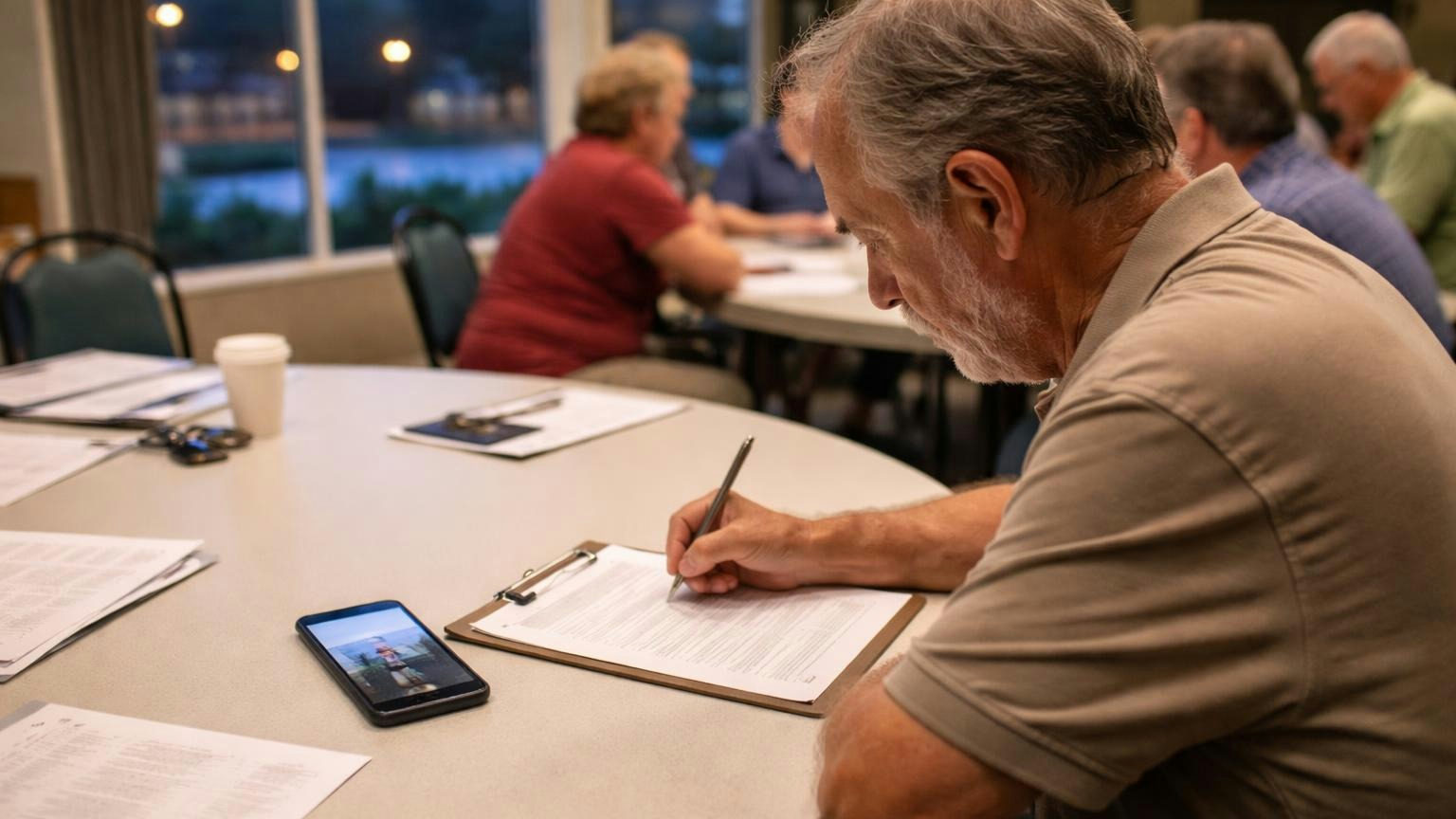
- Walk or drive the neighborhood at dusk and count every light.
- Photograph each pole's tag and note its location.
- Sort each light: public road, rented from the utility, or owned by the association.
- Ask the utility, in writing, for the list of fixtures and poles billed to the association's account.
- Find the signed lighting agreement, or ask the utility whether it still has a copy.
- Read the term, the termination charge, and who protects the lights from vehicles.
- Name the board member who owns streetlights, and a backup, in the minutes.
- File the register where the whole board can open it.
The light at the corner will go out this winter. The question is whether the board knows which pole it is, who owns it, and where the paper is.