
The short answer
- Your reserve study is a list of things on paper. Only a walk shows whether the list still matches the ground.
- Ask which level you bought. A study "update" with no site visit means nobody looked at your property.
- Walk it once a year with the list in hand, mark each item as matches, changed or missing, and bring the marked-up list to the budget meeting.
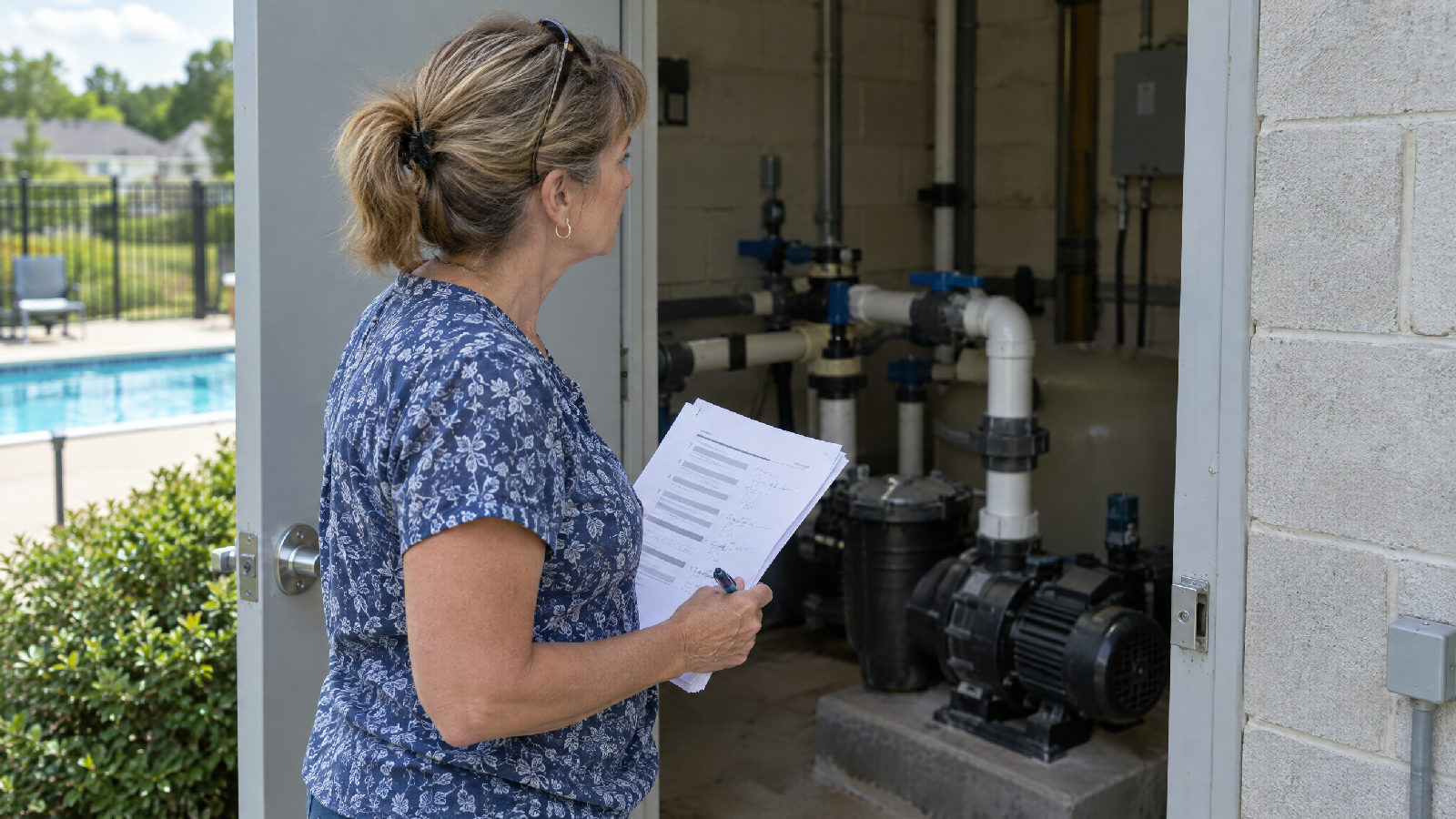
You can check whether your HOA's reserve study still describes your community in about 45 minutes, with the study open in one hand and a pen in the other. Walk to the first item on the component list, look at it, and write down one word: matches, changed or missing.
It is easy to skip. The study arrives as a PDF, the board reads the funding table at the front, and the list of components in the back goes unread for years. That list is the part that decides the numbers in the front.
Step 1 — Find out what you actually bought
A reserve study comes in levels, and the difference matters more than the price. Under the Community Associations Institute's National Reserve Study Standards, there are three:
- Full: inventories the components, assesses their condition from a site visit, estimates life and cost, and sets the funding plan.
- Update with site visit: verifies the inventory and assesses condition on site, then updates life, cost and funding.
- Update with no site visit: only updates life estimates, cost estimates, fund status and the funding plan. No inventory work. No condition assessment. Nobody visits.
Worth knowing An update with no site visit is a legitimate product. It is also a calculation on the last list someone walked. If your last full study is several updates back, the list is old.
Look at the cover page or the scope section of your study and find the word "update" or "full," and whether it mentions a site visit. Write it at the top of your walk sheet. That one line tells you how much to trust the list you are about to check.
Step 2 — Take the list, not the summary
Skip the funding charts. Go to the component inventory, the table that lists each item, its useful life, how many years remain and its replacement cost. Print it, one line per component.
Add four blank columns on the right: Matches · Changed · Missing · Not on the list. Those are the only four answers a walk needs.
What each mark means.
- Matches: It is there, and it looks like the line says
- Changed: Different material, size, quantity or condition than listed
- Missing: On the list, not on the property
- Not on the list: On the property, not in the study
The last column is the one boards forget. A fence section added by a resident group, a playground piece replaced with a different model, a sidewalk that was widened: if it is on the ground and not in the study, nobody is saving for it.
Step 3 — Walk it in the order of the list
Do not freelance a route. Walk in the order of the inventory so the sheet and the property stay in step, and take a phone photo of every item you mark Changed or Missing.
Check three things at each stop:
- Is it the thing described? Quantity, material, size.
- Does its condition match its remaining life? An item the study says has eight years left that is already failing is a number problem.
- Is anything beside it that the study does not mention?
You are not inspecting for defects like an engineer. You are checking whether the paper matches the place. If an item looks wrong, you do not need to diagnose it. You only need to write it down.

Step 4 — Turn the marks into one page for the board
Count the marks in each column. Then write three sentences at the top of the sheet:
- We bought a [full / update with site visit / update with no site visit] study, last completed in [year].
- On our walk, [number] items matched, [number] changed, [number] were missing and [number] were not on the list.
- We are asking the reserve specialist to [verify the changed items / add the new ones / schedule a site visit].
Those three sentences are what you say at the meeting. They turn "we should probably look at the reserve study" into a decision someone can second.
3 levels of reserve study exist under the National Reserve Study Standards, and only two of them involve anyone visiting the property. — Community Associations Institute, National Reserve Study Standards

What to do with the result
If most lines match, you have good news and a short note for the minutes: the study was walked and the list holds. Do it again next year.
If several lines changed or are missing, ask your reserve specialist for a site-visit update before the next budget vote, and bring your marked-up sheet so the visit starts where your walk ended. The sheet saves their time, which is the part of the work you can influence.
Frequently asked questions
How often should a board walk the reserve study list?
Once a year is enough for most communities, ideally before the budget draft so any change can reach the numbers. Walk it again after any major repair, replacement or addition.
Do we need an engineer to do the walk?
No. The walk checks whether the list matches the property, not whether each item is sound. Anything that looks wrong goes to the reserve specialist or a licensed professional.
What if our study is an update with no site visit?
Then the component list is only as current as the last time someone visited. Your walk is the cheapest way to find out whether it still holds, and a reason to ask for a site-visit update if it does not.
The sentence to take to the meeting
Bring the sheet and say this: "We walked the reserve study list. Here is what matches, what changed, and what is missing, and here is what we are asking the specialist to do about it." Then hand it to the person who keeps the minutes.
Run the walk on your own community this month, and download the free one-page walk sheet below to carry with you.