
Yesterday's piece named the five keys a self-managed HOA board actually has to hold — the ledger, the governing-document set, resident and payment history, the communication record, and the access list itself — and gave you the Walk-Away Test to check which ones your board holds versus merely logs into. If you haven't run it yet, that's the place to start.
Who Owns Your HOA's Records? The Walk-Away Test
Today is the question underneath all five: why does this gap exist in the first place? Not because boards are careless, and not because vendors are dishonest. It exists because "having access to something" and "owning it" have quietly become the same sentence in most people's heads — and they are not the same thing, technically or legally.
A login is a permission. A record is a possession.
Start with the plain-language version, because it's easy to lose once software is involved.
If you can log into a system and see the numbers, you have access. Access is granted by whoever controls the account, and it can be changed, revoked, or lost the same way it was given — a password reset, a departed volunteer, a vendor that changes its pricing tier, a platform that shuts down. Nothing about "I can see this today" tells you what happens tomorrow if the party controlling the login disappears.
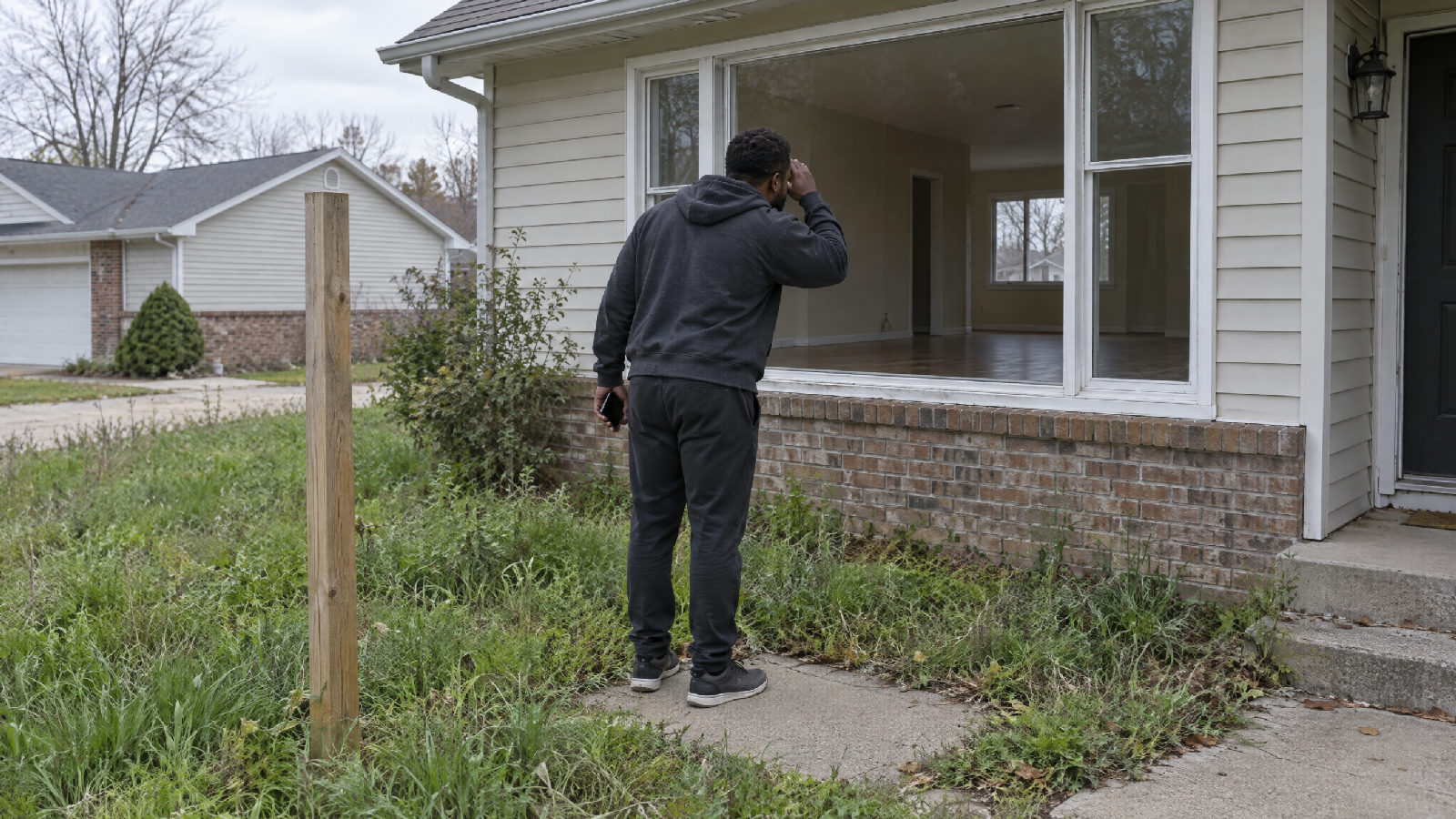
If you can take the ledger, or the document set, or the resident history, and put it somewhere else — readable, usable, complete — you hold it. Holding doesn't depend on anyone's continued cooperation. It's the difference between renting a view of your own records and actually owning the copy.
Most self-managed boards never separate these two ideas, because for years the only thing that mattered was "can I get in when I need to." That question has an easy yes/no answer, so it's the one boards ask. The harder, more important question — "if this account disappeared tonight, would we still have what's inside it?" — usually doesn't get asked until it's too late to answer comfortably.
9.5% of every concern raised was residents being unable to access their own association's information or documents — the third-most-filed complaint category in South Carolina. — South Carolina 2026 HOA Complaint Report (covering 2025 data)
The part almost no board realizes: the law already assumes you hold it
Here's what makes this more than a philosophical distinction. In both Carolinas, state law gives homeowners a legal right to inspect and copy their association's records — and that right is written against the association, not against whichever person or vendor happens to be holding the login at the time.
Under South Carolina's Nonprofit Corporation Act, which governs the overwhelming majority of the state's HOAs, § 33-31-1602 entitles a member to inspect and copy the corporation's records — governing documents, board resolutions affecting members, and (on a proper, particularized request) accounting records and minutes — after five business days' written notice. North Carolina's equivalent, the Nonprofit Corporation Act's § 55A-16-02 and § 55A-16-03, works the same way: a member gives five business days' notice, and the association has to produce the records, with copying rights that extend to electronic formats "if reasonable."
Read that obligation carefully and the design problem jumps out. The statute doesn't say "whoever holds the password has to respond." It says the association — the whole legal entity, the board acting on the community's behalf — has to produce the record. If the only person who can actually get into the system is unreachable, or the export only comes out in a format nobody downstream can use, the board hasn't just inconvenienced a homeowner. It has structurally set itself up to fail an obligation state law puts on the association as a whole, using an account it does not, in the full sense, control.

That's not a hypothetical stretch. It's the same story South Carolina's own 2026 HOA Complaint Report (covering 2025 data) already puts a number on: residents being unable to access their own association's information or documents was the third-most-filed complaint category in the state, at 9.5% of every concern raised — behind only covenant enforcement and maintenance. A board that can log in but can't produce isn't rare. It's common enough to be a named category in a state agency's own complaint tally.
Three shapes this takes, none of them anyone's fault
Single-admin dependence doesn't usually look like a crisis. It looks like a normal Tuesday, right up until it doesn't.
The single login. One person — a volunteer, a board member, occasionally a vendor's own staff — is the only credential that can get into the system that matters most. Everyone else has "access" in the sense that they can ask that person for information. Nobody else has access in the sense of being able to open the account themselves. This isn't negligence. It's usually the fastest way the account got set up in the first place, by the one person who had the time that week.
The PDF-shaped exit. Most platforms will hand you your data back if you ask — as a PDF. A PDF is fine for reading. It is close to useless for using: another piece of software can't import a ledger out of a PDF, a new platform can't reconstruct payment history from a scanned-looking export, and a board doing its own reconciliation can't run numbers against a document formatted for printing, not for data. Technically, the board "got its data." Functionally, it got a picture of the data and has to retype it to make it real again.

The platform-shaped record. Some resident and payment history doesn't export cleanly because it was never designed to leave. It exists as rows in a vendor's proprietary schema, formatted for that one system's screens, and "portable" only in the sense that a screenshot is portable. The association technically has an account. It does not, in any meaningful sense, hold the history behind it.
None of these three require a bad actor. Nobody sits down and designs a system to trap a future board — vendors build for the customer paying this month, and volunteers build for the task in front of them this week. The dependence accumulates as a side effect of a hundred reasonable shortcuts, not as anyone's plan.
It's the difference between renting a view of your own records and actually owning the copy.
What "holding it" actually requires — three tests
If access and ownership were the same thing, this article wouldn't need to exist. Since they aren't, here's the practical version of the difference, one test per failure mode above:
- More than one person can get in. Not "more than one person knows the password" — more than one board member has their own independent, working credential to every system the community depends on, today, without asking anyone first.
- The export is structured, not scenic. A real export is a file another piece of software could read back in — CSV, a documented format, an API — not a PDF a human has to retype. If the only "export" option produces something built for printing, that's not portability; it's a screenshot with extra steps.
- The data outlives the account. If the board changed software tomorrow, resident balances, payment history, and the document set would move with it — not reset to zero because the old platform never handed the substance back, only a view of it.
Run those three questions against every system your board currently depends on — not just the HOA-specific one, but the shared email, the bank portal, the website. Most boards will pass on at least one system and fail on at least one other. That's the normal result. It's also the whole reason the Walk-Away Test from yesterday exists as a five-minute-per-key audit rather than a one-time judgment call.

The smallest next step
We built a companion to yesterday's Custody Map for exactly this: the HOA System Access Inventory, a one-page fill-in matrix. List every system your board actually uses down one side — dues and payments, the website, shared email, bank portal, document storage, communication tools. Across the top: who has independent admin access today, whether the whole board (not just one person) can get in, whether the data exports in a usable format, and where the underlying record physically lives if that vendor disappeared tomorrow.
It takes one meeting to fill in, and it usually surfaces the same finding the Walk-Away Test does: three or four systems the board genuinely holds, and one that only looks that way. That's not a grade. It's the map you needed before you knew you needed it. Grab it below.
The law in both Carolinas already assumes your association can produce its own records on five business days' notice. The only question worth answering this week is whether that's actually true — or whether it depends on one person answering their phone.
You Ran the Walk-Away Test. Here's the Smallest Fix for What It Found.