The short answer
- Your recorded papers decide who maintains what, or state law where they are silent. The chart puts each item neighbors fight over (fences, mailboxes, retaining walls, drainage swales, boundary trees) on one page: owner, association or someone else, with the document that says so.
- Build it from what is recorded: the declaration, the plat and any easements. In North Carolina, when those are silent, the law sets the default for most communities: the association maintains the common elements, each owner maintains the lot.
- Adopt it by vote and hand it out: the minutes, the welcome packet, the website. A fight the chart already answers rarely reaches a meeting.
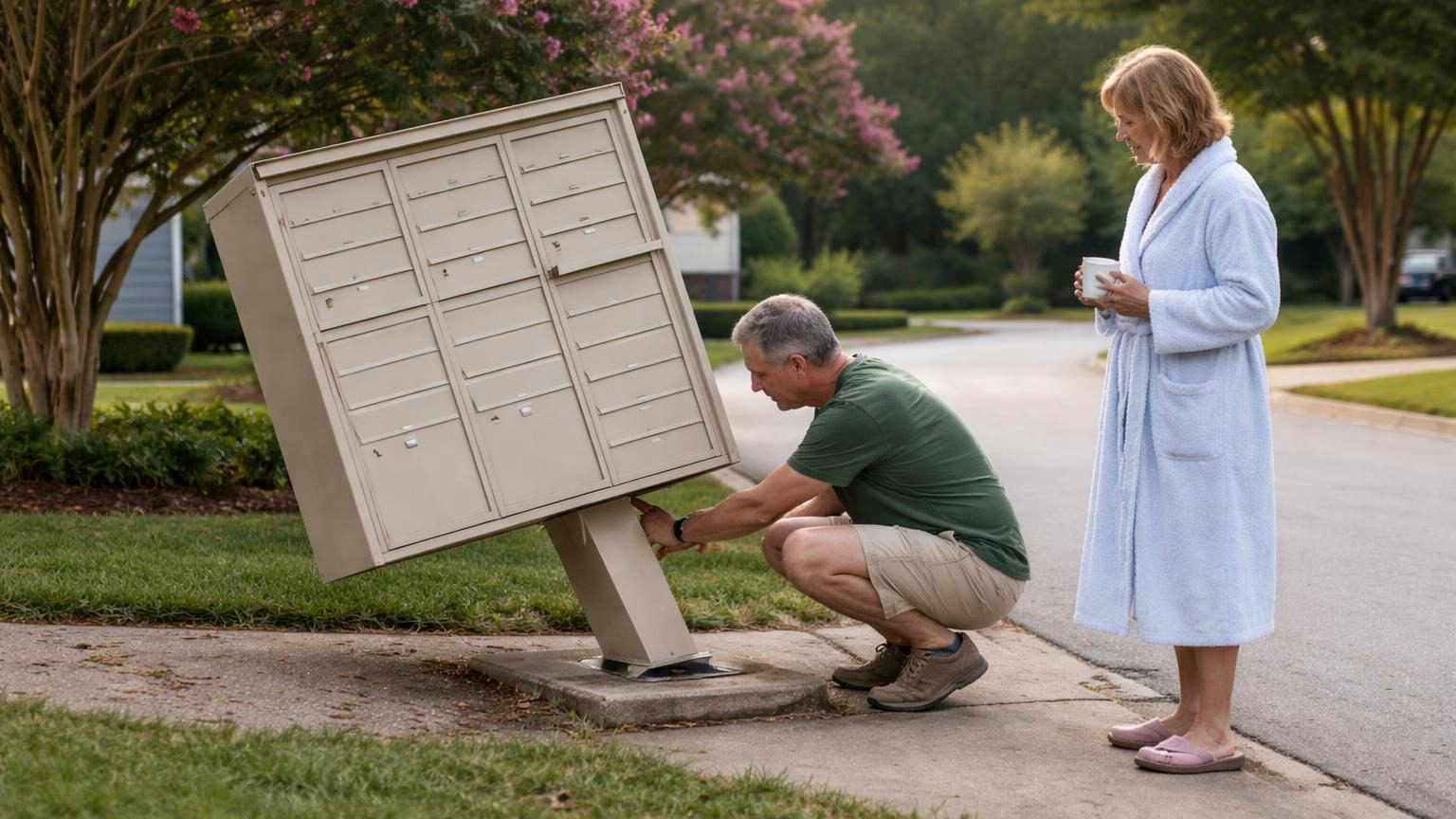
A delivery truck clips the cluster mailbox, and by lunch three neighbors want to know who pays. The answer may already be a checkbox on a Postal Service form.
The form is the Mode of Delivery Agreement at the back of the Postal Service's builder packet for its Greater South Carolina District, which Greenville County posts for developers. Partway down, a line reads "Equipment owned/maintained by:" with two boxes, "Developer" and "other." A few lines later: "Residents of single-family homes must be informed of their ongoing responsibility for keys; box maintenance/repair, snow removal, etc."
Part of the answer may have been settled before the first family moved in, on a form nobody on today's board has seen.
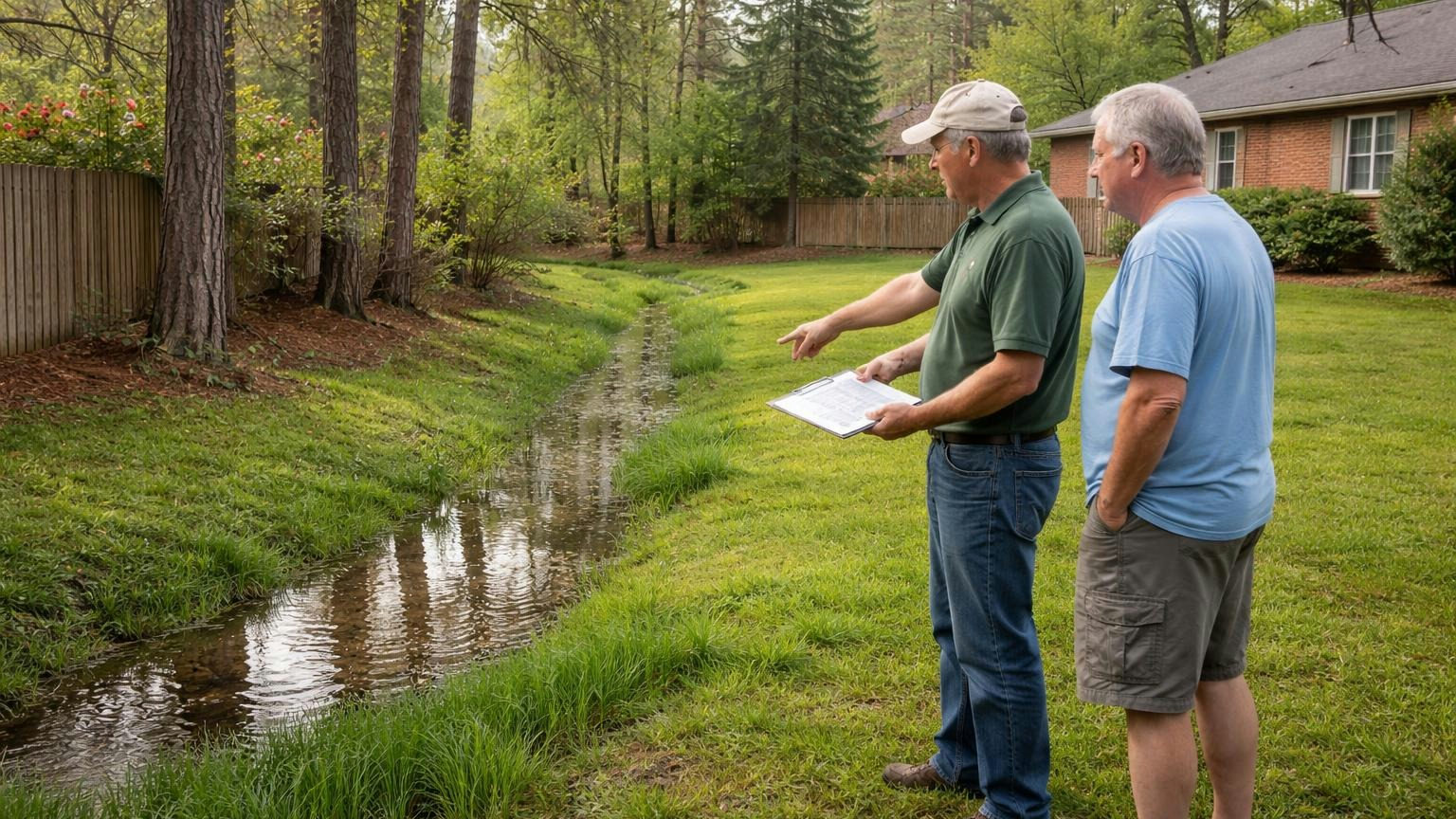
Many maintenance fights work that way: the answer exists, in papers nobody has open. The chart puts every answer on one page, with the page number beside it.
The chart: Three answers and a citation
One row per item, an X under who maintains it, a citation in the last column. The two steps below fill it in.
| Item | Owner | Association | Someone else | Where it says so |
|---|---|---|---|---|
| Fences on lot lines | ||||
| Mailboxes | ||||
| Sidewalks | ||||
| Driveway aprons | ||||
| Retaining walls | ||||
| Drainage swales and pipes | ||||
| Trees on a lot line |
"Someone else" is the column boards forget: the town, the state transportation department, a utility, the Postal Service. On a public street, part of every front yard may sit in a right-of-way neither the association nor the owner controls. Put that on the chart, with the phone number of whoever does.
"The board decided" ends nothing. "Declaration, Article VIII, Section 3" ends the conversation, because a neighbor can read it.
The default: What the law says when the papers are silent
In North Carolina, the Planned Community Act writes the starting rule. Unless the declaration says otherwise, "the association is responsible for causing the common elements to be maintained, repaired, and replaced when necessary," and "each lot owner is responsible for the maintenance and repair of his lot and any improvements thereon" (N.C.G.S. § 47F-3-107(a)).
Four details matter for the chart.
- Ownership decides it. "Common elements" means "any real estate within a planned community owned or leased by the association, other than a lot" (§ 47F-1-103(4)). A grassy strip never deeded or leased to the association is not a common element just because it looks shared.
- Older neighborhoods are covered too. The Act mainly governs communities created on or after January 1, 1999, but § 47F-1-102(c) applies § 47F-3-107(a) through (c) to older ones, for events since that date, "unless the articles of incorporation or the declaration expressly provides to the contrary."
- Small newer ones may not be. A community created since 1999 with 20 or fewer lots is outside the Act unless its declaration opts in (§ 47F-1-102(b)).
- Owners must give access. Section 47F-3-107(a) also requires each owner to allow access through the lot when "reasonably necessary" for maintenance or repair. That answers "you can't come in my backyard to fix the pipe."
South Carolina's Homeowners Association Act (S.C. Code §§ 27-30-110 to 27-30-170) sets no default split, so the recorded declaration decides. The Act says governing documents must be recorded "in order to be enforceable" (§ 27-30-130(A)(1)).
This is general information, not legal advice. Your recorded documents and your attorney decide what applies. For the rest of what North Carolina asks of a board, see what an HOA board has to do legally in North Carolina.
Step one: Read the declaration for three verbs
Pull the recorded declaration and every amendment, not the binder copy. Search for maintain, repair and replace. Every sentence using one goes on the chart with its article and section.
A "limited common element" is common property set aside for some but not all lots, like an association-owned driveway serving two homes; to the extent the declaration requires it, its upkeep is assessed against the lots it serves (§ 47F-3-115(c)(1)). A cost "benefiting fewer than all of the lots," like a wall holding up three backyards, is assessed only against those lots, again to the extent the declaration requires (§ 47F-3-115(c)(2)).
Where the declaration names an item, that answer wins. Where it is silent, a North Carolina chart says "Default: § 47F-3-107(a)."
Step two: Lay the plat beside it
The declaration says who maintains what. The plat says where things are.
Get the recorded plat from the county register of deeds and mark three things: every parcel labeled common area or open space, every easement drawn across a lot, and the right-of-way line along the street. Many arguments sit on one of those lines.
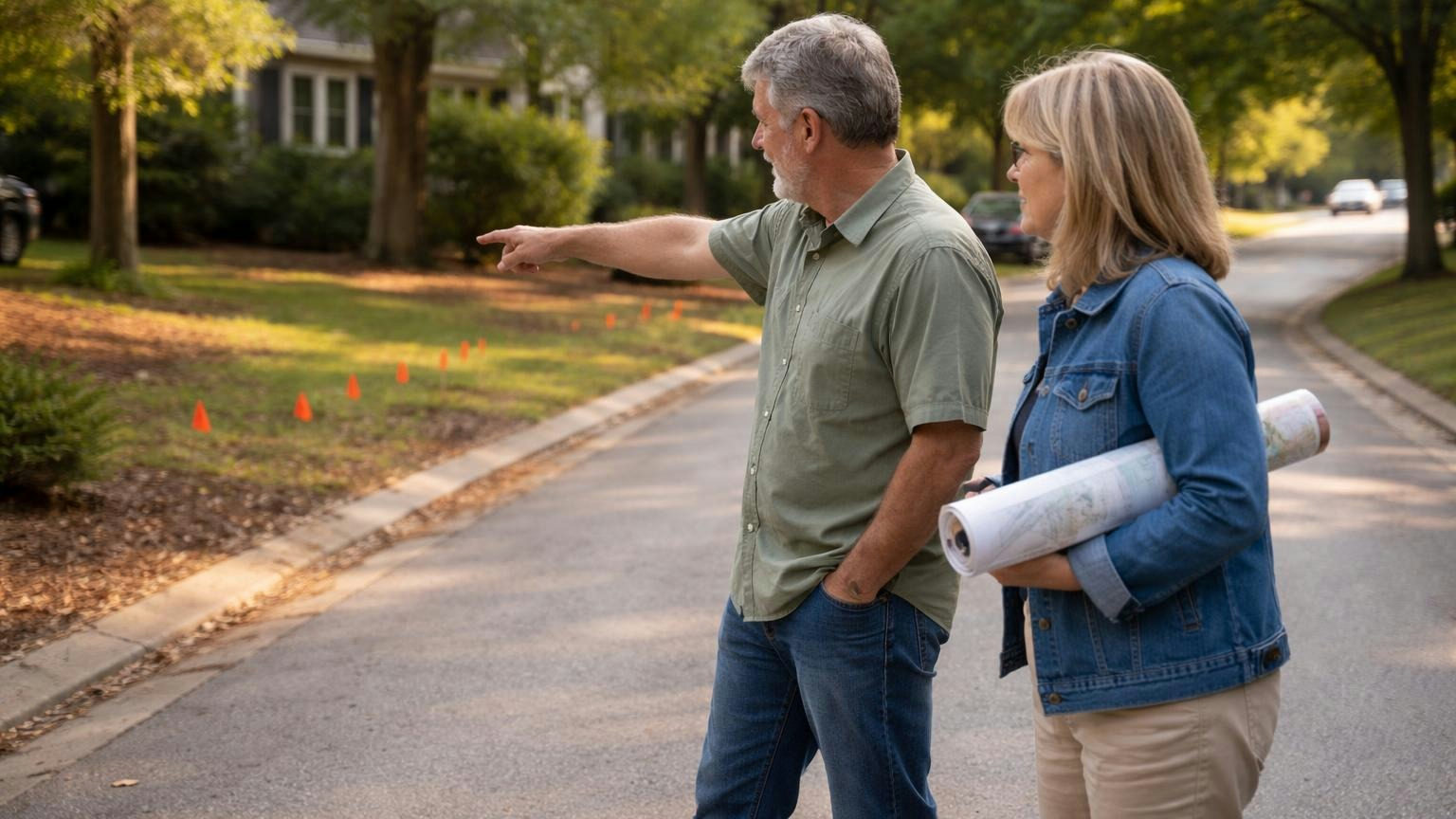
An easement on the plat says water may run there, not who keeps it clear. Do not assume the county does:
If you have any type of drainage feature on your property, maintenance is the responsibility of the property owner. — Guilford County, North Carolina, Drainage Concerns
Guilford County adds that drainage features "are often shared by two properties, thereby making maintenance responsibilities shared." The Town of Carrboro maintains storm drains in public rights-of-way, leaves the ones on private property to owners, and notes, "Most drainage easements in Carrboro are private." Find your county's or town's version and put its answer in the swale row.
The hard seven: One question each
- Fences. The owner's improvement, or a perimeter fence on common area? A fence shared by two lots needs a line on who pays.
- Mailboxes. For a cluster box, find the mode of delivery agreement and read the "owned/maintained by" line. The district packet says each homeowner should get a copy at move-in, so ask the post office, the developer and your longest-standing neighbors. It also quotes the Postal Operations Manual: "Purchase, installation, and maintenance of mail receptacles are the responsibility of the customer." The chart names which customer.
- Sidewalks. In the public right-of-way, or on common area? On a public street, the town or state may be the first call, not the board.
- Driveway aprons. Does the strip between curb and sidewalk sit in the right-of-way? If so, write down what the town or the state expects of the owner.
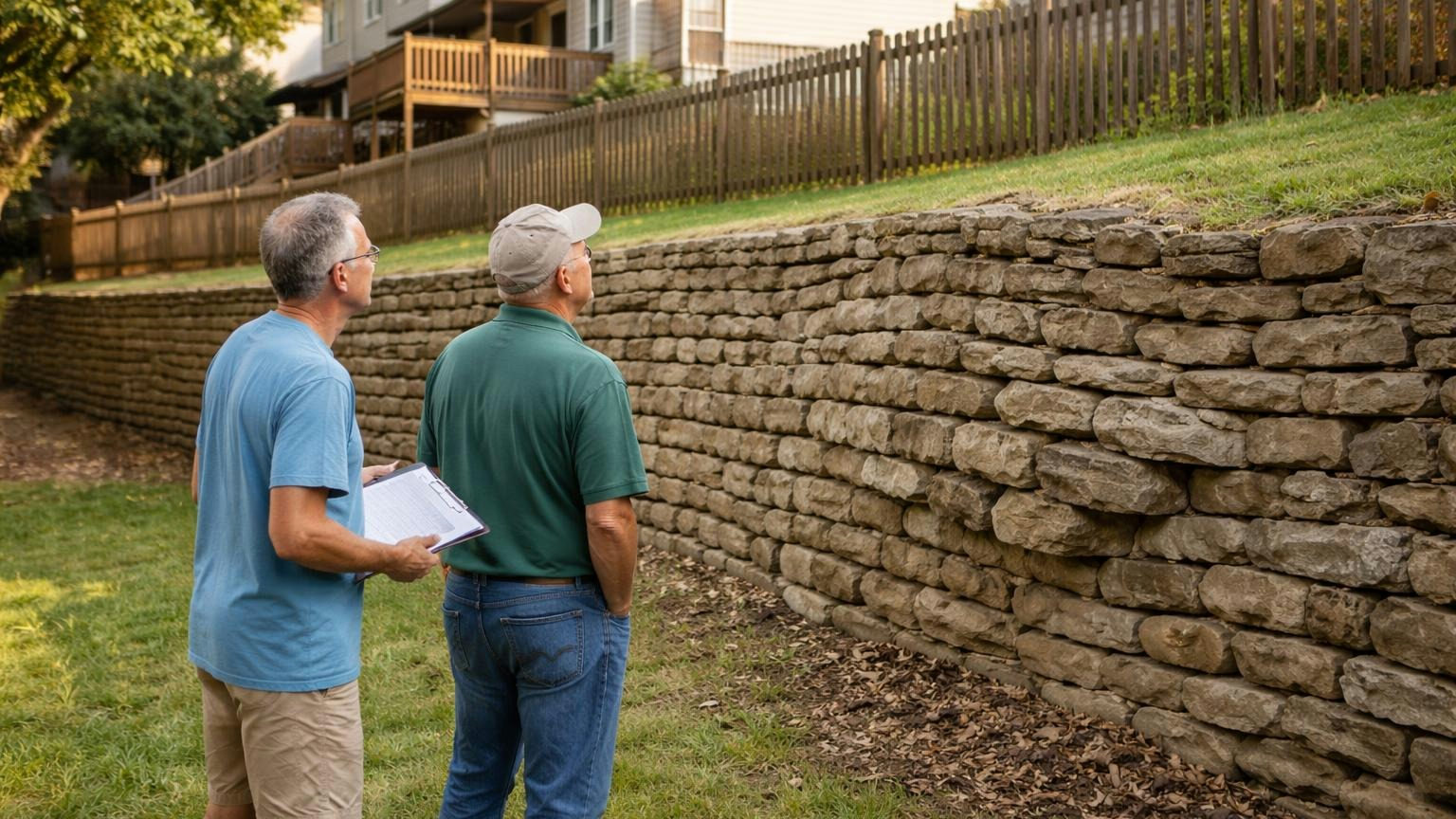
- Retaining walls. On one lot, across several, or on common area? A wall built across three backyards needs a sentence from the declaration.
- Drainage swales and pipes. Inside an easement, on whose lot? Then the county's answer, then the declaration's.
- Trees on a lot line. Whose lot is the trunk on? Guilford County also asks owners to keep drainage easements free of large obstructing vegetation, such as trees.
When it breaks anyway: Damage and the hearing
In North Carolina, if an owner is legally responsible for damage to a common element, the association may tell the owner to repair it, or repair it and recover the cost (§ 47F-3-107(b)). If the association's agent damages a lot while acting as its agent, the association must repair it or reimburse the owner, and is liable for the owner's losses (§ 47F-3-107(c)).
$10,000 is the most a North Carolina association's own hearing panel can decide on a damage claim under the Planned Community Act. A larger claim goes elsewhere, as the law otherwise provides. — N.C.G.S. § 47F-3-107(d) and § 7A-210
Either side can ask for that hearing, before a panel the board appoints or, if it appoints none, before the board itself, with notice, a chance to be heard and a decision. An owner's liability becomes an assessment secured by the association's lien; the association's, the owner may offset against what they owe. Put that route on the back of the chart.
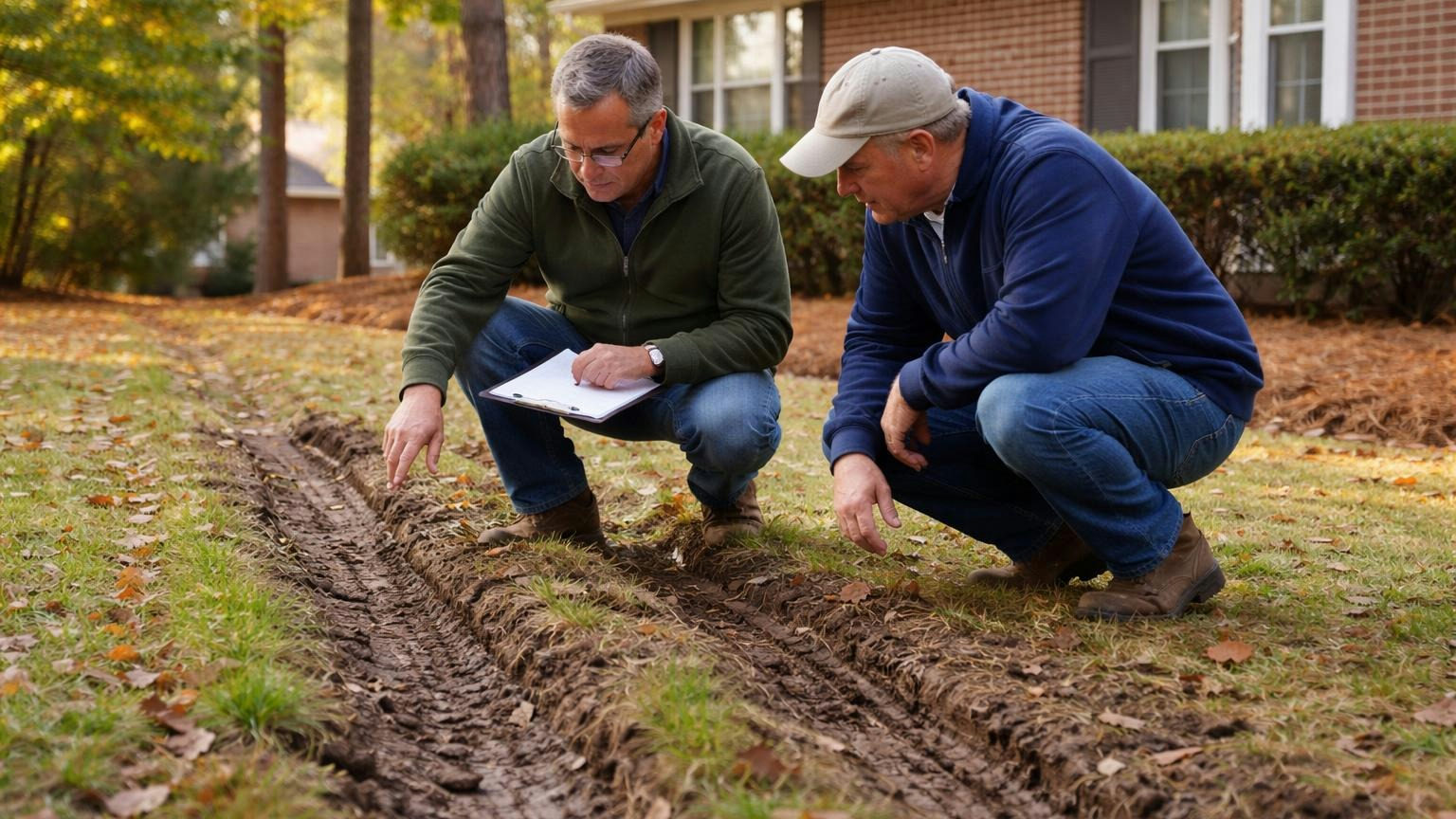
Adopt it: One vote, three places
Until the board adopts it, the chart is one member's opinion. At an open meeting, say:
"This chart doesn't change who owns anything. It shows what our recorded documents already say, page by page. I move we adopt it as our reference and give it to every owner."
- Into the minutes, with the motion and the date.
- Into the welcome packet every new owner gets.
- Onto the website or shared drive, beside the declaration.
The chart summarizes the declaration; it cannot overrule it. A row the papers leave open is a question for your attorney before it becomes a rule.
In South Carolina If the board adopts any part of the chart as a rule, the HOA Act says rules must be recorded with the county by January 10 of the year after adoption "in order to remain enforceable" (S.C. Code § 27-30-130(B)(2)).
Knowing which items are the association's also tells you what your reserve study should count:
What Percentage Should Your HOA Reserve Fund Be Funded At?

Frequently asked questions
In an HOA, who is responsible for maintenance, the owner or the association? Whatever the recorded declaration says. In North Carolina, if it is silent, the Planned Community Act sets the default for most communities: the association maintains the common elements and each owner maintains their lot and its improvements (§ 47F-3-107(a)). South Carolina's HOA Act has no default, so the declaration decides.
Who maintains a drainage swale or pipe that crosses my lot? Check the plat (is it in an easement?), the declaration (does it assign drainage to the association?), and your county or town (does it maintain anything on private property?). Guilford County, North Carolina, for example, says drainage features on private property are the owner's responsibility.
Who pays to fix a damaged cluster mailbox? Not the Postal Service, as a rule: its manual puts purchase, installation and maintenance of mail receptacles on the customer. Which customer, the association or the owners, is set by the declaration and the mode of delivery agreement. Ask the post office or the developer for a copy.
The bottom line: One page ends the fight
Many maintenance arguments were answered long ago, in a declaration article, a plat line, a county policy or a postal form. The chart puts them on one page, in every owner's hands before they need it.
The free Who-Fixes-What Register has the seven hard rows ready to fill in, a column for the page that settles each one, the damage-claim route, and the motion to read into the minutes.