
Can software replace an HOA management company? For the coordination work, yes — dues, records, homeowner answers, meetings, and the books can all run on a system built to do them, without a company standing between the board and its own community. What software doesn't replace, and was never really what boards were buying in the first place, is judgment: which vendor gets picked, what the real number is, what happens next. The board-owned model doesn't remove that judgment from anyone. It removes the caseload, the markup, and the log-in wall standing between the board and the coordination work a management fee currently buys.
That's the shift this week has been building toward. Monday's piece mapped what a management contract actually costs beyond the invoice. Tuesday's piece explained why boards go looking for that coordination in the first place — not because they can't run a community, but because the tools they had ran out of room. Wednesday's piece put numbers on what fragmentation costs in response time, visibility, and lost institutional knowledge. This is what the alternative actually looks like in practice — not a pitch for a product, but a description of a model that wasn't available to boards until recently.
Self-managing no longer has to mean doing it by hand.
The Same Five Jobs, a Different Owner
Every management contract, stripped down, buys five things: collecting dues, holding records, answering homeowners, running meetings and votes, and reporting the money. None of that changes in a board-owned model. The five jobs are still the five jobs. What changes is who runs them and where they live.
In a management-company model, those five jobs run through a person — a manager with a caseload, a company's systems, a company's format. In a board-owned model, the same five jobs run through software the board itself can see into: dues invoice and follow up automatically, homeowner questions get answered without waiting on a shared inbox, records and votes live in one place the board controls, and the books update in real time instead of arriving as a monthly report. The work doesn't disappear. It stops depending on one person's Tuesday night, or one company's caseload, to get done.

What Actually Changes for the Board
Four specific things move back to the board's side of the table:
Vendor selection stays visible. The vendor-markup practice Monday's piece documented — some management companies mark up vendor invoices before passing them to the association, without disclosing the gap — has no equivalent in a board-owned model. A board running its own system chooses and pays vendors directly; there's no intermediary invoice for a markup to hide inside.
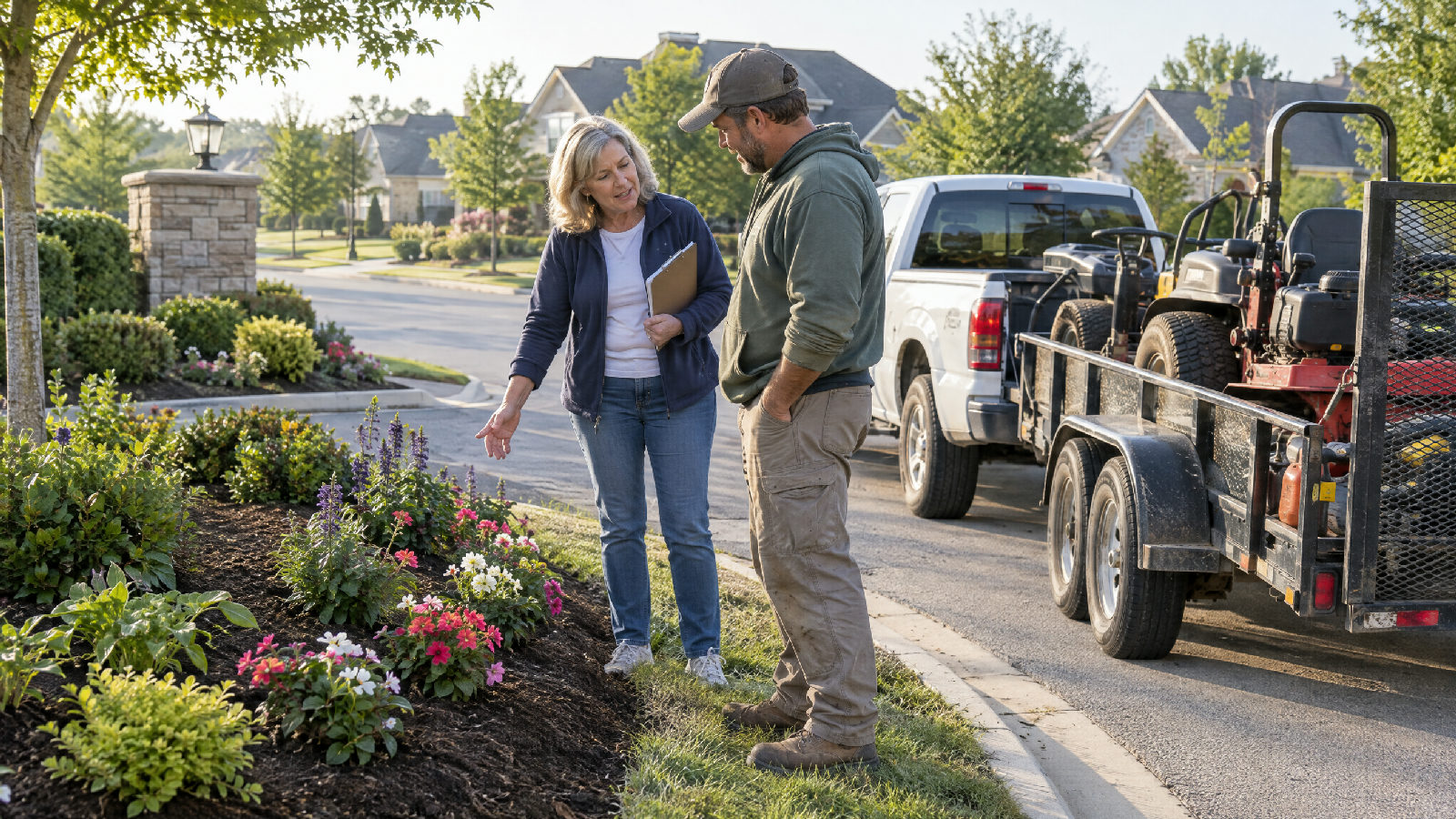
The books are the board's, in real time. Financial opacity was the single most common driver behind South Carolina's HOA complaints referenced earlier this week. A board-owned system replaces the monthly report with a ledger every board member can open whenever they want — nobody waits for a company to produce a statement.
Records don't reset when someone leaves. The institutional-knowledge gap Wednesday's piece measured is on loan to a manager's memory, not stored anywhere the board controls. In a board-owned model, the reserve-study context, the vendor history, and the reasoning behind last year's decision live in the system itself — not in whichever person happened to be holding the file.
Response time isn't capped by a caseload. The 30-to-60-day response norm this week's numbers documented exists because a shared inbox split across a dozen communities can't move faster without someone getting missed. Software answering directly from the community's own records doesn't have a caseload to divide.
The work doesn't disappear. It stops depending on one person's Tuesday night, or one company's caseload, to get done.
This Is a Model Change, Not an Attack on the People Doing the Job
None of this is a claim that community managers are doing their jobs badly, or that the coordination work is easy. For most of the industry's history, hiring a person was the only way to buy coordination capacity a volunteer board didn't have — that's a real service, done by real professionals, and it's part of why most U.S. community associations are professionally managed today. What's changed isn't the value of coordination. It's that modern software can now do the same five jobs continuously, at the community's own direction, without a caseload standing between the board and its own operations. That doesn't make the management-company model wrong for every board — some genuinely want to hand the whole job to someone else, and that's a legitimate choice. It means self-managing no longer has to mean doing it by hand.
What This Looks Like in a Real Community
This isn't theoretical. RebelHOA was built by someone who sat on an HOA board — who dealt with the management company, and with the gaps the self-managed software he could buy never closed. It runs dues, records, and homeowner questions the same way this piece describes: as a system the board can see into, not a service the board waits on.

Bottom line: A board-owned operating model doesn't ask a volunteer board to do more work by hand. It asks the same five jobs a management fee buys to run on a system the board actually controls — visible vendors, real-time books, records that outlast any one person, and answers that don't wait on a caseload. Monday's Management Cost Audit is where a board finds out what the old model is costing it. Boards that have already run that number and are ready to make the move can see the exact mechanics of leaving a management company — this piece is about the model they're moving to, not the process of getting there.
FAQ
Can software really replace an HOA management company? For the coordination work, yes — dues, records, homeowner answers, meetings, and financial reporting can all run on a system built to do them. What it doesn't replace is board judgment: which vendor to hire, what to do with the community's money, and what happens next. A board-owned model keeps that judgment with the board and moves the coordination workload onto software instead of a manager's caseload.
Does a board-owned operating model mean the board has to fire its management company? No — it's a model choice, not an all-or-nothing rule. Some boards genuinely want the coordination work handled entirely by someone else, and that's a legitimate choice. A board-owned model is for boards that want to keep running their own community but no longer want to do the coordination by hand, on a spreadsheet, or through a shared inbox.
What actually changes when a board owns its own operating system? Four things move back to the board: vendor selection stays visible instead of running through a company's markup, the books update in real time instead of arriving as a monthly report, records and institutional knowledge live in the system instead of one person's memory, and homeowner response time isn't capped by a manager's caseload.
Is a board-owned operating model the same as switching to different HOA software? Not exactly. Most HOA software is a records portal — a place to store documents. A board-owned operating model runs the actual coordination work (dues follow-up, homeowner answers, meeting logistics) rather than just storing information about it, which is closer to what a management company's staff does than what a typical software portal does.
Has a board-owned operating model actually been run in a real HOA, or is it theoretical? It's running today. RebelHOA was built by someone who sat on an HOA board and dealt with the management company himself, and it runs dues, records, and homeowner questions the same way this piece describes.