
"Let AI handle it" is not a plan. It's a wish dressed up as one — and for a board that has just spent three days reading about job descriptions that quietly grew too big (Monday), knowledge that lives in one person's head instead of the community's records (Tuesday), and the real invoice that shows up when a seat sits empty too long (Wednesday), "let AI handle it" is exactly the kind of vague relief that gets a board into new trouble instead of out of old trouble.
The honest version of that sentence has to answer a harder question first: handle which parts, and who's still holding the parts it doesn't touch?
The wrong unit of measurement is "the job"
Ask "can AI run the treasurer's seat?" and you'll get either a breathless yes or a nervous no, and both answers are wrong for the same reason: a board seat isn't one task, it's a bundle of them, and the bundle doesn't automate as a single unit. The right question is task by task, not role by role — and that's not a RebelHOA talking point, it's the finding of the largest labor-economics study ever done on the subject.
McKinsey Global Institute analyzed more than 2,000 discrete work activities across 800 occupations and found that fewer than 5% of occupations consist entirely of tasks that can be fully automated with demonstrated technology — but about 60% of occupations have at least 30% of their constituent activities that already could be. Almost no job disappears whole. Most jobs have a third or more of what they actually do sitting well inside the boundary of what a system can already handle correctly.

A volunteer treasurer's seat is not a job in McKinsey's dataset, but it's built the same way every real job is: as a bundle of distinct tasks with wildly different characters. Some of those tasks are a rule applied consistently — pull the balance, flag who's 30 days behind, generate the same notice with this month's name and amount filled in. Others are a judgment call that changes based on facts a rule can't see — does this family get a payment plan instead of a lien, given what the board knows about their situation this month that it didn't know last month. Treat the whole seat as automatable and you hand a judgment call to a system that has no business making it. Treat the whole seat as untouchable and you keep a volunteer typing the same reminder into the same email fifty times a month, which is the exact workload problem the last three days of this week's reading described.
Delegating the task isn't new. It's already the law.
Here's the part that should settle any nervousness about whether handing recurring tasks to a system is some kind of governance shortcut: it isn't. Nonprofit corporate law has drawn this exact line for decades, and it draws it the same way McKinsey's data does — by task, not by title.
About 60% of occupations have at least 30% of their constituent activities that already could be fully automated with demonstrated technology. — McKinsey Global Institute
California's Corporations Code — the statute most HOA attorneys point to when they explain how a nonprofit board is actually supposed to work — says a board "may delegate the management of the activities of the corporation to any person or persons, management company, or committee however composed," but only so long as "the activities and affairs of the corporation shall be managed and all corporate powers shall be exercised under the ultimate direction of the board." Delegating the management of an activity has always been legal and normal. What a board cannot delegate — what stays with the people who were elected, no matter who else is doing the typing — is the ultimate direction and the responsibility for the outcome.
That's precisely the distinction a hired bookkeeper, a landscaping vendor, or a collections attorney already relies on. Nobody argues that hiring a bookkeeper to reconcile the bank statement means the board "outsourced its finances." The board still approves the budget, still signs off on anything unusual, still owns the number at the end of the month. A system that pulls the balance, flags the discrepancy, and drafts the notice sits in that exact same legally settled category. It's not a new kind of delegation. It's the oldest kind there is, running faster.

The split, named plainly
So here is the line, stated in terms an HOA board actually deals with — not the abstraction, the specifics:
Stays with a human, always:
- Whether a violation gets a warning or a fine, and how big the fine is
- Whether a hardship exception gets granted, and on what terms
- Any vote your governing documents require the board to take — special assessments, contracts above your bylaws' threshold, anything that changes what residents owe or are owed
- What the board tells the community after something goes wrong
- Deciding to hire, fire, or renew a vendor or a manager
Can move to a system, correctly, today:
- Tracking who's paid, who hasn't, and for how long
- Generating this month's version of a notice you send every month, with the right name, date, and amount already filled in
- Reconciling the bank feed against the ledger and flagging what doesn't match
- Answering "what's my balance" or "when's the next meeting" at 11pm on a Tuesday, correctly, without a board member's evening
- Watching a number against a threshold the board already set — reserve percent-funded, delinquency rate — and raising a flag before it becomes a crisis, not after
Notice what the first list has in common: every item on it is a decision that changes an outcome for a specific person or the association's exposure, made with context a rule can't fully capture. Notice what the second list has in common: every item is the same procedure, applied consistently, that a human was doing correctly a thousand times before a system ever touched it — which is exactly why it was safe to hand over in the first place. Nothing on the second list was ever really a judgment call. It just felt like one because a person was the one doing it.

The honest boundary, stated so you can check it
Here's the credibility test, and it's worth being blunt about it: a system does not sit at your table. It does not decide who's right in a fence-line dispute between two neighbors who each believe their own version of events. It does not tell a widow three payments behind that this is the month the association has to file a lien — that conversation is a human's, every time, because it requires something a rule genuinely cannot supply: judgment about a specific person, made by someone accountable to the community for making it.
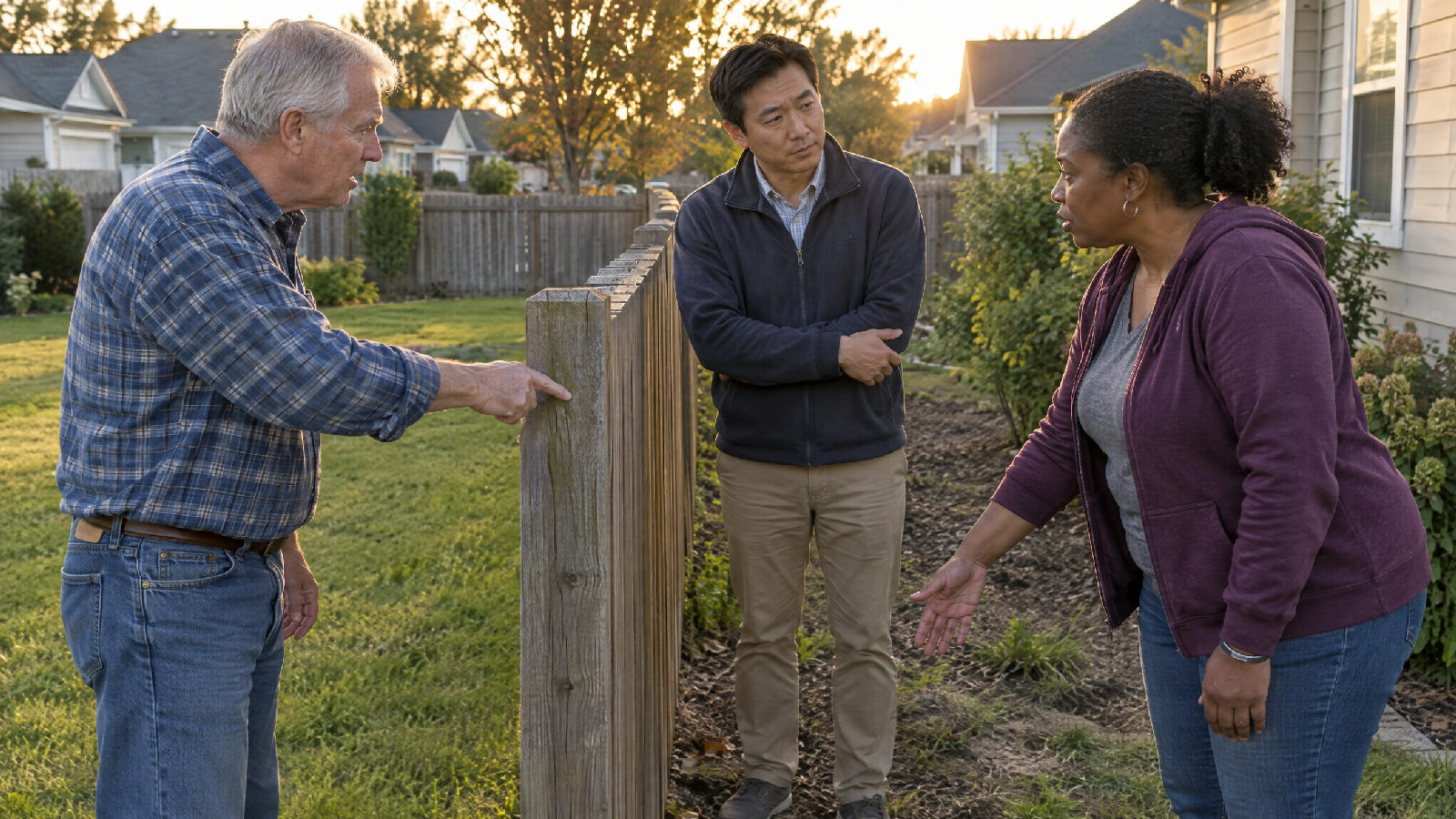
If a company selling you "AI for your HOA" can't tell you, specifically, which decisions never leave a human — not "we use human oversight," but the actual list — that's the sign the vagueness is doing the company a favor and your board a disservice.
What this actually buys the seat
This is the mechanism behind the belief this whole week has been building toward: a community doesn't get better board members by training the ones it has harder, and it doesn't get a fillable seat by hiring away the whole job to a management company that still makes the board do the underlying thinking. It gets there by moving the recurring layer — the part that was never a judgment call — off the volunteer's evening entirely, and leaving the judgment exactly where it belongs: with the people the community elected to exercise it.
Nothing on the second list was ever really a judgment call. It just felt like one because a person was the one doing it.
That's the split RebelHOA's agent workforce is built around: dues tracked and collected automatically, records and votes kept in one place any board member can check, and homeowner questions answered instantly and correctly around the clock — without a board member touching any of it — while the decisions on the first list stay decisions, made by your board, every time. It's built this way in part because it was built by someone who has sat on an HOA board himself and watched a volunteer's Tuesday evening disappear into exactly the recurring work this piece just listed.

The tool: score your own board's duties
Reading a list of examples is easy. Sorting your own board's actual duties is the part that produces a real answer, so here's a tool built for exactly that: the System-Readiness Scorecard. For any recurring duty on your board, score it 0–2 on four short questions — does it follow the same steps every time, does a rule decide the outcome or does a person, does getting it wrong mean redoing paperwork or facing real exposure, and does your governing documents require a board vote on it. Add up the four scores. A 6–8 is ready to hand to a system today. A 3–5 needs a system to prep it and a human to sign off. A 0–2 is a judgment call wearing a task's clothing — never move it, no matter how repetitive it feels.
Score any recurring duty 0–2 on four short questions, then add up the four scores.
- Same steps: Does it follow the same steps every time?
- Who decides: Does a rule decide the outcome, or does a person?
- If wrong: Does getting it wrong mean redoing paperwork, or facing real exposure?
- A vote: Do your governing documents require a board vote on it?
It's the natural next step after Monday's Job Description Audit: that tool sorted your seat's duties into judgment and recurring. This one tells you, specifically, which of the recurring ones are actually ready to move — and which only look ready because a person has been doing them competently for long enough that nobody stopped to check.
Why No One Will Join Your HOA Board (It's Not the Volunteers — It's the Seat)
Frequently asked questions
Can AI make decisions for an HOA board? No — not the decisions that carry legal or financial consequence for a specific resident or the association, like fines, exceptions, assessments, or contracts. What AI can correctly do is the recurring, rules-based layer underneath those decisions: tracking, reconciling, drafting, and answering routine questions, so the board's time goes to the calls only a human should make.
What HOA board tasks are safe to automate? Tasks that follow the same steps every time and where a rule — not a person's judgment about a specific situation — determines the right outcome: late-payment tracking and notices, bank reconciliation, records requests, meeting reminders, and answering routine resident questions like account balances or upcoming due dates.
Run the scorecard on your board's actual list this week. Whatever scores a 6 or higher was never really your judgment call to begin with — it was just waiting for something faster than a volunteer's Tuesday evening to take it.