The short answer
- When a resident reports a dangerous tree, log it with its date and reply in writing. Keep both, and what you decide, in the board's files, never one volunteer's inbox.
- Rate it the way a U.S. Forest Service tree risk form does: what it could hit, times its worst defect.
- Answer in writing, decide, and record the date the work was done.
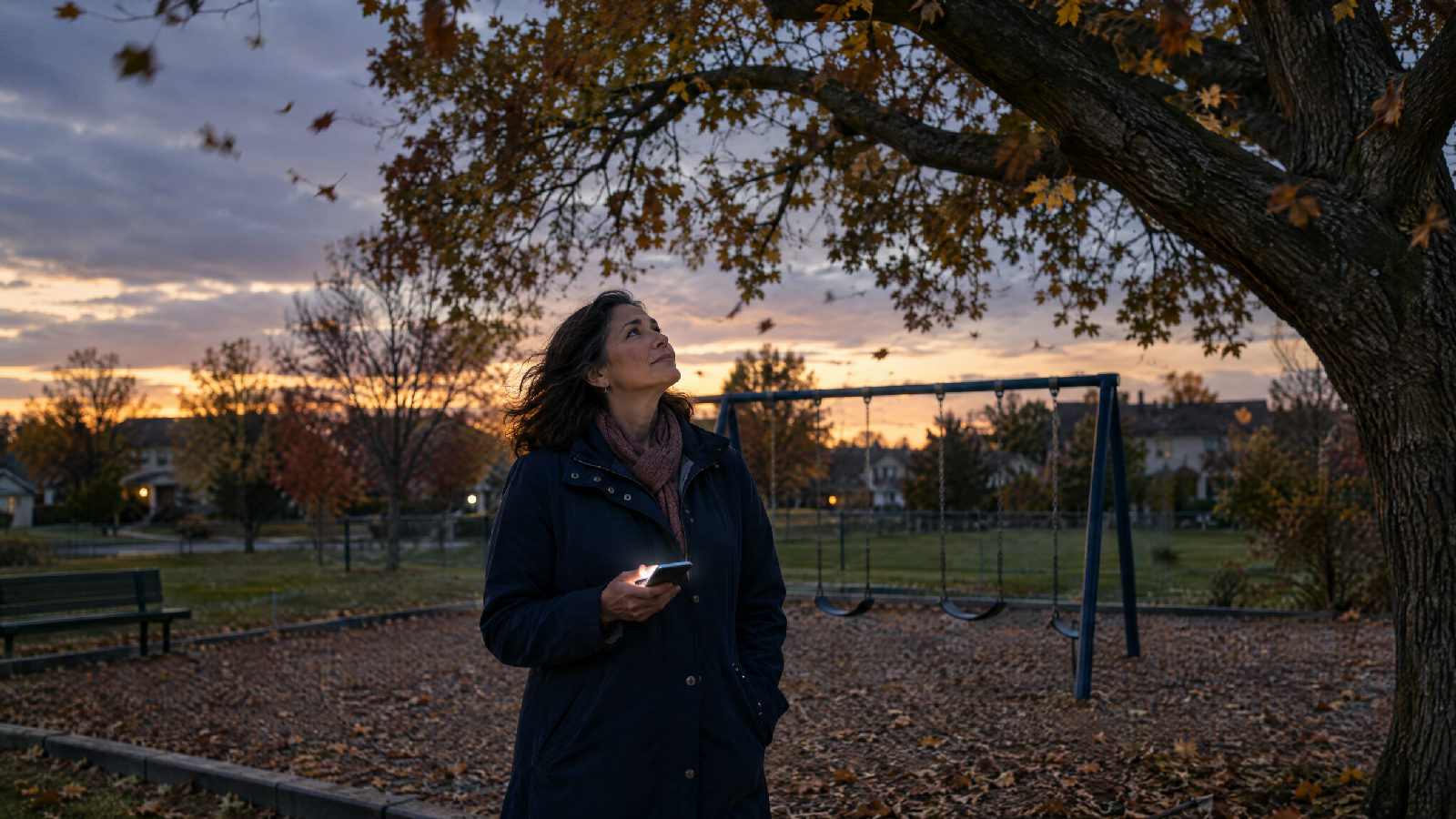
Picture an email in April. "The big oak behind the playground has been leaning more since the storm. Can someone look at it?"
It goes to the treasurer's personal address, because that is the one residents have. In September, the treasurer hands a new volunteer the bank login, the ledger and the budget. The email stays in an inbox nobody else can open.
Then a windy night in November. The board's first question is the one nobody can answer: did anyone tell us about this tree?
Somebody did. In writing. Seven months ago.
The record: A tree report is a fact about the board
A written tree complaint is the moment the association was told, with a date on it. What the board did next is the other half of that record.
Whether the association is responsible when a common-area tree falls is a question for state law, your governing documents, your insurer and your attorney. What your board controls is simpler: whether, on the day someone asks, you can show what you were told and what you did.
That record usually lives in whatever inbox the resident wrote to. When that person steps away, it leaves too.
HOA Handover Checklist: The Five Open Items Boards Lose
The rating: What it could hit, times its worst defect
You do not need an arborist to sort your trees. A tree risk form the USDA Forest Service's Southwestern Region uses for recreation sites does it with two numbers.
The target is what the tree would hit if it failed: 2 for people, permanent structures and vehicles, 1 for major trails and roads. The defect is how likely the tree is to fail, from 0 (no visible defect) to 3.
Calculate risk rating by multiplying target value and hazard value of the worst defect. — USDA Forest Service, Tree Risk Assessment Form
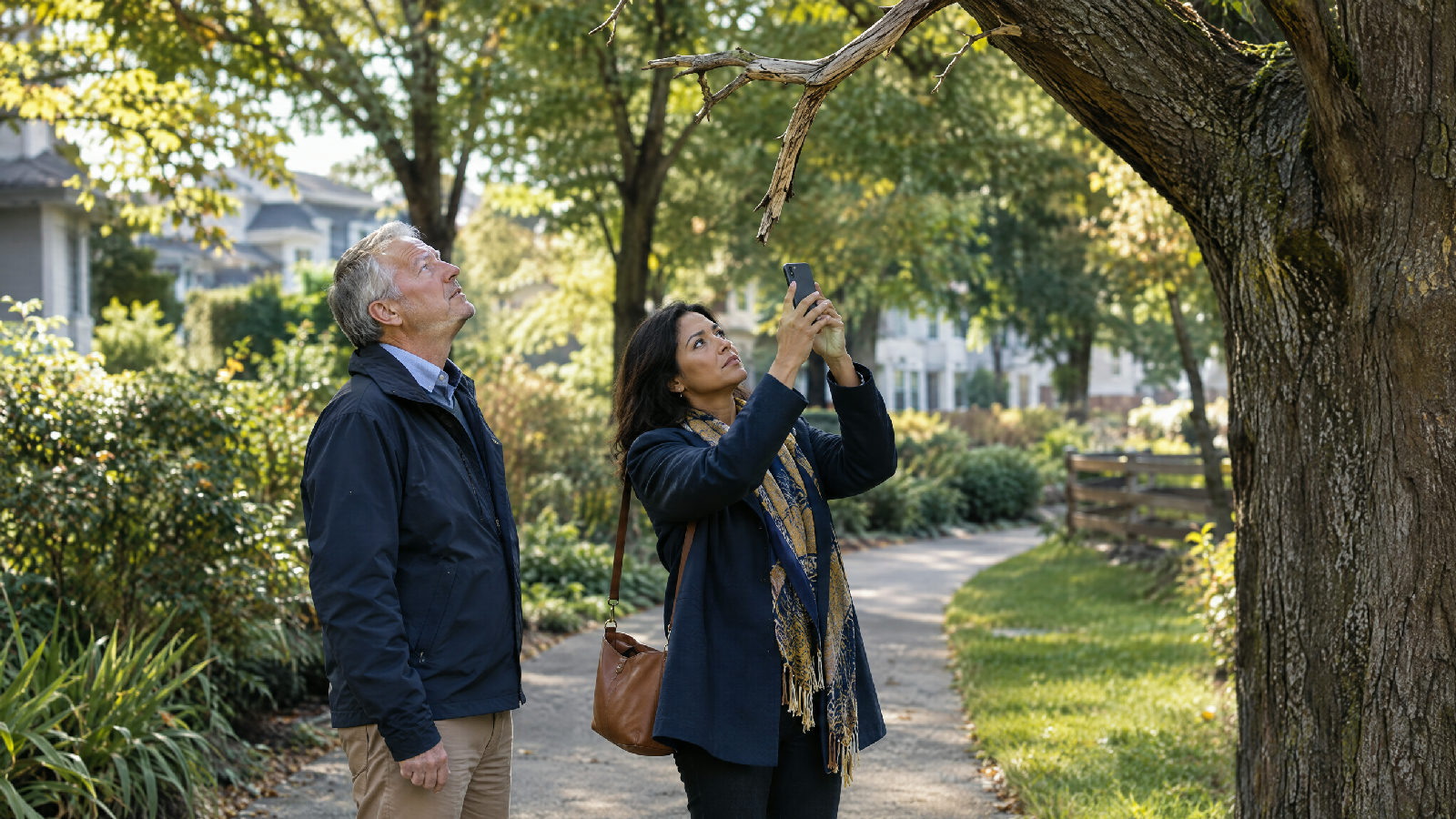
So a cracked limb over the playground scores 2 × 3 = 6, the top of the scale. Over a walking path, 3. A dead tree at the back of the woods, over nothing, waits its turn.
The signs: What the form calls severe
The form's top defect row (a 3) lists what a person on the ground can often see:
- A dead tree, or a dead top or branch more than 6 inches across.
- A severe crack, or a crack at a fork.
- An unnatural lean.
- Wounds or cankers (dead or missing bark) around more than half the trunk.
- Exposed roots with decay, on more than half the roots.
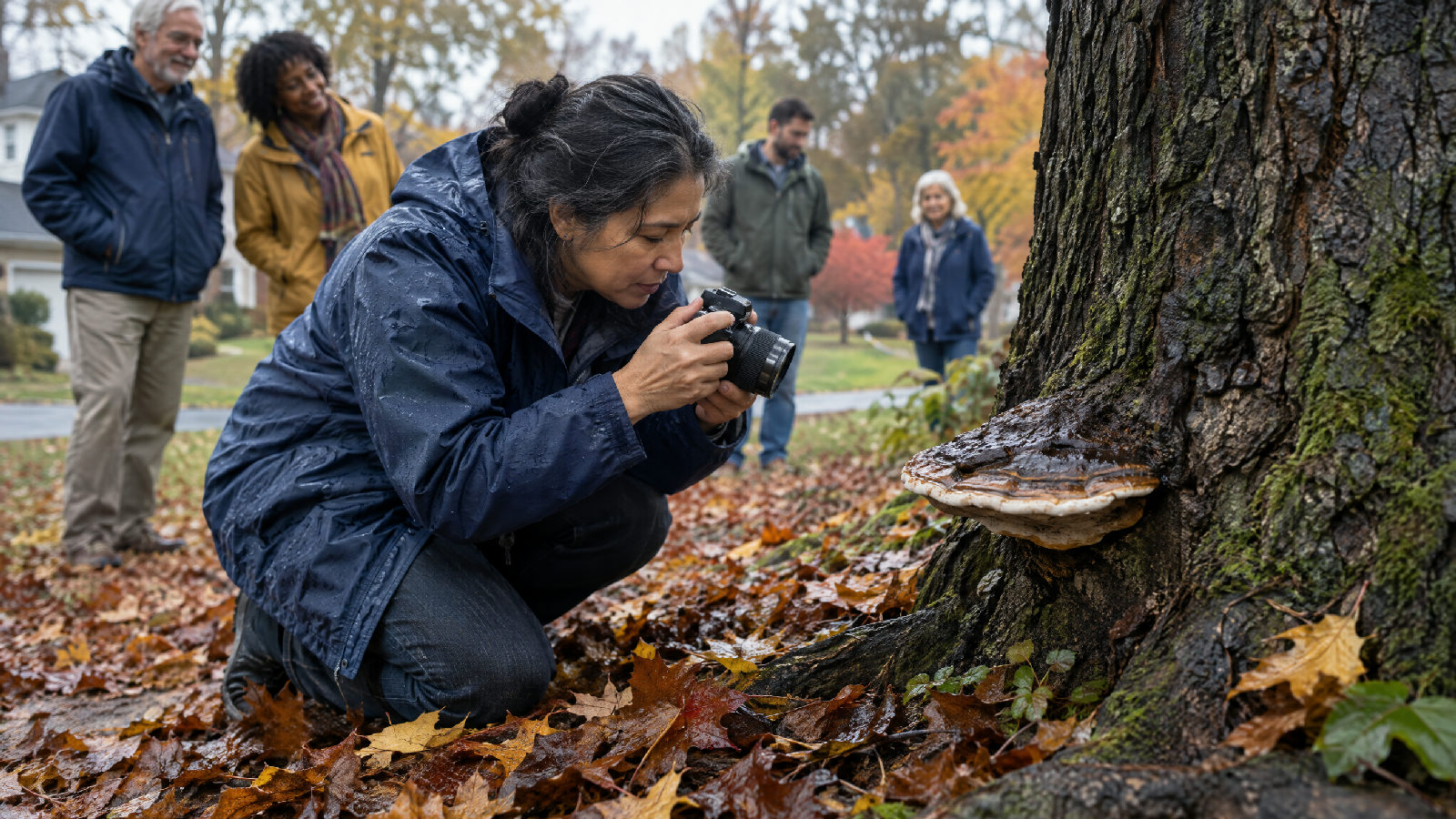
- Root disease, or severe stem decay, such as certain shelf-like fungi (conks).
This does not make you the expert. It tells you which trees need one. When in doubt, call a certified arborist and keep their written report with the tree's record.
The reply: Five steps from report to record
From the resident's email to a closed record.
- Log it: The date, who reported it, where the tree is, what they saw.
- Reply: In writing, within a week: who will look, by when.
- Look: Two board members, a photo of the tree and of what is under it.
- Decide: Remove, prune or monitor. Arborist when unsure.
- Close: The date the work was done, and a line in the minutes.
Say it like this: "Thank you. Two board members will look at the oak behind the playground by Saturday the 14th." The resident is heard, and the answer sits in writing next to the report.
"Monitor" is a decision, not a shrug: the tree goes on the next walk, with today's photo to compare against. The form calls itself "a record of the overall structural condition of a tree that can be used to determine progression of defects over time". A lean photographed in April and again in October is the same lean or a worse one. Only the record can tell you which.
The walk: Once a year, on purpose
A yearly walk catches the trees nobody reported. For its recreation sites, the form recommends "systematic, annual, documented inspections of trees" and corrective action.
Your version is one afternoon. Walk only the trees that stand over something: the playground, the pool, the paths, the parking, the mailbox kiosk, and homes that back onto the common area. Give each a number, a photo and a line on the log. Then calendar the next walk, with a name beside it.
The handover: The tree log moves with the board
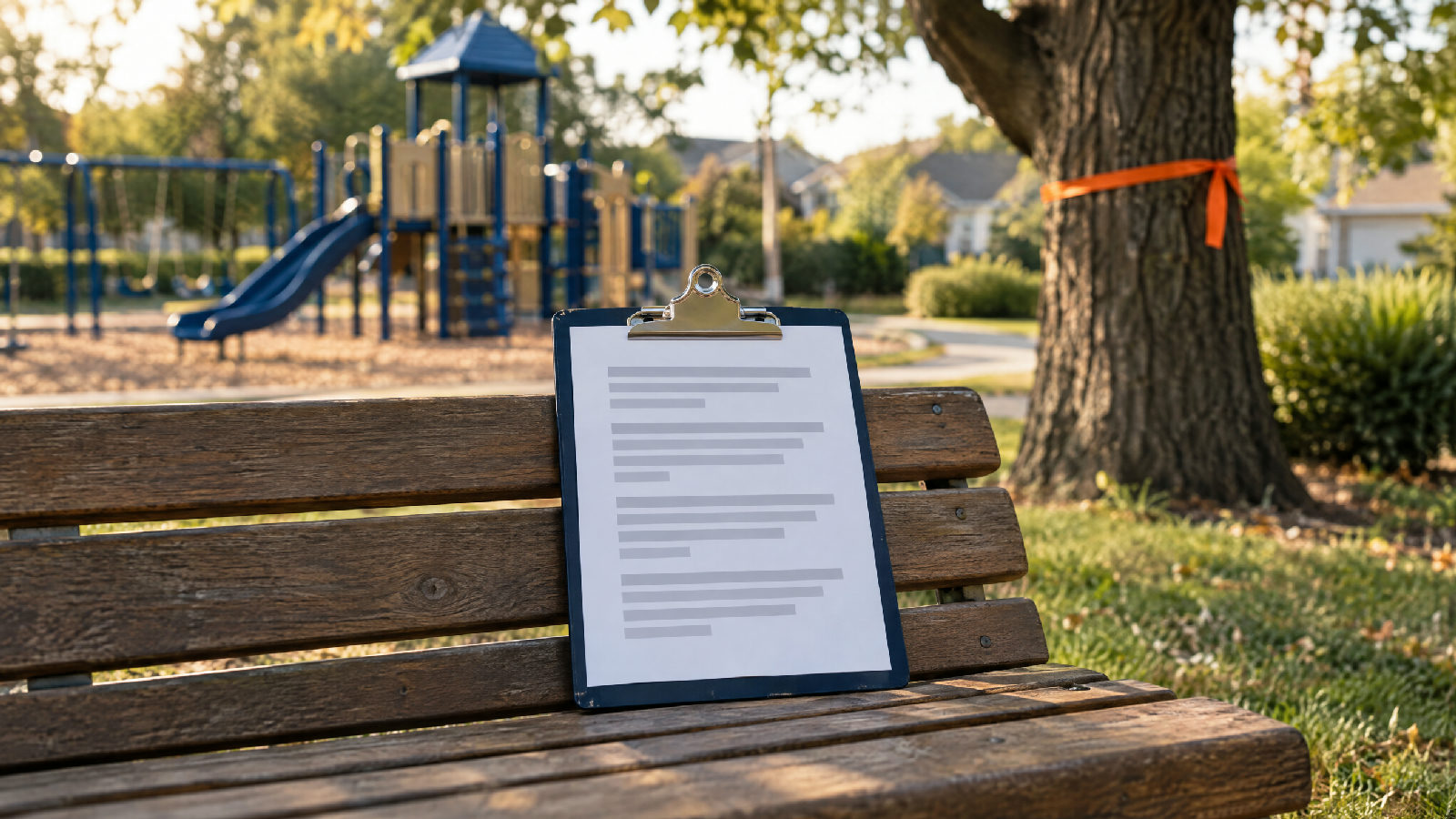
The log, the photos, the arborist's report and every tree email belong in the board's shared files, beside the minutes and the insurance policy.
Then a new treasurer or president opens one file and sees every tree the board was told about, what it decided and when the work was done.
This month, ask every board member to forward any tree email in a personal inbox to the board's address. That one request may recover your most important record.
Check your board in two minutes
- Residents know one board address for tree reports, not a person's email.
- Every tree report from the last two years is in the board's files.
- Each report has a written reply and a dated decision.
- Trees over the playground, pool, paths and homes are numbered and photographed.
- The next tree walk is on the calendar, with a name.
Free with this article: The Tree Report Reply Letter, a fill-in reply to a resident's tree report, with the log line for your board's files.
Frequently asked questions
What should an HOA board do when a resident reports a dangerous tree?
Log it with its date, reply in writing within a week saying who will look and by when, and send two board members to photograph the tree and what it stands over. Decide to remove, prune or monitor, with an arborist when unsure, and record the date the work was done.
Which common-area trees should the board look at first?
The ones that could hit something. A U.S. Forest Service tree risk form multiplies the target (people, structures and vehicles rate highest) by the tree's worst defect, so the playground comes before the back woods.
Where should tree reports and inspection records be kept?
In the board's shared files, beside the minutes and insurance policy, never only in a volunteer's inbox, so the record survives a handover.