The short answer
- An HOA snow removal contract needs a measured trigger, with a place and a separate rule for ice. The National Weather Service never counts freezing rain as snowfall, so a "two inches of snow" trigger can sleep through an ice storm.
- Draw the map: where snow goes, where it must never go, and where no salt goes, near the pond and the plantings.
- Put a name on the 4 AM call, and get the insurance endorsement, not just the certificate. Write all of it down with a date, so it survives the board member who knows it.
Here is a sentence from the National Weather Service's rule book for the people who measure snow: glaze ice that forms when rain freezes on contact "should never be reported as snowfall."
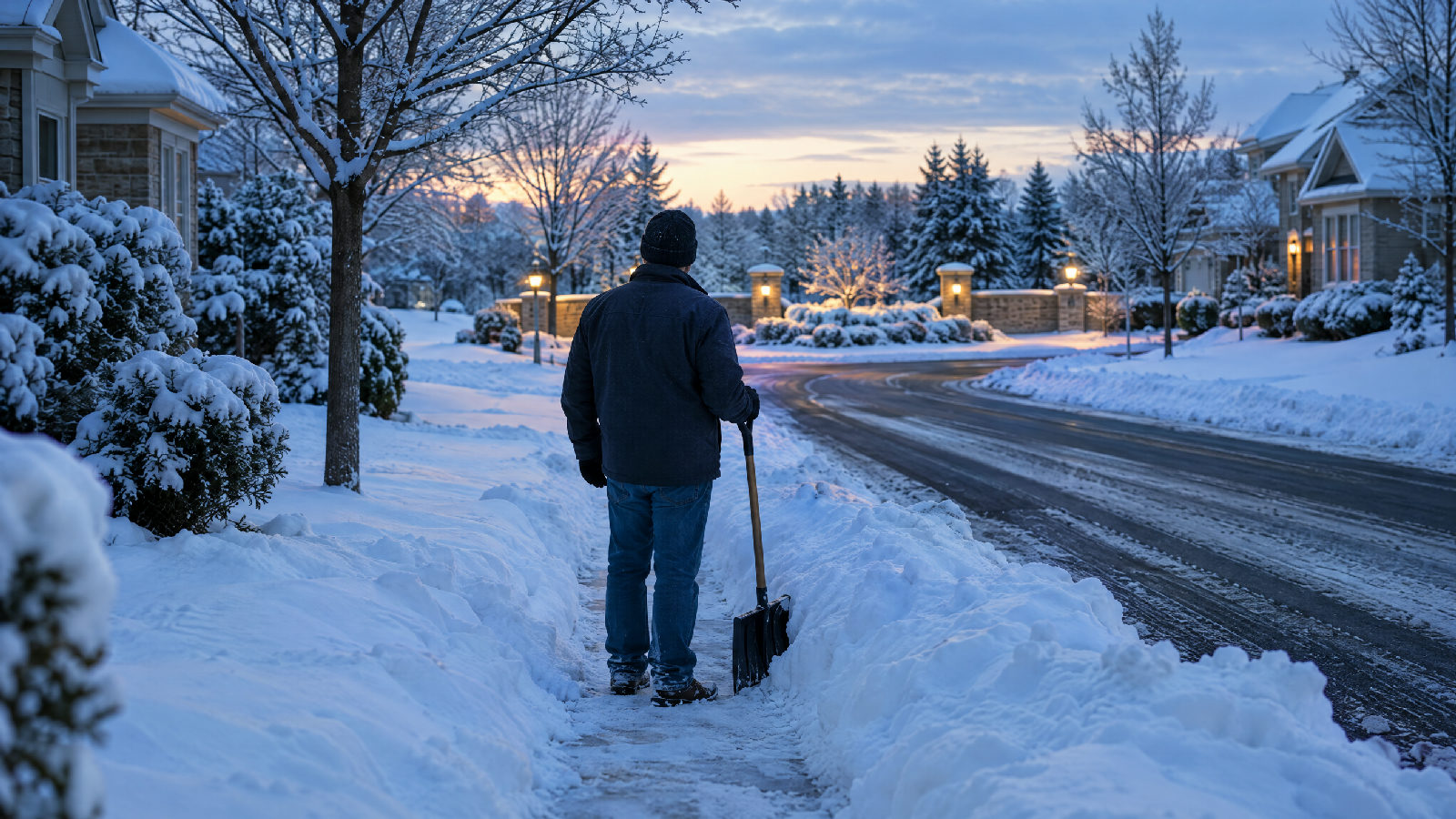
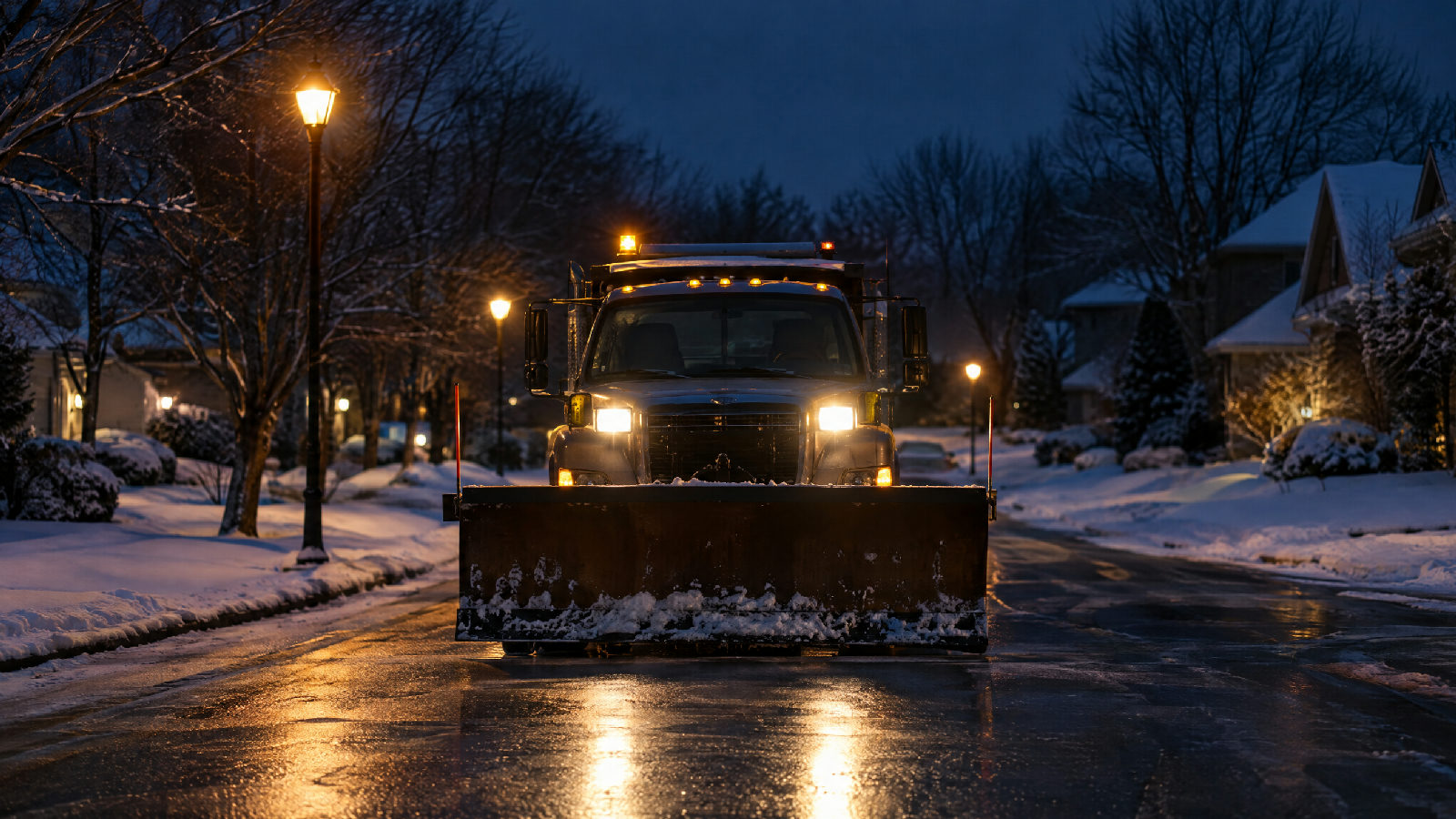
Now read your plow contract. If it says the contractor comes out at two inches of snow, then the night freezing rain coats the entrance hill, the contract has not been triggered. The truck stays in the yard. The first resident down the hill at 6 AM finds out the hard way.
For many communities, fall is when these contracts get signed, renewed or quietly rolled over. This is the list of what to settle before you sign, and what to write down so that one person's memory is not the whole plan.
This piece is general information, not legal advice. Your governing documents, your insurance policy and your association's attorney decide what applies to you.
The trigger: A number, a place, and a rule for ice
Many snow contracts turn on one line: the depth at which the contractor must show up. Three questions decide whether it works.
How deep, on which surface? A walkway is dangerous at a depth a road shrugs off. Set a lower number for walks, steps and the mailbox area than for the streets, and write both.
Measured where, and by whom? The National Weather Service measures new snow on a snow board, set in an open spot away from buildings and trees, and its guidance says measurements should not include the largest drifts or "artificial snow piles (e.g., from snowplows or shoveling near cleared walkways or driveways)." A trigger with no measuring point is an argument waiting for the first invoice. Name the spot, or name the weather report you will both accept.
What about ice? This is the line that is easiest to leave out. Remember the Weather Service's rule: ice from freezing rain is never snowfall, so it never reaches a depth trigger.
So add a second trigger that has nothing to do with depth: any ice on the roads or walks, at any depth, means the contractor treats it. Say when treatment must be finished, too. OSHA's advice to employers is to clear walking surfaces of snow and ice, and spread deicer, "as quickly as possible after a winter storm." "As quickly as possible" is a fine goal and a poor contract term. Pick an hour.

How you pay: Three shapes, three different risks
None of the common shapes is right for every community. Pick one on purpose, knowing who carries the risk of a bad winter.
| The shape | How the bill works | Who carries the risk of a heavy winter |
|---|---|---|
| Seasonal | One price for the winter | Mostly the contractor. You pay the same in a mild year. |
| Per push or per visit | A set fee each time the crew clears the property | The association. Three storms in a week is three bills. |
| Per event | A set fee per storm, however many times the crew comes back | Shared. Read how the contract defines an "event". |
Whatever the shape, two clauses decide the size of the surprise. The first is what happens past the cap: some seasonal deals have a ceiling on visits or inches, and the overage rate is where the money is. The second is what counts as a separate charge: salt, sand, hauling snow off site, and hand-shoveling of steps can be priced apart from plowing. Ask for every one of those rates on paper before you compare bids.
The map: Where snow goes, and where it must not
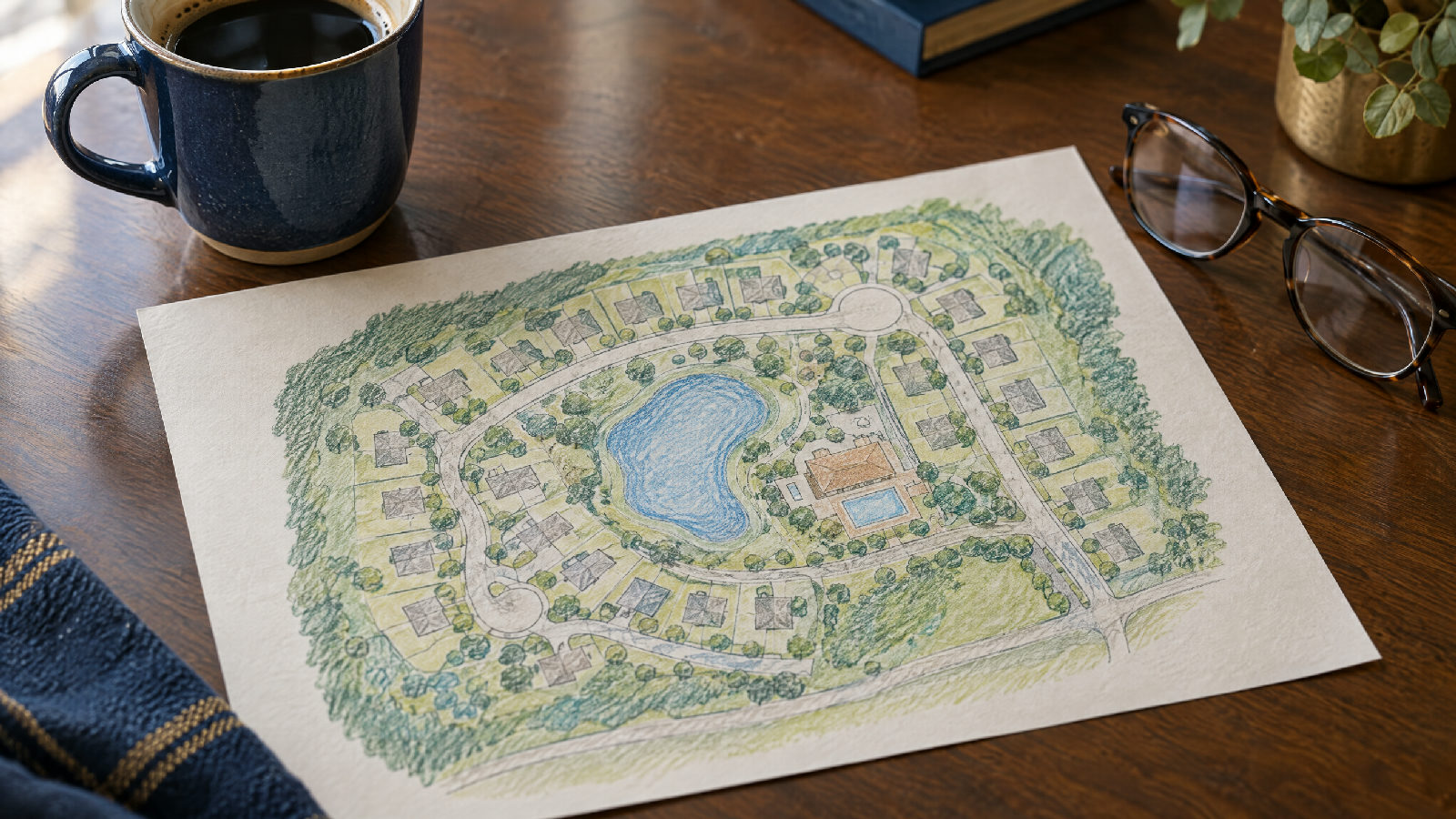
A plow driver at 4 AM knows the map you gave them, or nothing. One page, a simple drawing of the common areas, settles most of the season's complaints before they happen.
Mark these on it:
- Where the piles go. A corner of the overflow lot, a strip of grass that can take the weight.
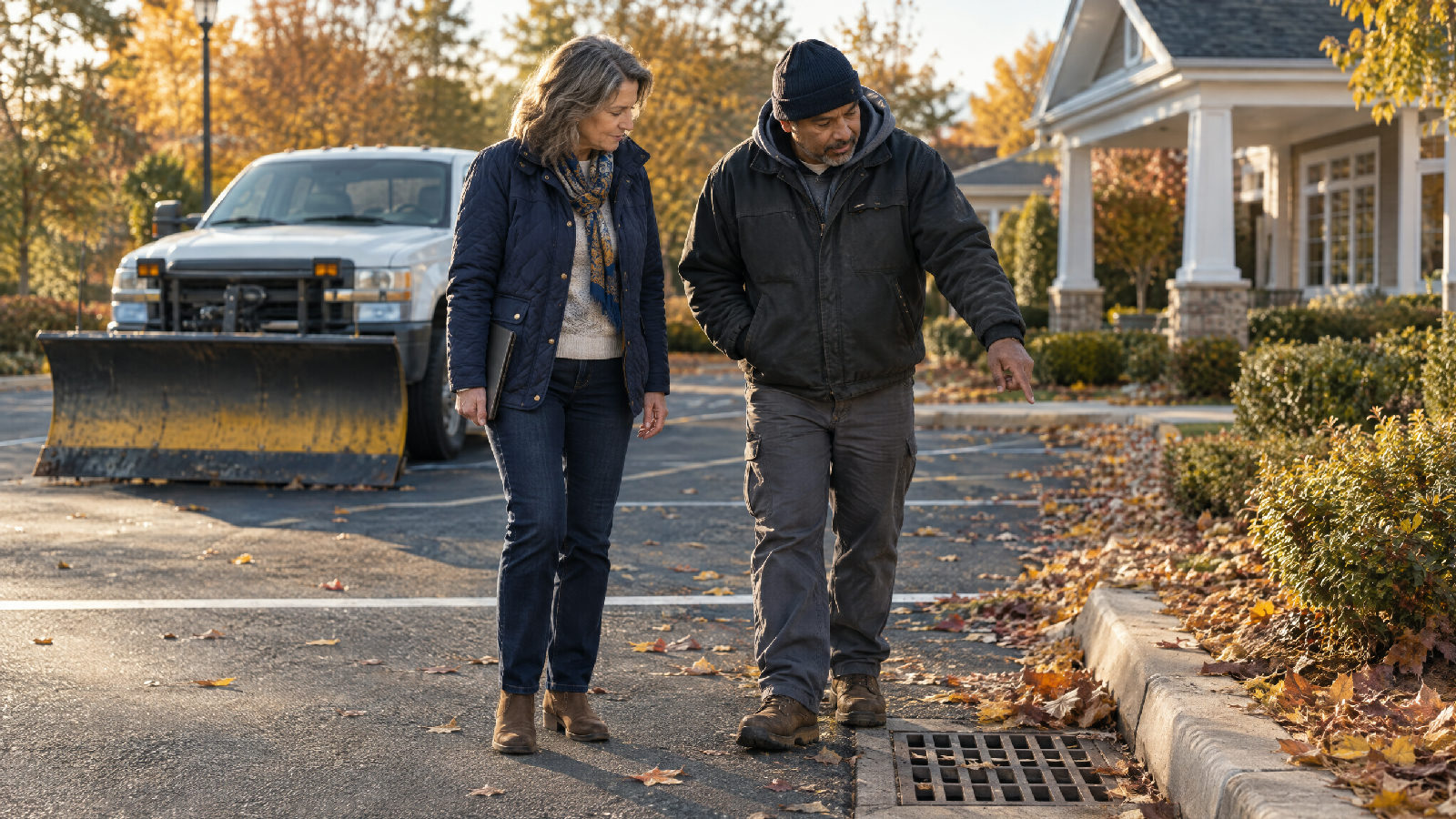
- Where piles must never go. On top of storm drains, in front of fire hydrants and the mailbox cluster, and anywhere a pile blocks the sight line at the entrance where cars pull out.
- What is the contractor's, and what is the owner's. Your governing documents decide whether the association clears owner driveways, the stretch of sidewalk in front of each home, or neither. Whatever they say, the map and the contract should say the same. A resident who believes the HOA plows driveways and finds out at 7 AM on a workday is the email the board answers all winter.
- Where no salt goes. The next section is about why.
Give the contractor the map with the contract, keep a copy in the board's records, and send the owner-driveway part to residents before the first snow.
The salt rule: Salt does not leave with the snow
Salt keeps people upright. It also does not go away. The U.S. Geological Survey tracked chloride, the part of road salt that washes into streams, in urban streams for decades.
84 percent of the urban streams analyzed saw chloride levels increase substantially, in records running from as early as 1960 to as late as 2011. — U.S. Geological Survey
Three more findings from that study belong in front of every board with a pond or a stream at the edge of its common area. Twenty-nine percent of the sites went past the EPA's chronic chloride criterion, 230 milligrams per liter, on an average of more than 100 days a year from 2006 through 2011. Chloride rose in 13 of the streams even outside the salting season, such as summer, a sign that winter salt is held in the ground and released all year. And the study names who adds it: salt is "also used by many public and private organizations and individuals to deice parking lots, walkways and driveways." That is an HOA's common areas, in plain words.
So write the rule into the contract instead of hoping:
- Name the material and the rate the contractor may use on walks and on roads.
- Mark the no-salt zones on the map: the edge of the pond, the plantings at the entrance, any spot that drains straight into water.
- Ask for the log: what was spread, how much, and when, for every visit. You will want it for the next section too.
The paper: A certificate is not coverage
Many boards ask for a certificate of insurance, file it, and stop there. The certificate is a summary. It does not change the policy.
Certificates of insurance are not actual policies of insurance, and they do not and cannot amend, extend, or alter insurance coverage afforded by policies or binders themselves. — Nebraska Department of Insurance, Guidance Document IGD-D3
If the contract says the association must be named an additional insured on the contractor's liability policy, ask for the endorsement itself, the page of the policy that does it, and not just a certificate that mentions it. Then put the policy's end date on the board's calendar. Coverage that lapses in February protects nobody in March.
Worth knowing In New Hampshire, property owners who hire a state-certified Green SnowPro salt applicator can get limited liability protection for hazards caused solely by snow or ice, when the state's best practices are followed and there is no gross negligence. RSA 508:22 makes that protection depend on written records of the material, the rate, the dates and the weather for each event, kept for three years.
Even where no such law exists, that list is the right log to ask any contractor for. If a resident falls on the clubhouse steps, the first question will be what was done, and when.

The 4 AM call: One name, one backup, written down
Every snow plan has a moment when somebody has to pick up the phone: the crew has not shown, the hill is glazed, the contractor says the trigger was not met. In many self-managed communities that somebody is the one board member who negotiated the contract and keeps the contractor's cell number in their own phone.
That works until that person moves, resigns, or is on a plane during the first storm. Then the plan was never the board's. It was theirs.

The storm night, written down so anyone on the board can run it.
- Forecast: The board contact checks the trigger.
- Trigger met: The contractor dispatches on their own.
- Not on site: The contact calls at the agreed hour.
- No answer: The backup calls the contractor's manager.
- After: The visit log goes in the board's records.
Put the contractor's dispatch number, the after-hours number, the board contact and the backup on one page with the map, date it, and file it where the whole board can open it. It is exactly the kind of open item that falls through when a board changes hands.
HOA Handover Checklist: The Five Open Items Boards Lose
Before you sign: The October checklist
- A depth trigger for roads, and a lower one for walks, steps and mailboxes.
- Where depth is measured, or which weather report both sides will accept.
- A separate ice trigger, at any depth, with a finish-by hour.
- The pricing shape, the cap, the overage rate, and every separately priced item.
- The one-page map: piles, no-pile zones, no-salt zones, owner versus association areas.
- The material and rate for salt, and a visit-by-visit log.
- The additional insured endorsement, not only a certificate, with the end date on the calendar.
- The 4 AM page: dispatch, after-hours, board contact, backup, dated and filed.
Frequently asked questions
What snow depth should trigger HOA plowing? There is no single right number. Set one for roads and a lower one for sidewalks, steps and mailbox areas, say where it is measured, and add a separate trigger for ice at any depth, since the National Weather Service never counts freezing rain as snowfall.
Is the HOA responsible for clearing owner driveways and sidewalks? Your governing documents decide that, and communities differ. Whatever they say, make the contract and the site map match them, and tell residents in writing before the first snow.
Is a certificate of insurance enough proof of coverage? It is a summary, not the policy. State regulators such as Nebraska's say a certificate cannot change coverage, so if the association should be an additional insured, ask for the endorsement that does it.
The bottom line: Write it down before it snows
A snow contract is a short document carrying a long winter. Settle the trigger, the ice rule, the map, the salt rule, the insurance and the 4 AM call in October, and put all of it on paper the whole board can find. Then the first storm runs on the board's plan, not on one person's memory.