The short answer
- Before a volunteer steps away, an HOA board should be able to find, without them, every shutoff, controller, meter, timer, key and drain on the common areas. That knowledge rarely has a paper trail, so it can leave with the person.
- One evening, two people and a phone fix it: walk the property, photograph each item with a landmark in the frame, tag it, and write one line for each: where, what it controls, who services it, when it is next due.
- October is a good month to do it: if your irrigation is getting its end-of-season check, the walk rides along with it. And when daylight saving time ends on Sunday, November 1, 2026, every timer that does not reset itself is an hour off until someone does.
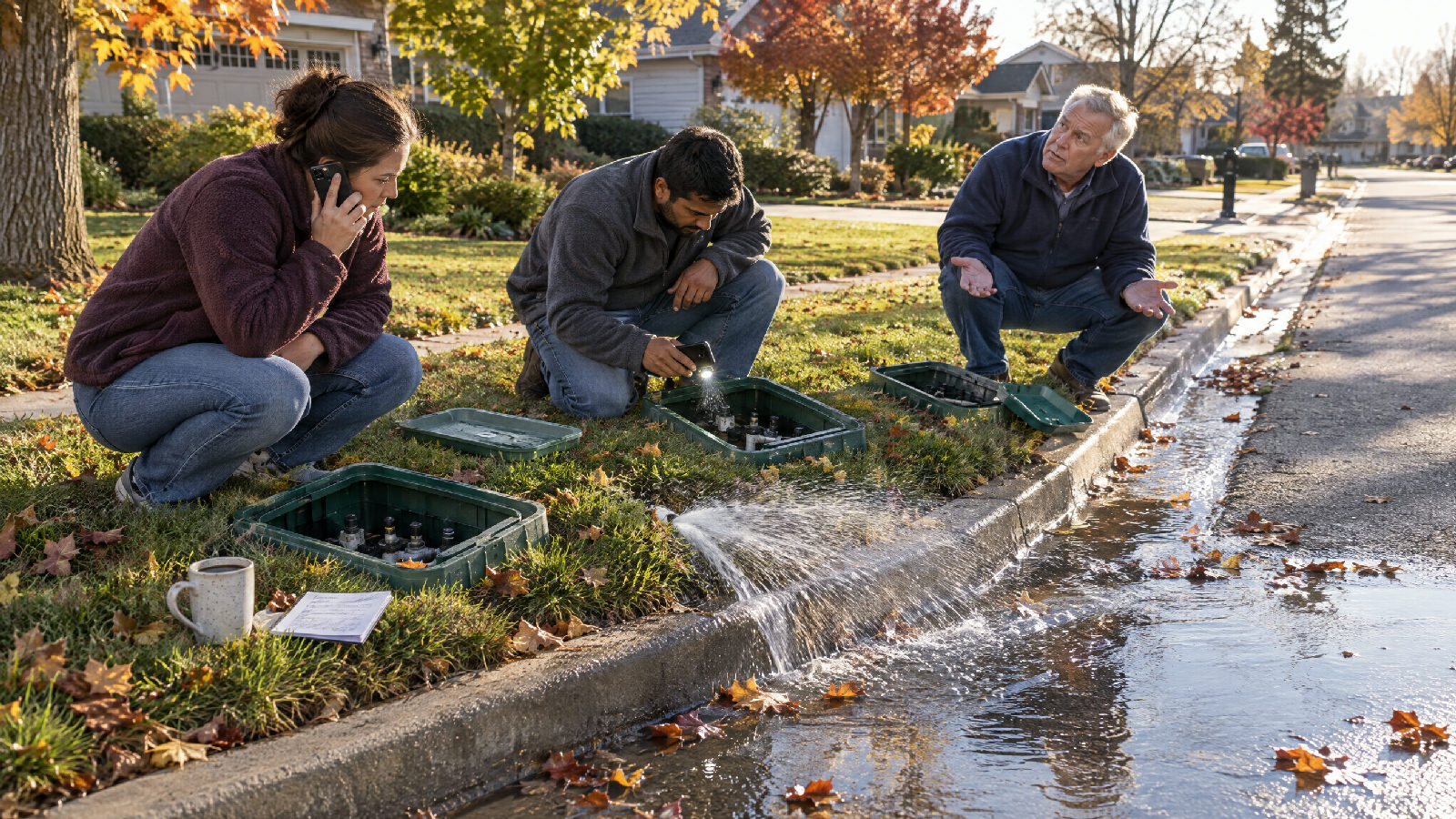
Picture a Saturday morning in late October. A sprinkler line at the entrance has split, water is running down the curb past the monument sign, and the one neighbor who knew where the valve is moved away in June.
Three board members are out there with their phones. They are lifting the lids of green plastic boxes in the grass, one after another, looking for the valve that stops it.
Nobody did anything wrong. The money had a paper trail: bank statements, a ledger, a budget. The valve never did. It lived in one person's head.
The gap: Paper has a trail. Valves don't.
When a treasurer, a committee chair or a longtime volunteer steps away, boards rightly chase the paper: the accounts, the contracts, the open approvals. The physical property is the part nobody writes down, because the person who knows it has never needed to. They just walk to it.
HOA Handover Checklist: The Five Open Items Boards Lose
So the test is simple. Could your board, without calling anyone, walk to each item below in under five minutes?
The list: Eight things only one person knows
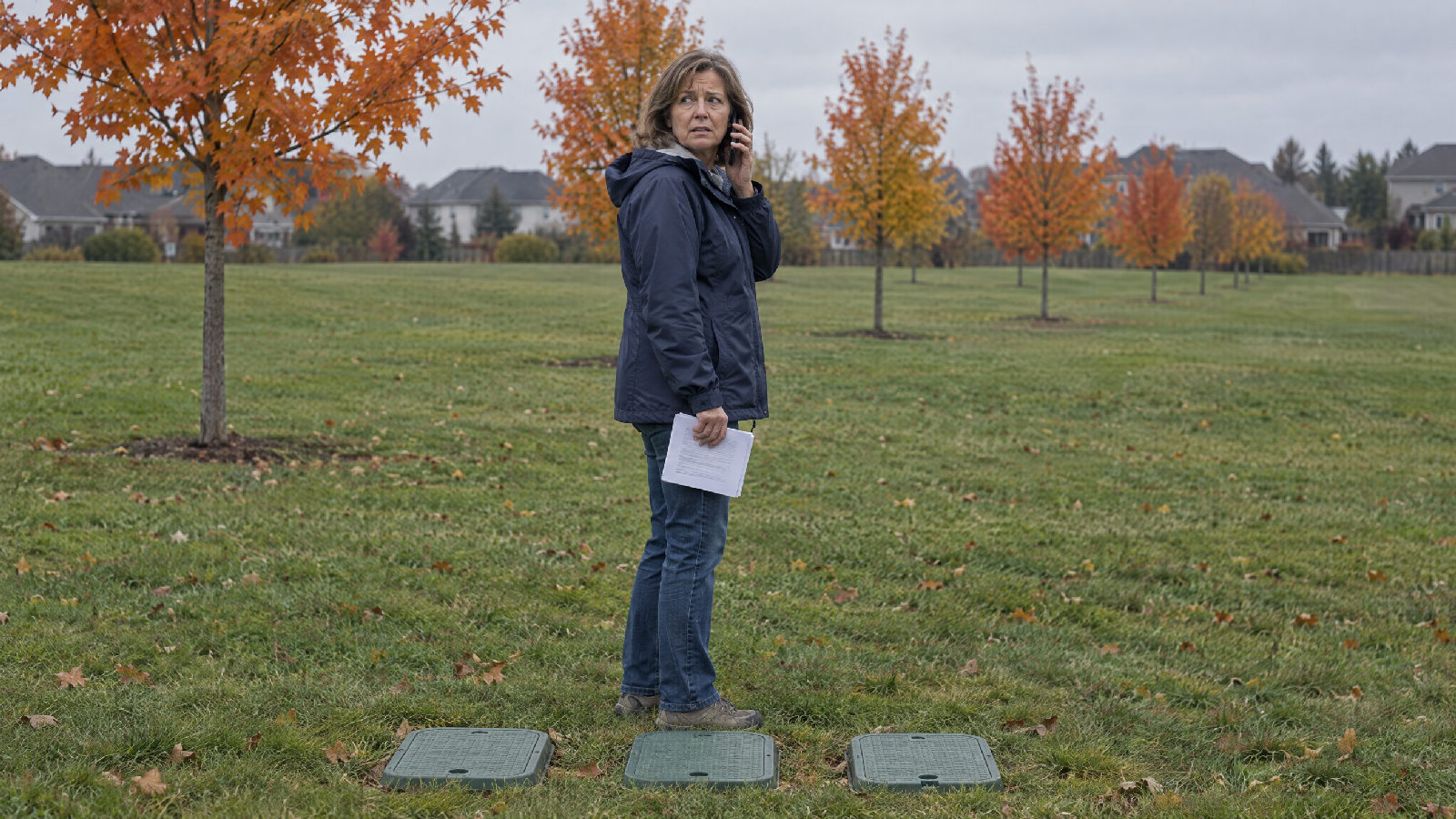
The common-area property map, in the order you will need it in an emergency.
- Water: The shutoff for each common-area water and irrigation line.
- Irrigation: Each controller, its schedule, and who can open the box.
- Backflow: The backflow preventer on each irrigation line, and when it is due to be tested.
- Power: Each common-area electric meter and panel, and what every breaker feeds.
- Lights: Every timer and light sensor on signs, paths and pools.
Then three more that are just as invisible:
- Keys and codes. Clubhouse, pool gate, mailbox kiosk, equipment rooms, gate keypads. Who holds a copy, and who can change a code? List the people, never the codes themselves.
- The pool equipment room. Where the pump's power is cut, and where pool chemicals are stored.
- Drainage. Storm drain inlets, pond outfalls and the culvert by the back fence, so you know what to clear before a storm.
Write the utility account number beside every meter. When a bill arrives for a meter nobody can find, that number is how you find it.
The walk: One evening, two people, a phone
Pick one person who knows the property and one who does not. The person who does not is the test: if they can find it again from your notes, the notes work.
The walk, in five moves.
- Find: Walk to each item on the list.
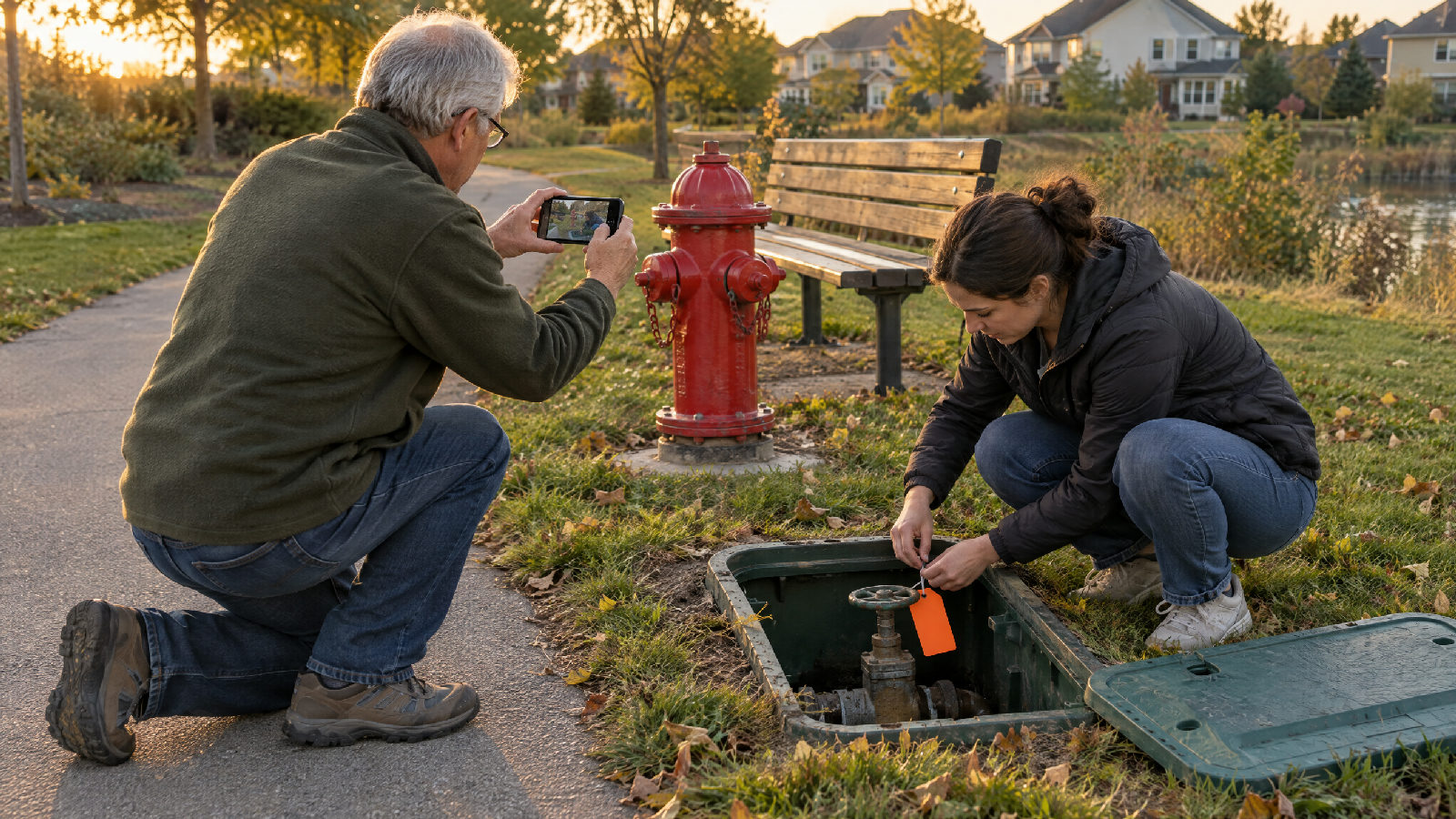
- Close-up: A photo of the item itself.
- Landmark: A wide photo with something you can't miss in the frame.
- Tag: A weatherproof tag saying what it controls.
- Write: One line on the map.
The landmark photo is the one that matters. A close-up of a valve box looks like every other valve box. The same box with the monument sign and the third light pole behind it can be found by anyone.
Don't force an old main valve yourself. If a shutoff has not been turned in years, note it, and have your plumber or irrigation contractor exercise it at the next visit.
The season: Why October works
Two things make this time of year a good one for the walk.
The sprinklers get their fall check. A valve that cannot close completely can let the system slowly seep water even when it is turned off. That is why EPA's WaterSense program tells homeowners to walk each irrigation zone, flag broken heads, and check that the valves inside valve boxes can shut. The person checking the zones is already standing at every box. Have them walk the map at the same time.
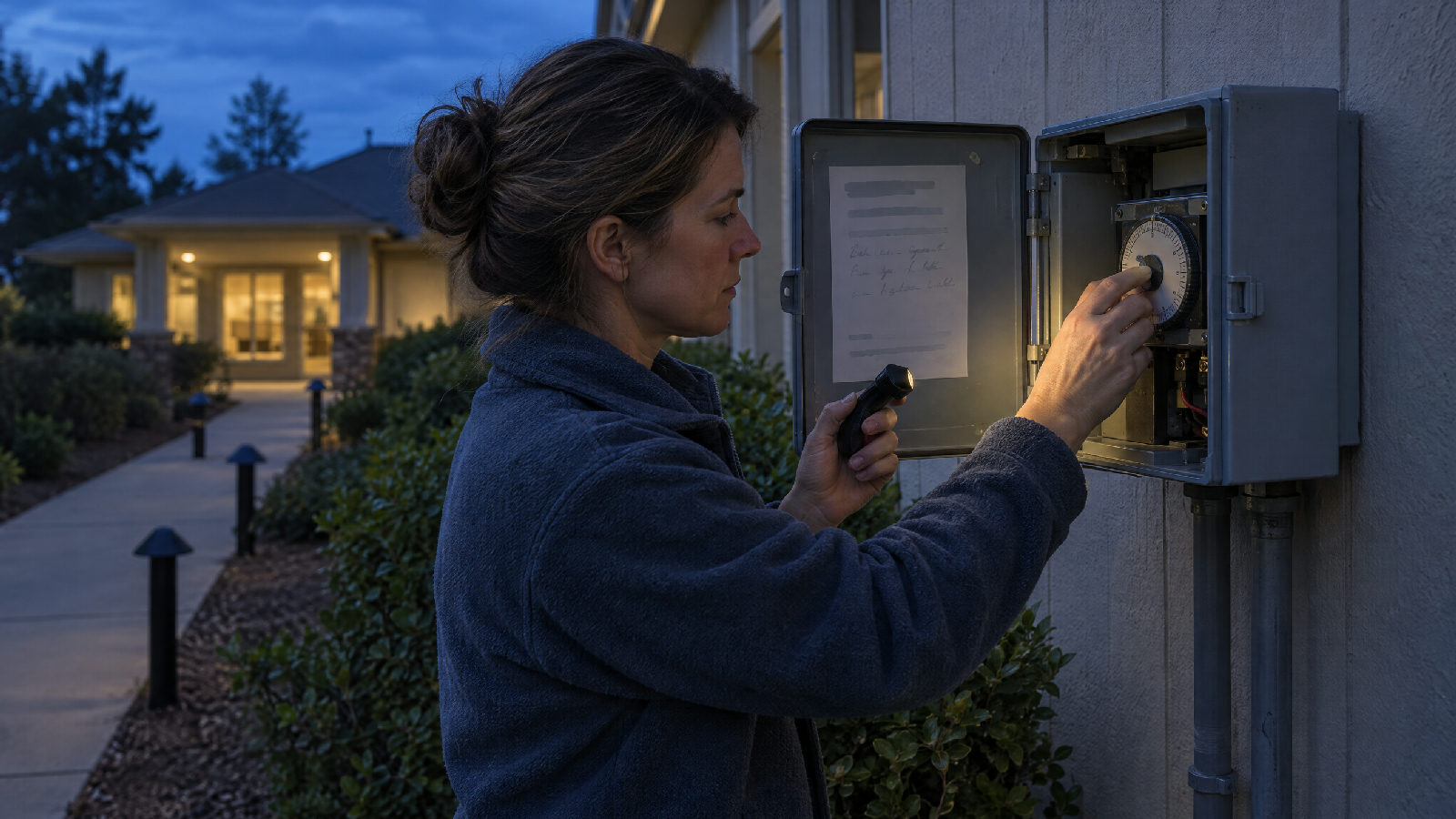
The clocks change. Daylight saving time ends at 2:00 a.m. on the first Sunday of November, according to NIST, an official timekeeper for the United States. In 2026 that is Sunday, November 1 (Arizona and Hawaii do not change their clocks). Any light or sprinkler on a timer that does not adjust itself will run an hour off until someone resets it, and someone can only reset it if they know where it is.
Worth knowing Some lights run on a light sensor and some on a timer, and a timer that does not reset itself needs a person at each clock change. Your map should say which one each light has.
The record: One row per item, two copies
The map is a list, not a drawing. One row for each item: what it is, where it is (with the landmark), what it controls, who services it, when it is next due, and where its two photos live. The free property-map worksheet with this article has those columns ready to print.
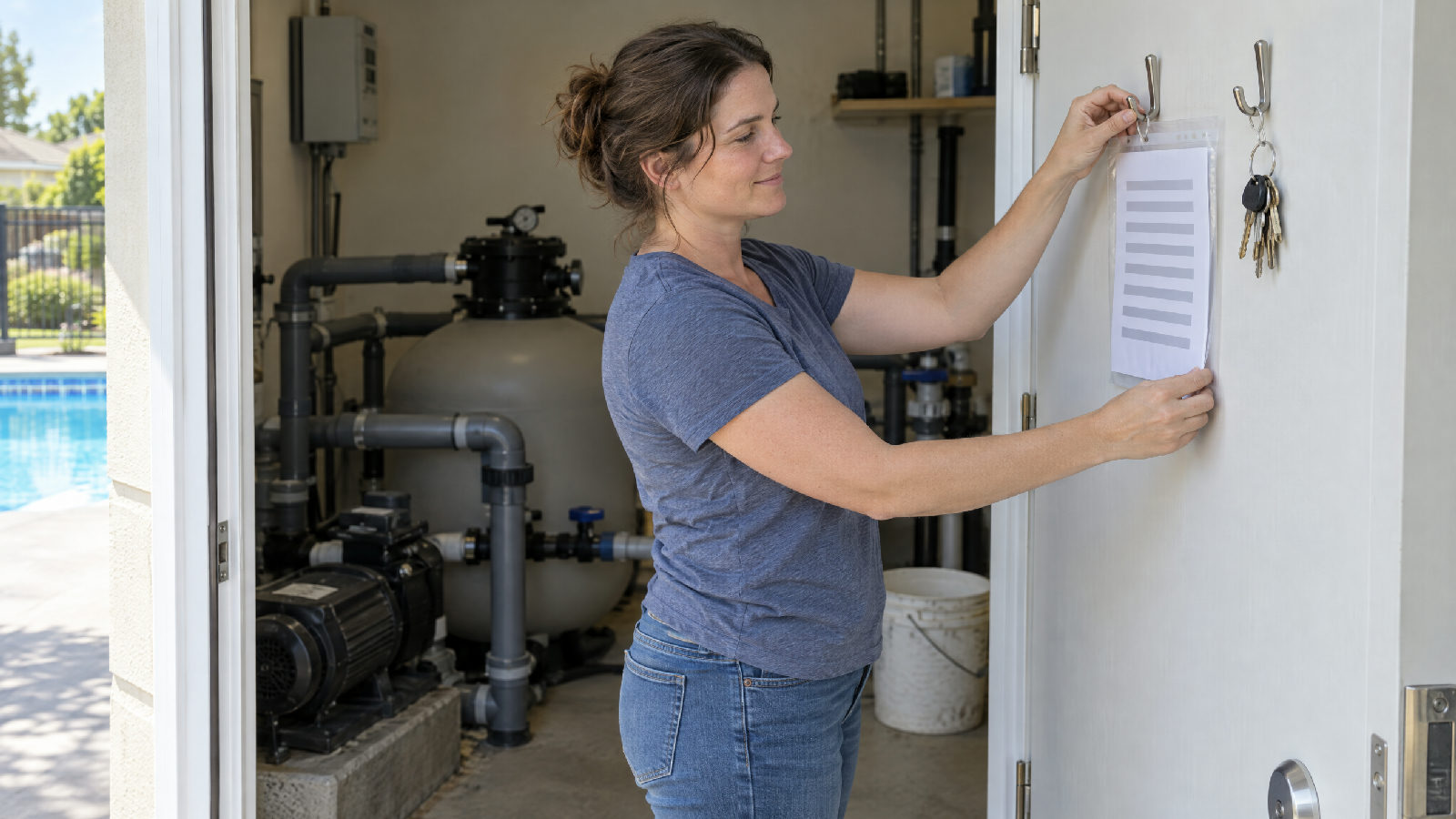
Keep two copies. One goes in the board's shared drive, beside the contracts. One is printed and kept somewhere every board member can reach on a Saturday morning without logging in: the clubhouse, or the equipment room, inside the door.
Then add one line to the next meeting's minutes: "The common-area property map was updated on [date] by [names]." The next person to step away will not have to hand anything over. It is already handed over.
Your check: Could your board do it tonight?
- We can find the shutoff for every common-area water line without calling anyone.
- We know where every irrigation controller is and who can open it.
- We know when each backflow preventer is next due for its test.
- Every light on a timer is on our list for the November clock change.
- We know who holds every key and gate code.
- The map exists in two places, and the minutes say when it was last updated.
Every empty box is one Saturday morning your board will spend lifting lids.
Frequently asked questions
What should be on an HOA common-area property map? Every water and irrigation shutoff, irrigation controller, backflow preventer, electric meter and panel, light timer and sensor, key holder, the pool equipment room, and every storm drain and pond outfall. Each gets a landmark photo, what it controls, who services it and when it is next due.
How often does an HOA backflow preventer need to be tested? It depends on your local water utility, which sets the schedule and who may do the test. Call the utility that serves the irrigation meter, ask when your next test is due and who is certified to do it, and write the date on your map.
Who should keep the HOA's property map? The board, not one volunteer. Keep one copy in the board's shared files and one printed copy where any board member can reach it without logging in, and record each update in the minutes.