The short answer
- The HOA itself is often responsible for maintaining its stormwater pond, under a maintenance agreement recorded when the subdivision was approved.
- That agreement can require an inspection report every year, and lets the county fix a neglected pond and bill the owners.
- Pull the agreement this week, put the inspection on the board calendar, and give the pond its own line in the budget.
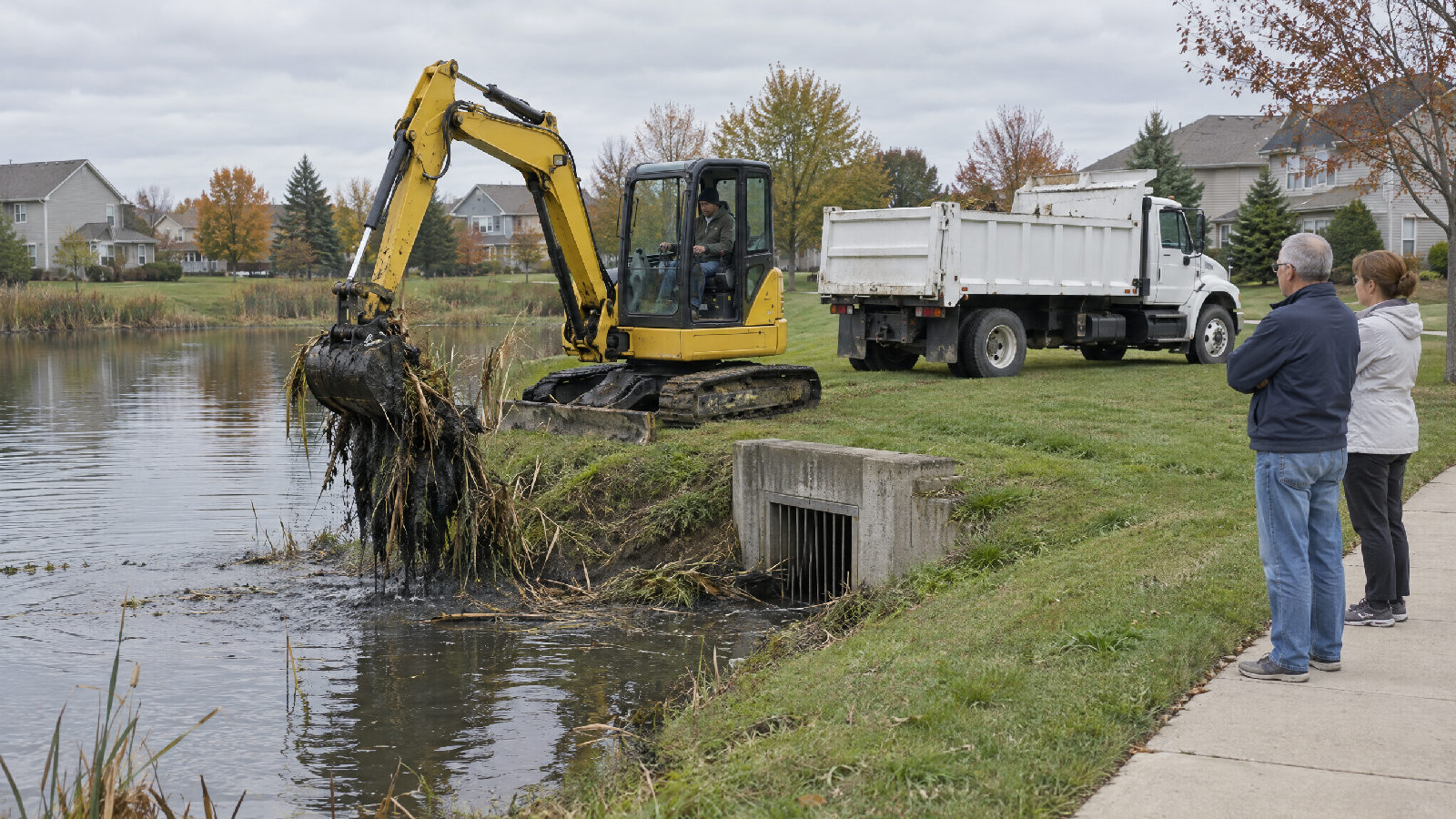
In Greenville County, South Carolina, the county's standard pond agreement says that if the pond is not kept in good working condition, the county may, with notice, enter, make the repairs and charge the cost back. Unpaid after 30 days, that cost becomes a lien that can go on the property tax bill. If your HOA has a stormwater pond in its common area, there is a good chance the association maintains it, and that the obligation is written into a contract recorded against the land.
Many boards have never read it. It was usually signed by the developer, it sits at the Register of Deeds, and it often stays out of the board binder until a letter arrives.
Step 1 — Find the agreement nobody handed you
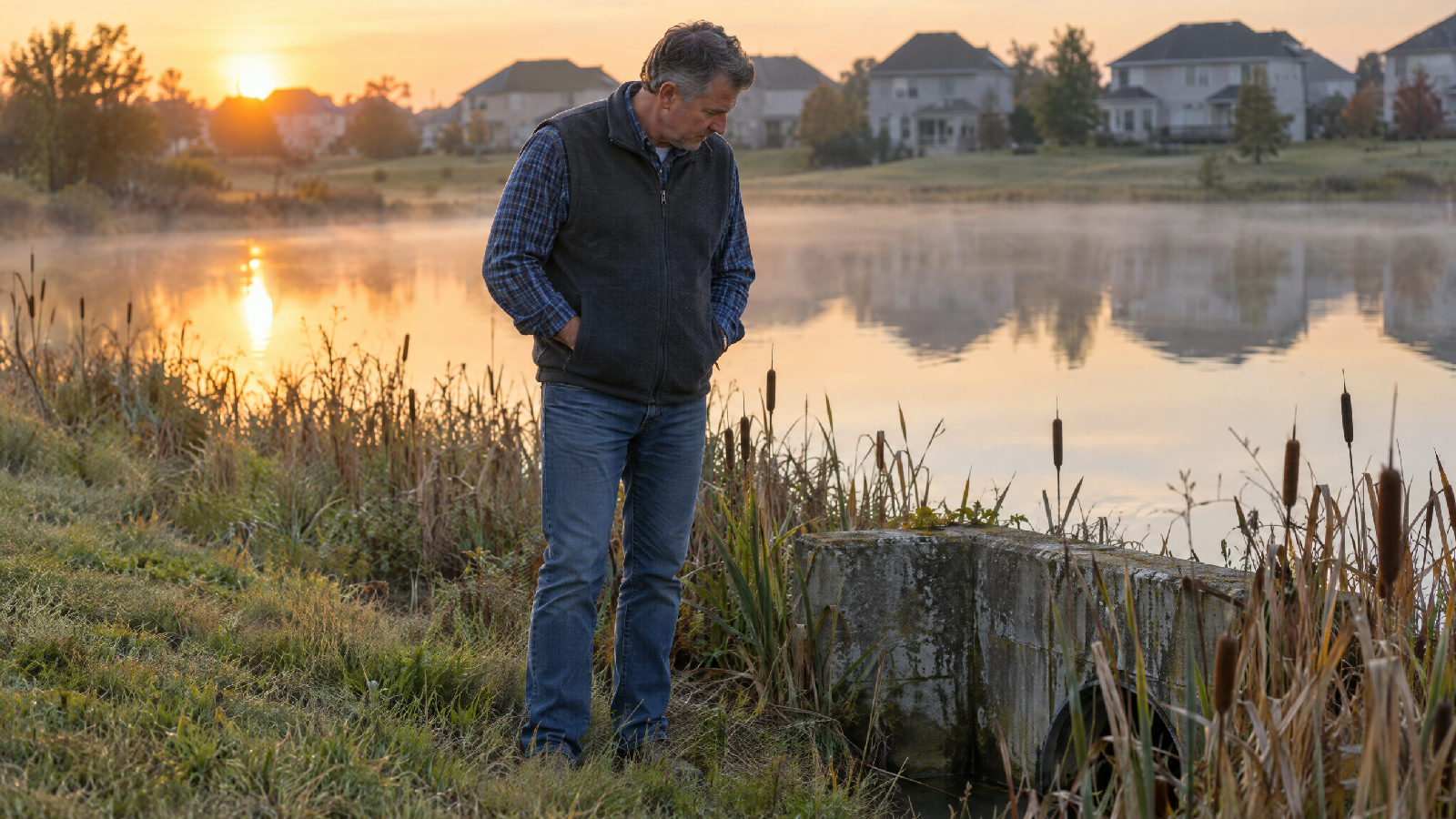
In counties like Greenville, SC, and Henderson, NC, approving a subdivision with a pond comes with a maintenance agreement, recorded so that it binds whoever owns the land next. Greenville County's form says it plainly: the agreement "shall constitute a covenant running with the land" and binds the landowner's successors, "including any homeowners association."
The developer's promise is now yours. Where to look:
- The Register of Deeds. Search the subdivision name or common-area parcel for "Stormwater Management Facility Maintenance Agreement" or "Operation and Maintenance Agreement."
- The county's stormwater or land development office. Ask for the agreement, the approved maintenance plan and any inspection reports on file.
- The developer's turnover box, if you ever got one.
Not every pond is the association's A county can agree in writing to take on a pond's maintenance; Henderson County, North Carolina, writes that exception into its code. The recorded agreement is what settles it for yours.
Step 2 — Read the five clauses that matter
Agreements differ by county, so read your own, and take anything unclear to your association's attorney. This is general information, not legal advice. Greenville County's public form is a useful map.
What the Greenville County agreement asks of the owner.
- Maintain: Keep it in good working condition, pipes and outlets included
- Report: Inspect and submit a report every year
- Entry: Let the county in to inspect
- Repair: The county may fix it and charge the cost
- Escrow: ,000 per pond, topped up yearly from dues
The repair clause changes a budget. If the county does the work, the owner must reimburse it within 30 days, and an unpaid cost can be placed on the ad valorem tax bill. The form also says the county "is under no obligation to routinely maintain or repair" the pond. The work stays yours either way; letting it slide only changes who sends the bill.
Two more lines deserve a second read. The escrow "shall be supplemented annually," from association dues or owner payments. And the owner agrees to hold the county harmless and to defend, at its own expense, any suit brought against the county over the pond.
Henderson County writes the same idea into its code: an association's agreement must let the county recover from "the association and its members" "any and all costs" it spends to maintain or repair the pond, with interest, collection costs and attorney fees added.
30 days to reimburse the county after it repairs a neglected pond, before the cost becomes a lien that can go on the property tax bill. — Greenville County, SC, Stormwater Management Facility Maintenance Agreement (Rev. 11.16.18)

Step 3 — Know what the maintenance actually is
You only need to know the job well enough to hire it and check it was done. The U.S. Environmental Protection Agency's wet pond fact sheet cites an estimate that routine maintenance runs about 3 percent of the pond's construction cost a year, and notes that ponds typically last longer than 20 years. It lists the typical work:
How the work stacks up, from the EPA's wet pond fact sheet.
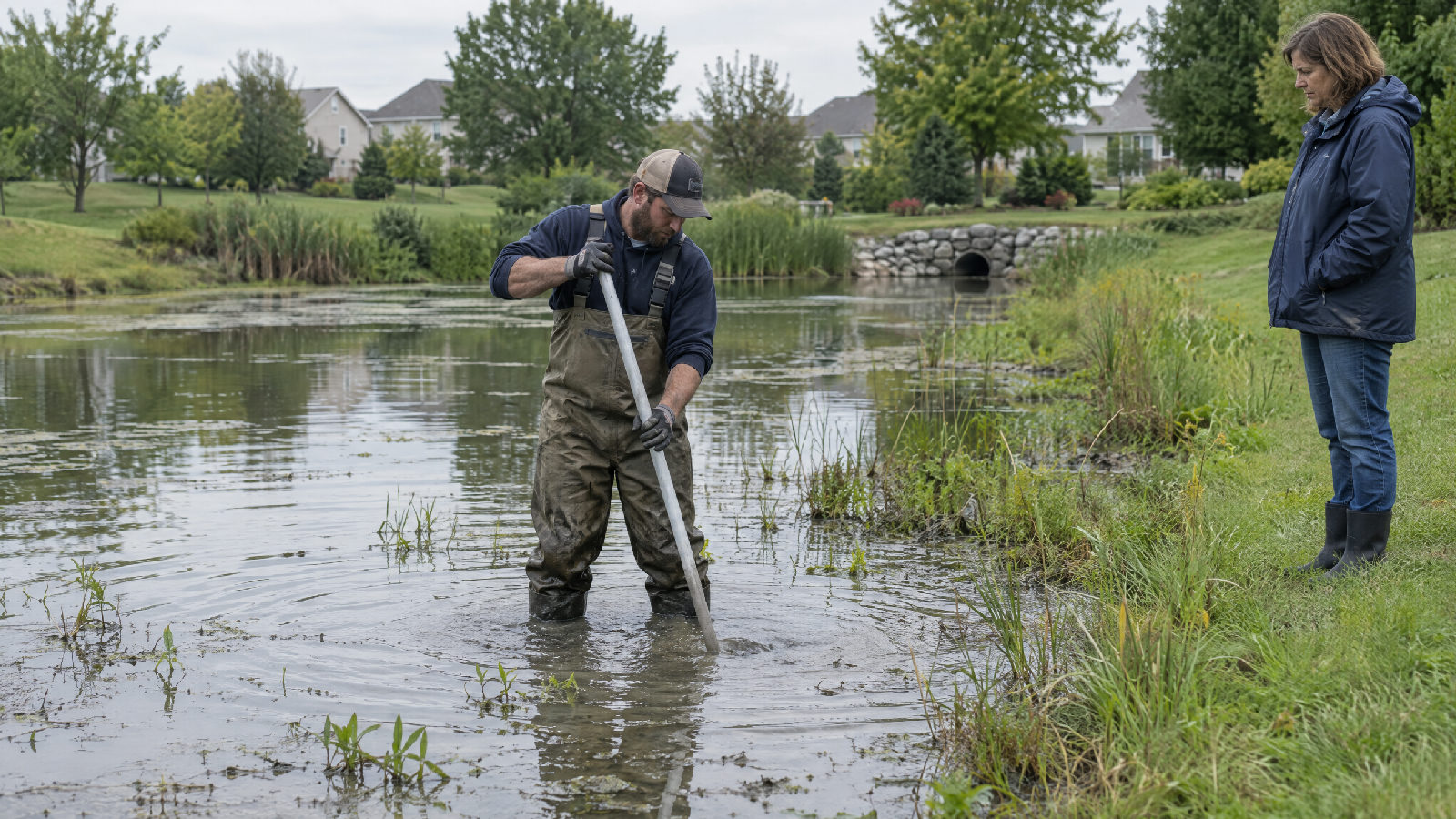
- Monthly to quarterly: Check outlets for clogging and shorelines for erosion, remove debris, and check after major storms
- Semiannual to annual: Remove invasive plants, make sure mechanical parts work
- Every 1–3 years: Inspect pipes and risers, check how much sediment has built up
- If needed: Remove sediment from the pond and its forebay
The EPA says the frequencies vary with climate and drainage, so treat them as a starting point. The last step is the one a budget should see coming. A forebay, a small pool that traps coarse sediment, lets crews clean it out instead of dredging the whole pond.
Step 4 — Give the pond a place in the calendar and the budget
The deed records hold the agreement, the county holds the reports, your books hold the money. Nobody connects them unless assigned.
- We have a copy of the recorded maintenance agreement.
- We know the date our last annual inspection report was submitted, and to whom.
- We know what our maintenance fund or escrow holds today.
- The pond has its own line in the operating budget and, for sediment removal, in the reserve study.
- One board member owns the pond, by name, in the minutes.
If the reserve study does not list the outlet structure or sediment removal, nobody is saving for them.
Walk Your HOA's Common Areas With the Reserve Study in Hand
Frequently asked questions
Who is responsible for maintaining an HOA stormwater pond?
Often the association is, under a maintenance agreement signed and recorded when the subdivision was approved. A county can agree in writing to maintain a particular pond; Henderson County, NC, allows for it. Your recorded agreement settles it.
What happens if the HOA does not maintain the pond?
Under agreements like Greenville County's, the county can do the work after notice and bill the owners; unpaid, the cost can become a lien collected with property taxes.
Do we need an engineer for the annual inspection?
It depends on your county and your agreement. Greenville County's form puts the inspection and the report on the owner; other counties may set their own requirements for who signs it. Ask the county stormwater office what it accepts. This is general information, not legal advice.
The sentence to take to the meeting
Say: "Our pond comes with a recorded maintenance agreement. Here is what it asks of us every year, here is when we last did it, and here is who will own it from now on." Then calendar the next inspection before the meeting ends.
Download the free records request letter below and send it this week.