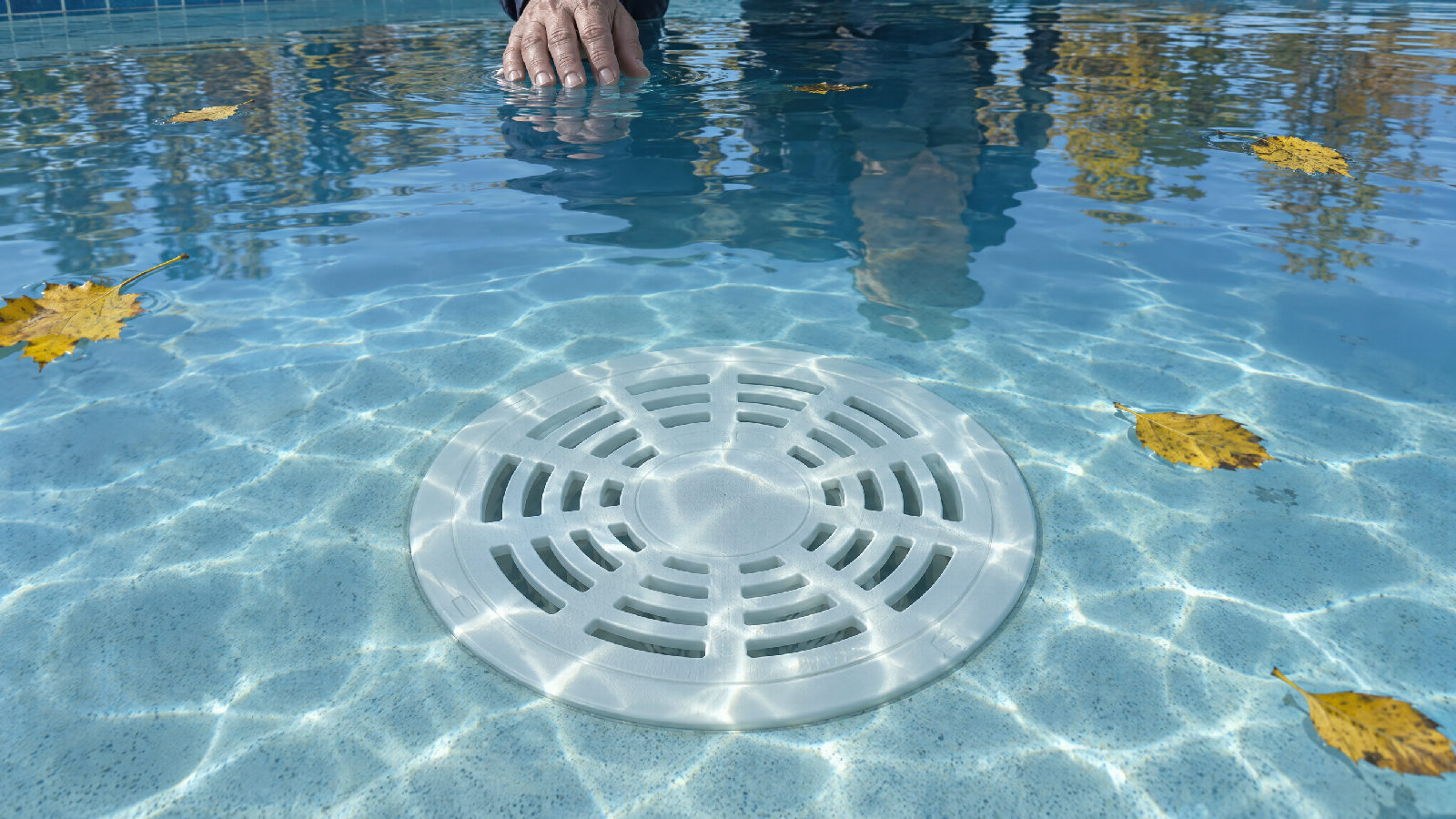
The short answer
- Yes, the federal Virginia Graeme Baker Act applies to an HOA pool. It covers any pool open only to the residents of a residential real estate development.
- Since December 19, 2008, the pool must have anti-entrapment drain covers that meet the federal standard, and a single blockable main drain needs a second system.
- The cover has a lifespan marked on it. The federal safety agency recommends replacing one past its expiration date, and the off-season is the time to check.
There is a date at the bottom of your community pool. It is marked on the drain cover, and many boards have never read it.
It matters because a federal law names communities like yours. The Virginia Graeme Baker Pool and Spa Safety Act sets the rules for every "public pool and spa," and its definition of public includes a pool open exclusively to the "residents of a multi-unit apartment building, apartment complex, residential real estate development, or other multi-family residential area." A neighborhood pool open only to the community's residents fits that description.
So the drain covers on your pool fall under federal law. In a self-managed community it is usually the board that has to see to them, and the proof that they comply lives in three places nobody connects: on the cover itself, in the pool contractor's files, and on the equipment. This is general information, not legal advice. Your pool company, your association's attorney and your local health department are the people to confirm what applies to your pool.
The law: What the Act asks of a community pool
The Act's pool rules took effect on December 19, 2008. From that day, each public pool and spa "shall be equipped with anti-entrapment devices or systems" meeting the federal drain cover standard.
2008 is the year every pool open only to the residents of a residential development had to carry federally compliant anti-entrapment drain covers. — 15 U.S.C. § 8003(c), Virginia Graeme Baker Pool and Spa Safety Act
A pool with a single main drain that can be blocked needs more. It must also have at least one backup system, such as a safety vacuum release system that stops the pump or releases the suction when a drain is blocked, a gravity drainage system, an automatic pump shut-off, or a drain that has been disabled. The Consumer Product Safety Commission (CPSC) applies the same rule to drains on the same plane less than three feet apart.

Why the law cares: a pool drain pulls water toward the pump. CPSC's compliance office warns that without protective covers and backup systems, swimmers can face suction forces "capable of trapping clothing, hair, limbs, or an entire body underwater." A violation of the Act's public-pool requirement is treated as a violation of the Consumer Product Safety Act. The current successor standard is ANSI/APSP/ICC-16 2017, which CPSC lists as effective May 24, 2021.
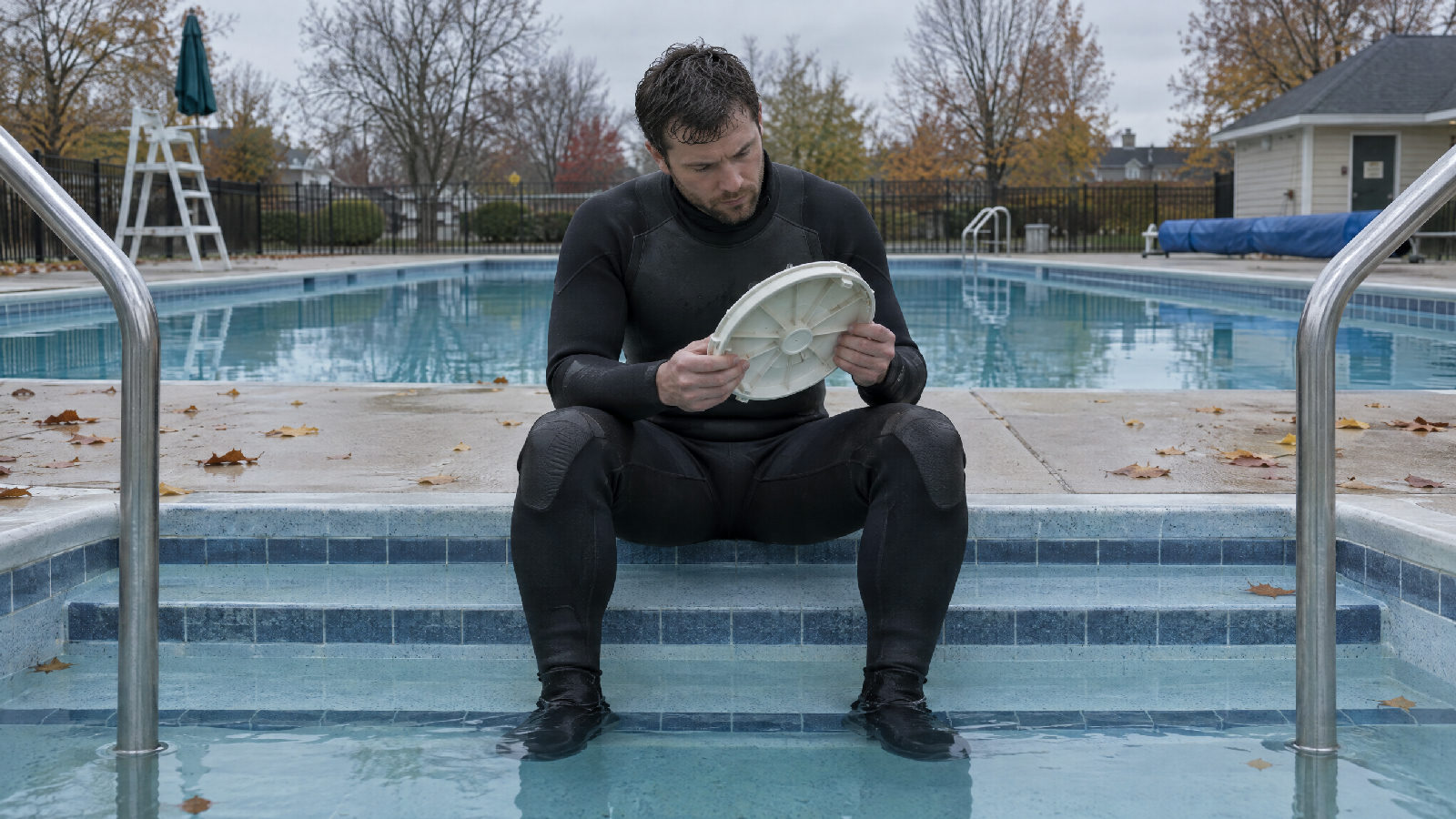
The date: Why a drain cover expires
Drain covers are not permanent. CPSC's 2024 checklist for public pool operators asks them to "confirm that the drain covers have not exceeded the manufacturer-recommended lifespan on the cover." The lifespan is the manufacturer's, marked on the cover, so there is no single number to remember: read yours.
CPSC's compliance office puts the recommendation plainly: "Even if the drain is compliant, we recommend replacement of drain covers that have passed the expiration date on the cover."
That sentence changes what "compliant" means for a board. A pool can pass inspection the year a cover goes in and quietly fall out of date later, with nothing visible from the deck to say so. Someone has to read the cover, and someone has to write down what it says.
Worth knowing The skimmer equalizer lines count too. CPSC's checklist asks operators to confirm each one is covered with a compliant cover, plugged with a tool, or otherwise disabled, such as cemented over.
The record: The three places the proof lives
Everything that shows the pool is compliant already exists. It just is not in one place:
- On the cover: the standard it meets, the maximum flow rate it is rated for in gallons per minute, and its lifespan.
- In the contractor's file: the certificate for the cover, when it was installed, and, if the pool has one drain, which backup system protects it.
- On the equipment: the pool's maximum flow rate, which CPSC's checklist says must be at or below the rating marked on the cover.
Nobody is assigned to carry those facts into the community's own records. When the contractor changes, or the board member who hired them steps off the board, the paperwork often leaves with them. The cover is still down there, and the community can no longer show what it is or when it went in.

The fix: An off-season drain cover check
The pool is closed and nobody is swimming, which makes the off-season the easiest time to do this and to schedule any replacement before opening day. Ask your pool contractor to walk through CPSC's own checklist with you, and keep what they hand over.
CPSC's drain cover checklist, as a board's off-season job.
- Certificate: A copy for every cover, equalizer lines included.
- Label: The standard, VGB 2008 or later, or the swimmer logo.
- Condition: No cracks, breaks, or loose or missing screws.
- Lifespan: Read it off the cover and write it down.
- Flow: The pool's maximum flow at or below the cover's rating.
Then ask one more question: does this pool have a single main drain, or drains less than three feet apart? If it does, ask which backup system protects it, and get that in writing too.
Where a cover is past its lifespan, or will be before the season ends, put the replacement on the contractor's calendar now, and in next year's budget if it falls there.

Your check: Can your board answer these today?
- We know the lifespan marked on every drain cover in our pool.
- We know when each cover was installed.
- We have the certificate for each cover in the community's own records, not only the contractor's.
- We know whether our pool has a single main drain, and which backup system protects it.
- We know the pool's maximum flow rate is within the covers' rating.
If any box stays empty, that is your off-season job. It fits naturally into the yearly common-area walk:
Walk Your HOA's Common Areas With the Reserve Study in Hand
Frequently asked questions
Does the Virginia Graeme Baker Act apply to an HOA pool? The Act defines a public pool to include one open exclusively to the residents of a residential real estate development or other multi-family residential area. A community pool open only to its residents fits that definition, so its drain covers must meet the federal anti-entrapment standard. Confirm your pool's details with your attorney and pool company.
Do HOA pool drain covers expire? Each cover carries a manufacturer-recommended lifespan. CPSC asks pool operators to confirm covers have not exceeded it, and recommends replacing covers past the expiration date even when the drain is otherwise compliant. Read your cover; the lifespan is the manufacturer's.
What if our pool has only one main drain? The Act requires a pool with a single main drain that can be blocked to have at least one backup anti-entrapment system, such as a safety vacuum release system, an automatic pump shut-off or a disabled drain. CPSC applies the same rule to drains on the same plane less than three feet apart.
Who is responsible, the board or the pool company? The Act puts the requirement on the pool itself. Where the association owns or runs the pool, a contractor can install and certify the covers, but the board should hold the certificates, the lifespans and the backup-system details in the community's own records.