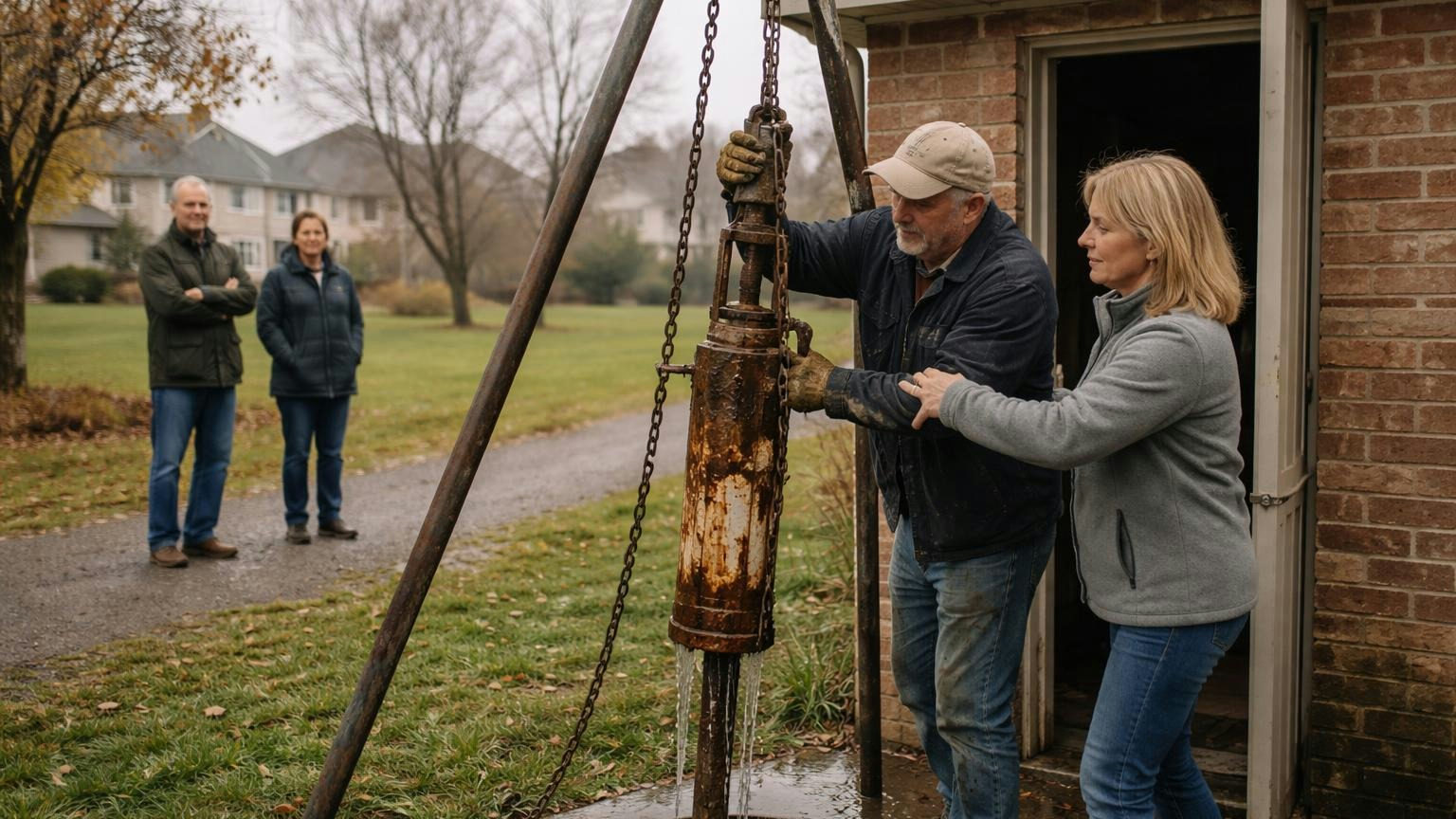
"We had a 97% increase." That is how one homeowner described the association's new dues to a local TV station in October 2026, months after a broken well pump left some residents taking water from a nearby stream to flush their toilets. The association's president told the station there had been "a huge amount of deferred maintenance here over the last many years," and that no reserve fund had been kept for years.
So how much should HOA dues be? Add up four yearly lines (fixed obligations, the reserve contribution, administration, and an allowance for dues you will not collect), divide by the number of homes and by twelve, and that is what one home costs per month. A board that skips that sum finds out what its dues should have been the year the bills arrive together.
The short answer
- Dues should equal what one home costs to run: four yearly lines, divided by homes and by twelve.
- The four lines are fixed obligations, the reserve contribution, administration, and an allowance for dues you will not collect.
- Price it before the budget vote, because a cap on increases can turn one late discovery into a climb of several years.
The three answers: Where your dues really came from
Ask where a community's dues came from, and the honest answer is often one of three.
- The developer's number. Somebody set it before the first owner moved in, when the roads were new and the pool had never been resurfaced.
- Last year plus a little. The treasurer nudged it, nobody objected, and it passed.
- Whatever passed without a fight. The board wanted a raise, settled for half, and never wrote down why.
None of those is a price. Each is a guess that has held so far, and a guess holds for years because most costs arrive slowly: insurance creeps, a contract renews a little higher, one owner falls behind. The dues cover it, barely, and the shortfall hides inside the reserve that is not being funded.
Then one year it lands at once. A pump fails. The insurer re-prices. The deferred repairs stop being deferrable. Owners get a number with no arithmetic behind it, and the station heard the line every board dreads from a new owner: "There's no communication."
The catch-up year: Why a cap turns one bad year into three
Here is the part most boards learn only when they need it: some communities cannot fix an un-priced number in one step.
In California, a board may not raise the regular assessment more than 20% over the previous fiscal year without the approval of a majority of a quorum of members (Cal. Civ. Code § 5605(b)). Where your state sets no cap, your governing documents and your attorney decide, and your documents may carry their own.
One 157-home association shows how that plays out. Its president laid out the numbers in a Reddit post, as The Cool Down reported in October 2026: dues of $35 a month, documents that limit annual increases to 20%, and a step to $42 already scheduled for 2027. That is the full 20%, and the board said it still may not solve the shortfall. One commenter needed seven words: "Your problem is the $35 a month."
Illustrative: dues of $35 that should be $60, raised the most a 20% cap allows each year.
- Today: $35.00
- Year 1: $42.00
- Year 2: $50.40
- Year 3: $60.48
Three budget cycles to reach the real cost, and the repairs do not wait for the third. That is the case for pricing it now, while the gap is small enough to close in one ordinary increase.

The four lines: What one home actually costs
Write each line as a yearly total, then divide it by the number of homes and by twelve.
- Fixed obligations. Insurance, utilities, and every contract that renews: landscaping, pool, trash, snow.
- The reserve contribution. What your reserve study says to set aside this year. With no study, a written list of the big items (roofs, roads, pumps, paving) and their expected lives is the honest minimum.
- Administration. Tools, bookkeeping, mailings, bonds, legal, and the annual filings.
- The collection allowance. The share of dues the community will not collect, taken from last year's actual unpaid share.
The fourth line is the easiest one to leave out. The board's president said 24 owners were at least 60 days behind, about 15% of the community. A budget written as if every home pays starts short.
$58.82 per home per month is what it takes to collect a $50 cost when 15% of homes do not pay: $50 divided by 0.85, not $50 plus 15%. — Illustrative arithmetic, Rebel HOA
Adding 15% on top looks right and comes up short: collect 85% of $57.50 and you have $48.88, not $50. Divide instead, and the homes that pay cover the whole $50.
A board that can't say what one home costs isn't setting dues. It's waiting to find out what they should have been.
The one-evening test: Can your board say its number tonight?

You need one evening and last year's actuals. Tick the ones your board could answer right now:
- We know what fixed obligations cost per home per month, from last year's actual bills.
- We know the reserve contribution our study (or our written list) calls for this year, per home per month.
- We know what administration costs per home per month.
- We know last year's unpaid share, and our budget divides by it.
- We can state the total per home per month beside today's dues.
- We know whether our documents or our state cap an increase, and by how much.
Every box you cannot tick is a line someone else will price for you later: the insurer, the contractor, or a special assessment.
Above today's dues, you know the gap before owners do and can explain it a line at a time. Below, you know exactly what the dues are funding.
Download the free Dues Statement Script: the two minutes your treasurer reads at the budget meeting, with a blank for every line.
Then compare your number with communities like yours:
How to Compare Your HOA Dues to Other HOAs for Free
Frequently asked questions
Is there a law that limits how much an HOA can raise dues? Some states set one. California limits a board's increase in the regular assessment to 20% over the previous fiscal year unless a majority of a quorum of members approves (Cal. Civ. Code § 5605(b)). Where your state sets none, your governing documents and your attorney decide, and your documents may carry their own cap.
Should we raise dues or levy a special assessment? Your governing documents and your attorney decide what each requires. In California, the same section also bars a board from levying special assessments that total more than 5% of the year's budgeted gross expenses without that member approval (Cal. Civ. Code § 5605(b)). As a budgeting rule, dues pay for what comes every year, including the reserve contribution; a special assessment is for what the reserve was never set up to cover.
What if the per-home cost comes out lower than our dues? Then you know what the difference is paying for. Check the reserve line first: an unfunded reserve is a common reason dues look generous when they are not.
This article is general information, not legal advice. Rules on increases and assessments differ by state and by your governing documents.