The short answer
- HOA board members should get the board packet on a fixed day, about a week before the meeting. California, one of the more detailed states, sets four days' notice for the meeting and its agenda (Civil Code § 4920), not a deadline for the packet, so the board sets it.
- The packet should carry the source documents beside the summary: the bank statements, the reconciliations and the check register, not only a page someone wrote about them.
- Every director can ask to see the books directly. In California, a director of an association incorporated as a nonprofit mutual benefit corporation has that right in law (Corporations Code § 8334). The same three questions work whether a volunteer or a manager keeps the books.
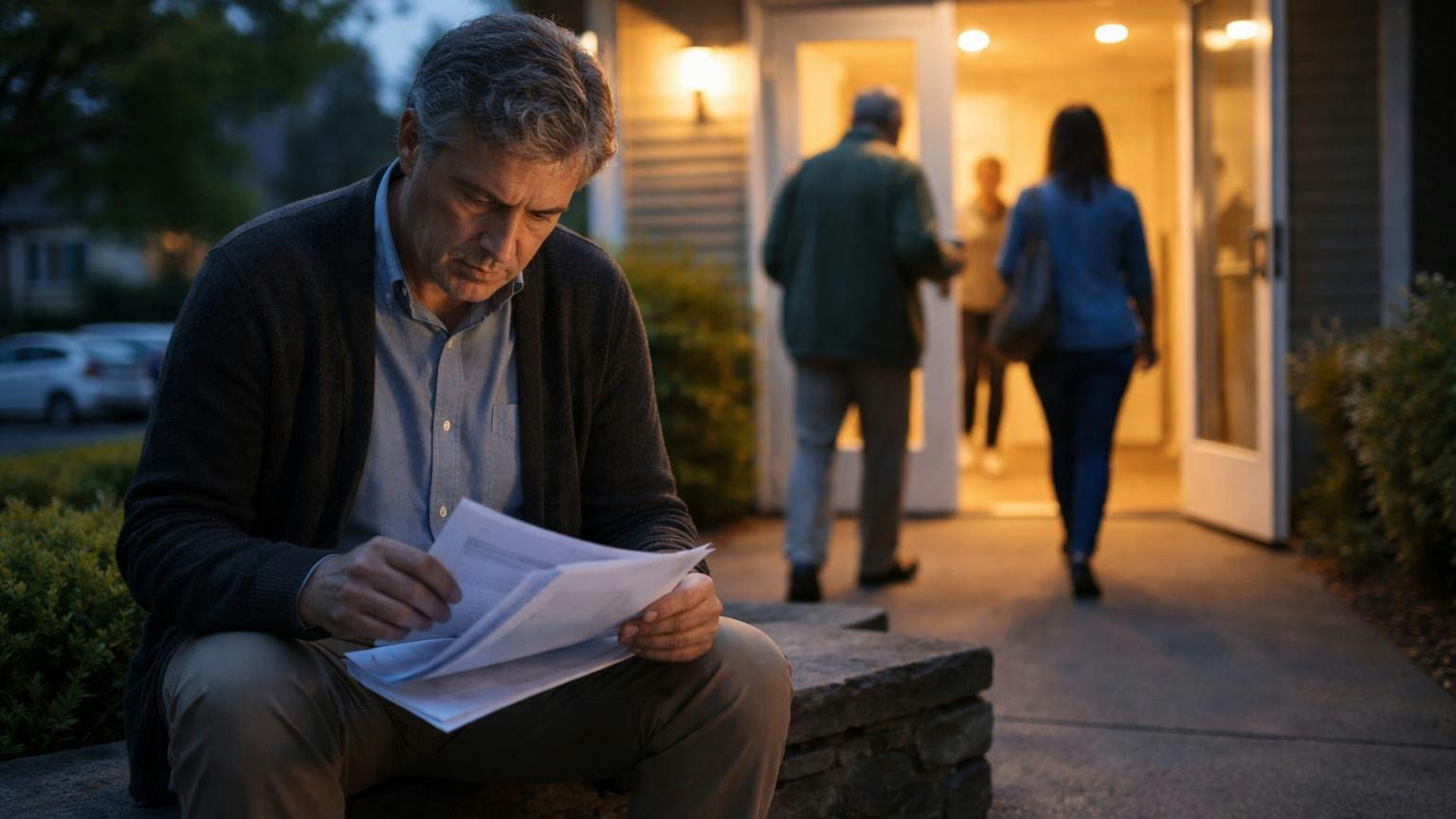
The packet lands at 4:12 in the afternoon. The meeting is at 7. It is 38 pages. By the time you find the bank balance you are pulling into the clubhouse lot, and twenty minutes later the chair asks for a motion to approve the financials.
You vote yes. Everyone does. Nobody is hiding anything. But on the drive home you know the truth: you did not review those numbers. You signed them.
The quiet failure: A packet you cannot question is a signature

Late packets are rarely anyone's fault. The treasurer has a job. The manager has eleven other boards. The bank statement posts on the 3rd, the reconciliation takes an evening, and the meeting was set before anyone counted backwards.
So the packet arrives when it arrives. And three things happen that nobody decided:
How a late packet turns oversight into a rubber stamp.
- Same day: Nobody has time to read it
- At the table: Nobody has time to question it
- The vote: "Approve the financials" means "trust the summary"
- Next year: The habit is the process
The problem is not the person sending it. The problem is that nothing says when it is due or what it must hold. Change who does the books, and the board's view changes with them, because the view was never the board's to begin with.
If the board only sees what the operator chose to send, when they chose to send it, the board is not overseeing. It is signing.
Here are the three questions that fix it. Ask them at your next meeting, out loud, and write the answers in the minutes.
Question one: When do we get it?
Pick a day and make it a board rule, not a favour.
The law gives you less help here than you would think. California is one of the more detailed states, and even there the clock runs on the meeting notice, not the packet: the board must give owners notice of a board meeting, with its agenda, at least four days before it (California Civil Code § 4920). Nothing in that section says when the directors get the reports they are voting on.

So count backwards yourself:
- The meeting date. Fixed for the year, in the minutes.
- The packet date. Seven days before it. Long enough to read on a weekend, short enough that the numbers are still current.
- The question date. Two or three days before the meeting, questions go to whoever prepared the packet, in writing, so the answer arrives at the table instead of "I'll have to check."
A week is a working practice, not a statute. If your documents set something stricter, they win. If they say nothing, the board can adopt its own rule by motion, and that rule holds no matter who prepares the packet next year.
Worth knowing The packet date only works if the bank statement has posted. Set the meeting at least ten days after the statement date, and the reconciliation has time to happen.
Question two: What is in it?
A summary is someone's description of the numbers. A source document is the numbers.
Late packets are often thin for the same reason they are late: the summary is the last thing written, and it is the only thing sent. The board then votes on a description it has no way to check.
California spells out what a board there must review every month, unless its documents set a stricter standard: a current reconciliation of the operating accounts and of the reserve accounts, the year's actual operating revenues and expenses against the year's budget, the latest statements from the banks that hold the operating and reserve accounts, an income and expense statement for the operating and reserve accounts, and the check register, the monthly general ledger and the delinquent assessment receivable reports (California Civil Code § 5500). Even outside California, that list is a fair picture of what "the financials" means.

You do not need to read every line. You need to be able to pick one and follow it. Ask for this:
- The bank statements themselves, for every account, not a balance typed into a summary.
- The reconciliation for each account, showing how the statement matches the books.
- The check register for the month: who was paid, how much, on what date.
- The report of who is behind on dues.
- The one-page summary, last, with the documents behind it.
If the packet holds only the summary, the fix is not suspicion. It is one sentence: "Please attach the statements and the register from now on."
Question three: Can we see the books ourselves?
This is the question boards are most nervous to ask, and it is the one that protects everyone most, including the person keeping the books.
In California, a director of an association incorporated as a nonprofit mutual benefit corporation has, in the statute's own words, "the absolute right at any reasonable time to inspect and copy all books, records and documents of every kind" (California Corporations Code § 8334). As written, it does not depend on a vote of the board or the comfort of the treasurer. Other states and other documents frame the right differently, so outside California, your governing documents and your attorney decide how it works for you.

The simplest version is a practice, not a requirement of law: read-only access to the bank accounts for every director, set up with the bank. No director moves money with it. Every director can look, any day, without asking anyone.
That access matters most at the moment money leaves. California already requires prior written board approval for a transfer out of the reserve or operating accounts above a threshold (California Civil Code § 5502), and two signatures on any withdrawal from the reserve accounts, from two directors or from one director and one officer who is not a director (California Civil Code § 5510). A board that can see the accounts can see that those rules are being kept, instead of hoping they are.
None of this prevents every mistake. What it does is put the board back where its name says it sits: in front of the numbers, not behind a summary.
The motion to bring to your next meeting
One motion covers all three questions, and it reads the same whether a volunteer or a manager does the books:
One motion, three parts.
- When: The packet reaches every director seven days before each meeting
- What: It carries the bank statements, reconciliations, check register and delinquency report with the summary
- Access: Every director gets read-only access to the association's bank accounts

Adopt it, put it in the minutes, and hand it to whoever prepares the packet. If that person changes next year, the motion does not.
How to Run an HOA Board Meeting That Ends in Decisions
Frequently asked questions
How far ahead of a board meeting should HOA board members get the financial reports? About a week is a sound working practice, set by the board as a rule and adopted by motion. Check your documents and state law first: California, for example, sets four days of notice for the meeting and its agenda (Civil Code § 4920), not a deadline for the reports.
What should be in an HOA board packet? The agenda, last meeting's draft minutes, and the month's financials with their source documents: bank statements, account reconciliations, the check register and the report of owners behind on dues, plus a one-page summary.
Can a board member see the HOA's bank statements? In California, a director of an association incorporated as a nonprofit mutual benefit corporation has the right to inspect and copy all books, records and documents (Corporations Code § 8334). Elsewhere, the right depends on your state law and governing documents, so ask your attorney.
Is approving the financials the same as reviewing them? No. Approving is a vote. Reviewing is reading the reports in time to ask questions. A packet that arrives the day of the meeting makes the vote possible and the review almost impossible.
Does a management company have to send the packet earlier? Only if your management agreement or a board rule says so. If neither does, the board can adopt a packet date by motion and add it to the agreement at renewal.
This article explains general practice and cites statutes as examples; it is not legal advice. Your governing documents and your attorney decide what applies to your association.