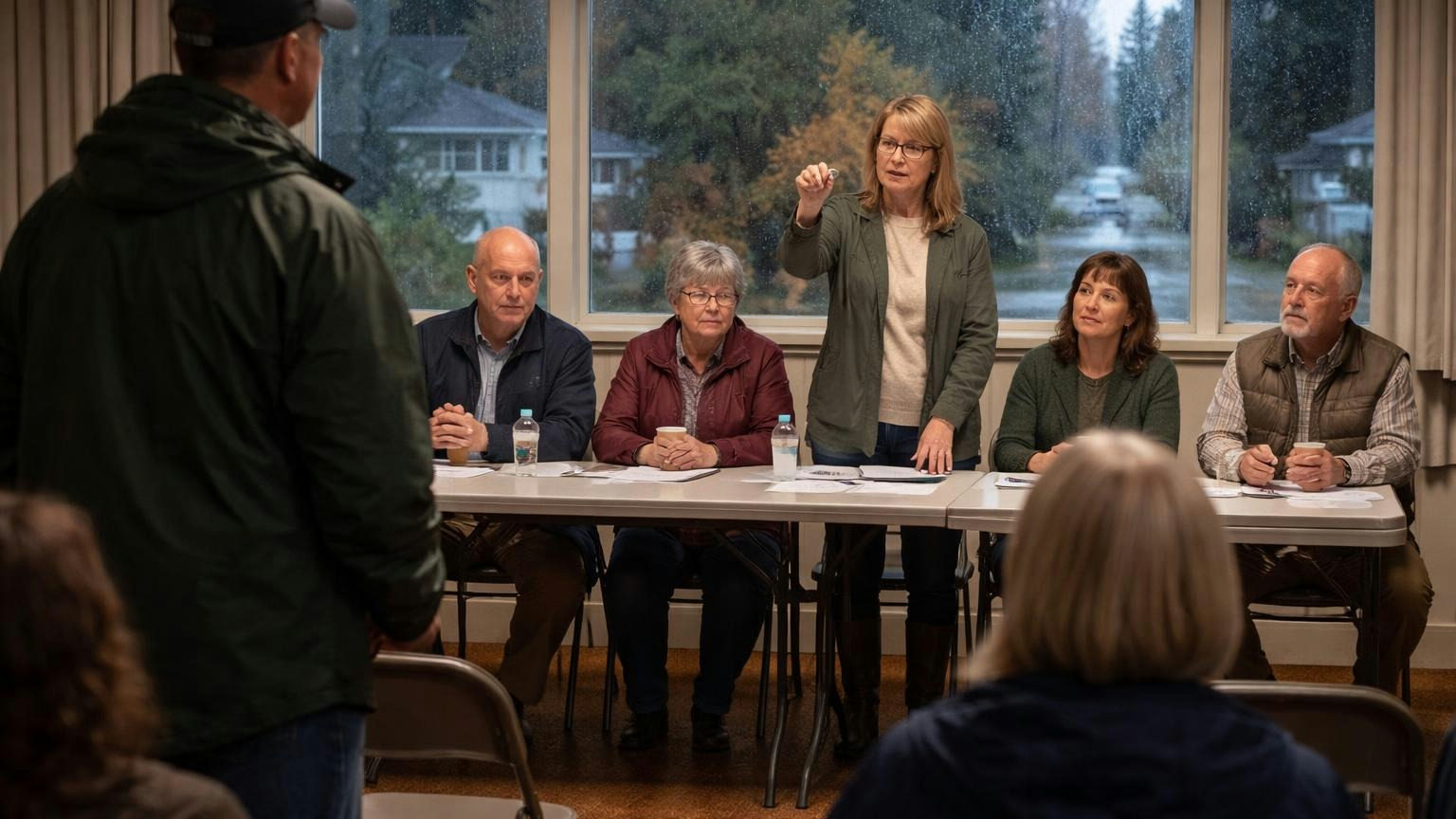
Picture a board president outside Tacoma emailing the neighborhood on a Monday: board meeting Thursday, 7 p.m., the clubhouse. Under Washington law today, that email is eleven days short. It is how the board has always done it, and its 1990s bylaws never said otherwise. A board must give owners at least 14 days' notice of each board meeting, with the agenda, unless the meeting is on a schedule owners already have, and it must set aside at least 15 minutes at the start for owners to comment before it votes (RCW 64.90.445(2)).
That rule sits in the newer act, not the old HOA chapter most boards were handed. Washington has been moving older communities onto it a piece at a time, and on January 1, 2028 it finishes the move.

The short answer
- A Washington HOA board has to give owners 14 days' notice of board meetings with the agenda, let them speak first, and send every budget to the owners, who can reject it. Under RCW 64.38 it must also keep and open seven years of records and, where its documents give it a lien, send the state's mailed notices before collecting or foreclosing.
- Older HOAs live under RCW 64.38, newer ones under RCW 64.90, and nine sections of the newer act already reach the older ones. On January 1, 2028 RCW 64.38 is repealed and RCW 64.90 governs every HOA.
- The law does not require a management company. Under RCW 64.38, a yearly CPA audit starts only when annual assessments reach $50,000, and owners can waive it each year by 67 percent of the votes cast.
Last reviewed: October 5, 2026
Which law governs your community
Created before July 1, 2018: RCW 64.38, the Homeowners' Associations Act. Created on or after that date, or an older community that amended its declaration to opt in: RCW 64.90, the Washington Uniform Common Interest Ownership Act (RCW 64.38.095, RCW 64.90.360).
What few boards know is that the line is not clean. Nine sections of RCW 64.90 apply to communities created before July 1, 2018, and any inconsistent part of RCW 64.38 gives way (RCW 64.90.365). Among them: meetings (64.90.445), budgets and special assessments (64.90.525), reserve studies (64.90.545), emergency powers, a free way to pay dues, and the rules on EV chargers and heat pumps. They govern events since July 1, 2018, and apart from the budget rule and the opt-in rule they do not override what an older community's documents already said on that date.
Small plat communities A plat community of 50 homes or fewer, not subject to any development right, whose declaration caps average yearly assessments at $1,000 (as adjusted under RCW 64.90.065) is left out of those nine sections. Once RCW 64.90 reaches it, only the narrower list in RCW 64.90.360(4) applies.
The 2028 switch Chapter 64.38 is repealed on January 1, 2028, and from that day RCW 64.90 applies to every common interest community in the state (RCW 64.90.360, RCW 64.90.365). Read your declaration against it now, not in December 2027.
The nine things the law actually requires
Which chapter each rule comes from Items citing RCW 64.90 reach almost every HOA; items citing RCW 64.38 are the rule for a community created before July 1, 2018, and a newer community finds its counterpart in RCW 64.90.
1. Call board meetings 14 days out, with the agenda, and let owners speak first. Board and committee meetings are open to owners (RCW 64.90.445(2)). Notice goes to every board member and owner at least 14 days ahead with the time, date, place and agenda, unless the meeting is on a schedule given to owners; a meeting about something no one could have foreseen needs 7 days and an electronic notice to owners whose email or phone the association has. The board gives owners at least 15 minutes at the start of each meeting to comment on agenda items before it votes, and may limit each owner to no less than 90 seconds, or share the time equally when more than 10 owners want to speak. Materials handed to the board before the meeting are made reasonably available to owners, except unapproved minutes and executive-session papers. A board member may not vote by proxy or absentee ballot.
2. Keep executive sessions to five subjects, and never vote in one. A board may close the door only to consult its lawyer, discuss litigation or other proceedings, discuss personnel, discuss a contract being negotiated where early knowledge would hurt the association, or protect a person's privacy, and only during a regular or special meeting. No final vote or action may be taken in executive session, and board members may not use social gatherings to get around the open-meeting rule (RCW 64.90.445(2)(a)–(c)). Every decision voted on goes in the minutes (RCW 64.90.445(4)).

3. Meet the owners once a year, with 14 to 50 days' notice. The association meets at least once a year, and owners holding 20 percent of the votes can make it call a special meeting (RCW 64.90.445(1)). Notice goes out 14 to 50 days ahead with the agenda, the text of any proposed amendment, and any proposal to remove a director. Under RCW 64.38, unless your documents set another number, a quorum is owners holding 34 percent of the votes, present in person or by proxy at the start (RCW 64.38.040).

4. Send the budget out, and let the owners reject it. Within 30 days after adopting a proposed budget, the board sends a copy to every owner and sets an owners' meeting 14 to 50 days later. The budget stands unless owners holding a majority of all the votes in the association reject it, whether or not a quorum is present (RCW 64.90.525). It must show income and expenses by category, each home's assessment and due date, what goes to reserves, whether a reserve study backs it, and the reserve surplus or shortfall per home. A special assessment goes through the same owners' meeting. This rule overrides an older HOA's governing documents too (RCW 64.90.365(2)).

5. Keep a reserve study, unless you are exempt. An association prepares a reserve study and updates it every year, and at least every third year a reserve study professional updates it from a visual site inspection (RCW 64.90.545). It is exempt if its reserve costs are only nominal, or if the study would cost more than 10 percent of the annual budget. Money taken from reserves for something unrelated to reserve components is recorded in the minutes, mailed or hand-delivered as a notice to every owner, and repaid on a schedule of no more than 24 months unless that would unreasonably burden owners (RCW 64.38.075).
35% of the votes is all owners need to demand, in writing, that a reserve study be put in the next budget once more than three years have passed since the last professional one. — RCW 64.38.080
6. Keep seven years of records, and open them. Under RCW 64.38, the association keeps detailed financial records, and the statute lists what it must retain: seven years of receipts, expenses, financial statements, tax returns and contracts; minutes of all owner and board meetings other than executive sessions; the owner list; seven years of the materials behind every architectural decision and every enforcement decision; and ballots and proxies for one year (RCW 64.38.045). Owners may examine and copy them during reasonable business hours, with personnel records, live negotiations, legal advice, executive-session records and other owners' files removed. Each owner gets one free copy of the owner list a year. The association prepares a financial statement every year, and an independent CPA audits it once annual assessments reach $50,000, unless 67 percent of the votes cast at a meeting with a quorum waive the audit for that year. The association's money stays in its own accounts, never mixed with a manager's. A community under RCW 64.90 keeps a similar list (RCW 64.90.495).

7. Fine only from a schedule owners have seen, after a hearing. Under RCW 64.38, an association may levy reasonable fines only after notice and an opportunity to be heard by the board or its designee, from a schedule of fines the board adopted earlier and furnished to the owners (RCW 64.38.020(11)). In a community under RCW 64.90, if a tenant breaks the rules the association can fine the tenant and owner after notice and a hearing, but it cannot end the lease or evict unless the declaration allows it (RCW 64.90.405(5)). The association must also offer at least one way to pay assessments at no charge, or as a common expense (RCW 64.90.480(10)).
8. Collect by the state's notices, not your own letters. Where an older HOA's governing documents give it a lien, Washington sets the steps (RCW 64.38.100). A community under RCW 64.90 has a lien by statute and its own notice steps (RCW 64.90.485).
The steps Washington sets before a foreclosure.
- Within 30 days: A notice of delinquency with the state's first preforeclosure notice
- Next 15 days: No other collection, and only capped charges
- At 90 days late: A second preforeclosure notice, 60 days after the first or later
- The threshold: Three months of assessments or $2,000, whichever is greater
- The vote: The board approves foreclosure on that specific home
The first notice goes by first-class mail to the home and any address the owner gave, by email if the association knows it, in English and any language the owner prefers, with the preforeclosure wording the statute prints and the hotline numbers from the Department of Commerce. For 15 days after it is sent, the association may charge only the actual cost of printing and mailing the notice, an administrative fee of no more than $10, and a single late fee of no more than $50 or 5 percent of the unpaid assessment, whichever is less. It cannot file to foreclose until the owner owes at least three months of assessments or $2,000, whichever is greater, not counting fines, fees or interest; 90 days have passed since that amount accrued; any foreclosure mediation is finished; and the board has approved foreclosure against that home. Every step must be commercially reasonable.

9. Answer owners, and be ready for an emergency. Under RCW 64.38 (until that section expires January 1, 2028), when an owner sends a written question about governance or operations by certified mail, the association answers in a record within 30 days, with the extensions the statute allows (RCW 64.38.185). A board may adopt a rule limiting this to one inquiry per lot every 30 days. In a declared emergency or an imminent threat to safety, habitability or the association's finances, the board may meet on whatever notice is practicable, without a quorum, and by a two-thirds vote levy a special assessment that takes effect at once, then tell owners promptly what it did (RCW 64.90.502).
What the law will not let a board ban
Whatever the governing documents say, an HOA under RCW 64.38 cannot prohibit the first four, and every HOA is bound by the last:
- The U.S. flag, or a flagpole for it, on the owner's property; it can set reasonable rules on placement and size (RCW 64.38.033).
- Political yard signs before a primary or general election (RCW 64.38.034).
- Solar panels that meet the safety standards, though it can bar roof panels from showing above the roofline (RCW 64.38.055).
- Drought-resistant or fire-resistant landscaping, and it cannot fine an owner for letting a lawn go brown during a state drought order (RCW 64.38.057).
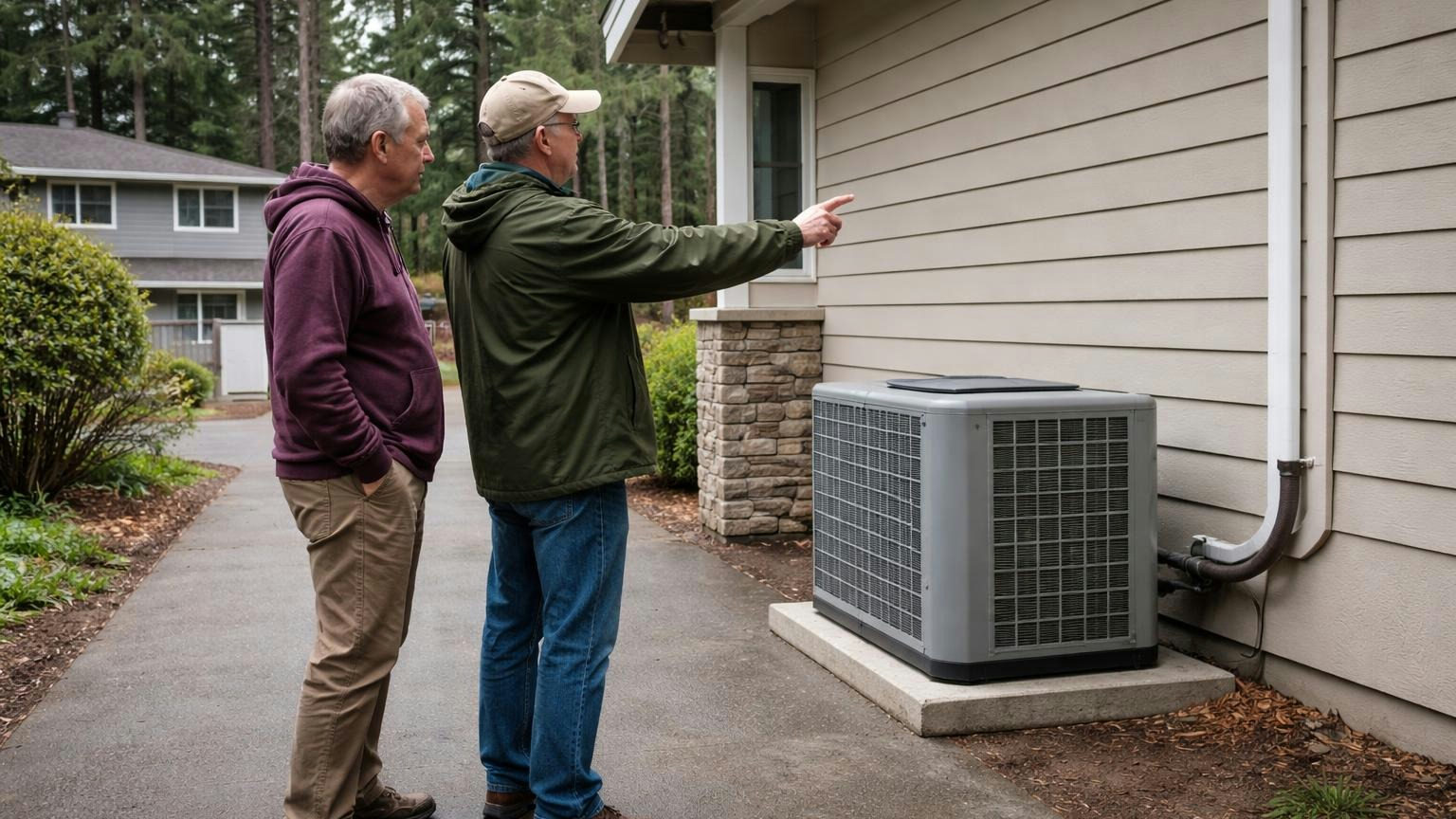
- An EV charger or a heat pump for the owner's home, or rules that unreasonably restrict them; reasonable restrictions are allowed. If approval is required, an application not denied in writing within 60 days is approved, unless the delay comes from a reasonable request for more information (RCW 64.90.513, RCW 64.90.580).
An HOA under RCW 64.38 also cannot demand a copy of a tenant's screening report, though it can require the owner to obtain one (RCW 64.38.130).
What the law does not require
- No management company. The association may hire a managing agent; nothing in the statute says it must (RCW 64.38.020(3)).
- No audit below $50,000 in annual assessments under RCW 64.38, and above it owners can waive the audit each year by 67 percent of votes cast (RCW 64.38.045(2)).
- No reserve study when reserve costs are only nominal, or when one would cost more than 10 percent of the annual budget (RCW 64.90.545(2)). Your declaration may still require one.
- No personal damages for reserve decisions. Under RCW 64.38, no money damages may be awarded against the board for failing to keep a reserve account or study or to make the reserve disclosures (RCW 64.38.085). After a written demand by 35 percent of the votes, a court can order the study prepared (RCW 64.38.080).
Washington does not ask a volunteer board to hire anyone. It asks the board to give owners two weeks, the first fifteen minutes, and the vote on the budget.
What this means for a self-led board
Most of what Washington asks is timing: 14 days, 15 minutes, 30 days, 90 days. A board that keeps a calendar keeps the law. The trap is the bylaws. A set of documents written before 2018 can be accurate about your community and still be behind the state, and from 2028 the whole of RCW 64.90 decides.
Four things to do this week:
- Check the notice for your next board meeting: 14 days ahead, the agenda included, to every owner.
- Put 15 minutes of owner comment at the top of the agenda, before any vote.
- Pull your delinquency letter and check it carries the state's first preforeclosure notice and charges nothing beyond the capped fees for the first 15 days.
- Put the 2028 switch on the next agenda: who will read the declaration against RCW 64.90, and by when.

The takeaway
Washington lets a volunteer board run its community without a manager. In return it wants two weeks' notice, owners heard before votes, every budget put to the owners, seven years of records kept open, and the state's own notices before collecting. Learn RCW 64.90 now, because in 2028 it is the only rulebook.
Frequently asked questions
How much notice does a Washington HOA board need to give for a board meeting? At least 14 days, with the time, date, place and agenda, unless the meeting is on a schedule already given to owners. An unforeseeable emergency needs 7 days and an electronic notice (RCW 64.90.445(2)(f)).
Does RCW 64.90 apply to an HOA created before 2018? In part, today: nine of its sections, including meetings, budgets and reserve studies, already reach older communities under RCW 64.90.365. All of it applies from January 1, 2028, when RCW 64.38 is repealed.
When can a Washington HOA foreclose for unpaid dues? Under RCW 64.38, only if the governing documents give it a lien, the owner owes at least three months of assessments or $2,000 (whichever is greater, excluding fines and fees), 90 days have passed, both preforeclosure notices have gone out, and the board has approved foreclosure on that home (RCW 64.38.100).
What Does an HOA Board Actually Have to Do Legally in Colorado?
This is a plain-language guide, not legal advice. Your governing documents and an attorney licensed in Washington have the final word.
Sources:
- Homeowners' Associations Act, chapter 64.38 RCW, as published by the Washington State Legislature: chapter 64.38 RCW
- Washington Uniform Common Interest Ownership Act, chapter 64.90 RCW, sections 64.90.360, .365, .405, .445, .480, .485, .495, .502, .513, .525, .545 and .580, as published by the Washington State Legislature: chapter 64.90 RCW