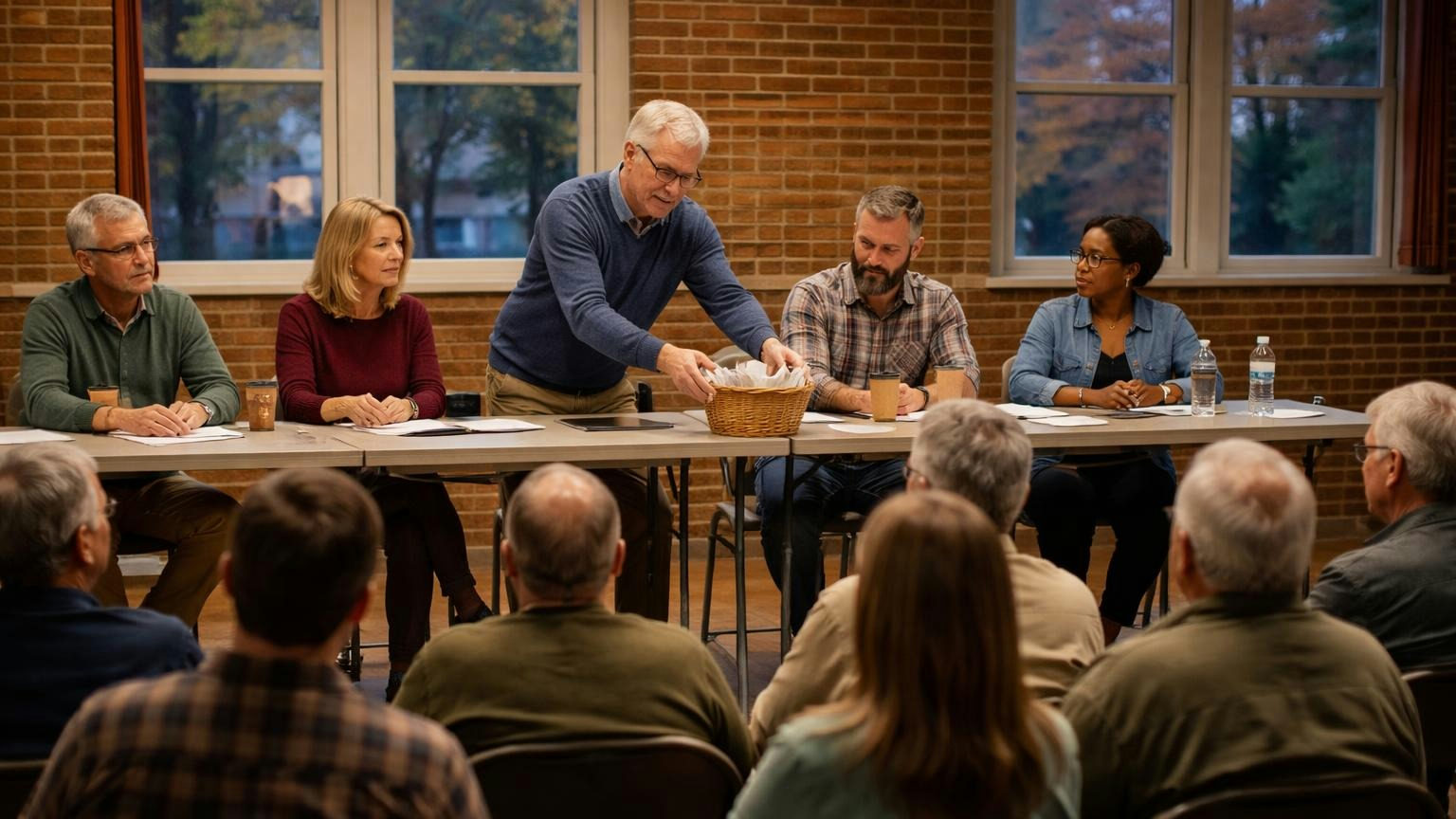
Picture five volunteers in a Virginia subdivision voting by paper slip on whether to repave the pool lot, to keep feelings out of it. Under Virginia law, that quiet vote is itself a violation. Except for electing officers, "voting by secret or written ballot in an open meeting shall be a violation of this chapter" (§ 55.1-1816(B)).
The Act barely asks whether a board hires a manager. It cares a great deal about how the board meets, decides and enforces, and it writes those steps down.

The short answer
- A Virginia HOA board has to meet in the open and vote out loud, give owners a set time to speak, open the records on written notice, follow a notice-and-hearing ladder before any fine, carry a fidelity bond, and redo its reserve study at least every five years.
- The Virginia Property Owners' Association Act (Code of Virginia § 55.1-1800 et seq.) sets those duties for developments whose declaration was recorded after January 1, 1959. Condominiums and cooperatives fall under other laws.
- It does not require a management company. It gives a self-managed association more notice before opening its records than a managed one.
Last reviewed: October 5, 2026
Which law governs your community
The Act applies to developments subject to a declaration first recorded after January 1, 1959, and to associations organized after that date (§ 55.1-1801(A)). It does not override what an older declaration says, but where the declaration is silent the Act fills the gap, and a declaration can opt in on its own terms (§ 55.1-1801(C)). If one lot in a development is subject to the Act, every lot is.
It does not govern condominiums, cooperatives, time-shares or membership campgrounds, which have their own statutes (§ 55.1-1801(D)). A "declaration" here is any recorded instrument that puts maintenance of common areas on an association or lets it charge mandatory payments (§ 55.1-1800). That is the test, whatever the document is called.
The ten things the Act actually requires
1. Hold every board meeting in the open, and vote out loud. Every meeting of the board, and of any committee of the board, where association business is discussed or transacted is open to every member, and the board may not use work sessions or informal gatherings to get around it (§ 55.1-1816(A)). Notice of the time, date and place is published where it is reasonably calculated to reach a majority of owners, and mailed or emailed to any owner who asks in writing each year. The agenda packet the board receives is available to members at the same time. Members may record any open portion. And except for electing officers, no secret or written ballots at an open meeting.
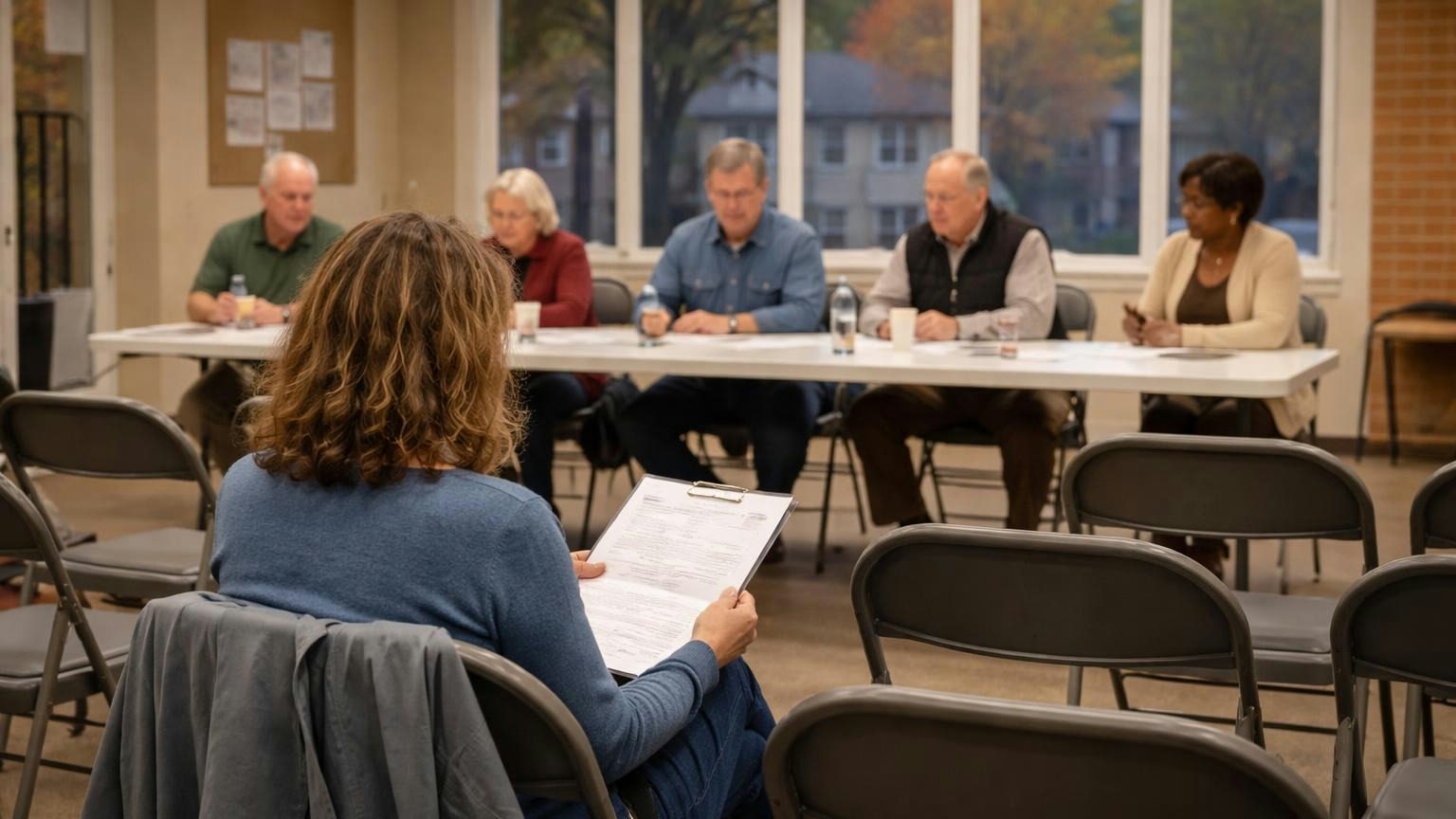
2. Give owners a set time to speak, and close the door only for listed reasons. The board provides a designated period at each meeting for members to comment on any association matter, under reasonable rules it adopts; at a special meeting it may limit comments to the agenda (§ 55.1-1816(D)). Closed sessions are allowed only for personnel, legal advice, contracts, litigation, violations and members' personal liability, on a motion voted in open session that states the purpose. Nothing decided behind closed doors takes effect until the board comes back out and votes on it in the open (§ 55.1-1816(C)).
3. Meet the members at least once a year, with written notice. The association meets at least once a year (§ 55.1-1815(G)). Notice of the time, place and purpose goes to each member at least 14 days before an annual or regularly scheduled meeting and at least 7 days before any other, by mail, by hand with a written certification, or by email to members who chose email. Unless the governing documents forbid it, members may vote in person, by proxy or by absentee ballot, and by electronic means once the board has adopted guidelines for it (§ 55.1-1815(H)).

4. Open the records on a written request, on the clock. The association keeps detailed records of receipts and spending, kept to generally accepted accounting practices, plus each owner's assessment account (§ 55.1-1815(A)). A member in good standing may examine and copy the books and records for a proper purpose, including the membership list, on written notice that identifies the purpose and the records: 10 business days' notice for a self-managed association and 5 for one run by a manager, during reasonable business hours or at a mutually convenient time (§ 55.1-1815(B)). The association may withhold only the nine categories the statute lists, such as personnel files, pending contracts, litigation and other owners' files, and must redact rather than withhold a whole record when only part is protected (§ 55.1-1815(C)-(D)).
Any copy charge must come from a cost schedule the board has adopted and hands to the member when the request is made (§ 55.1-1815(E)). Draft board minutes are open within 60 days of the meeting, or sooner when they go out in the next agenda packet (§ 55.1-1815(G)).

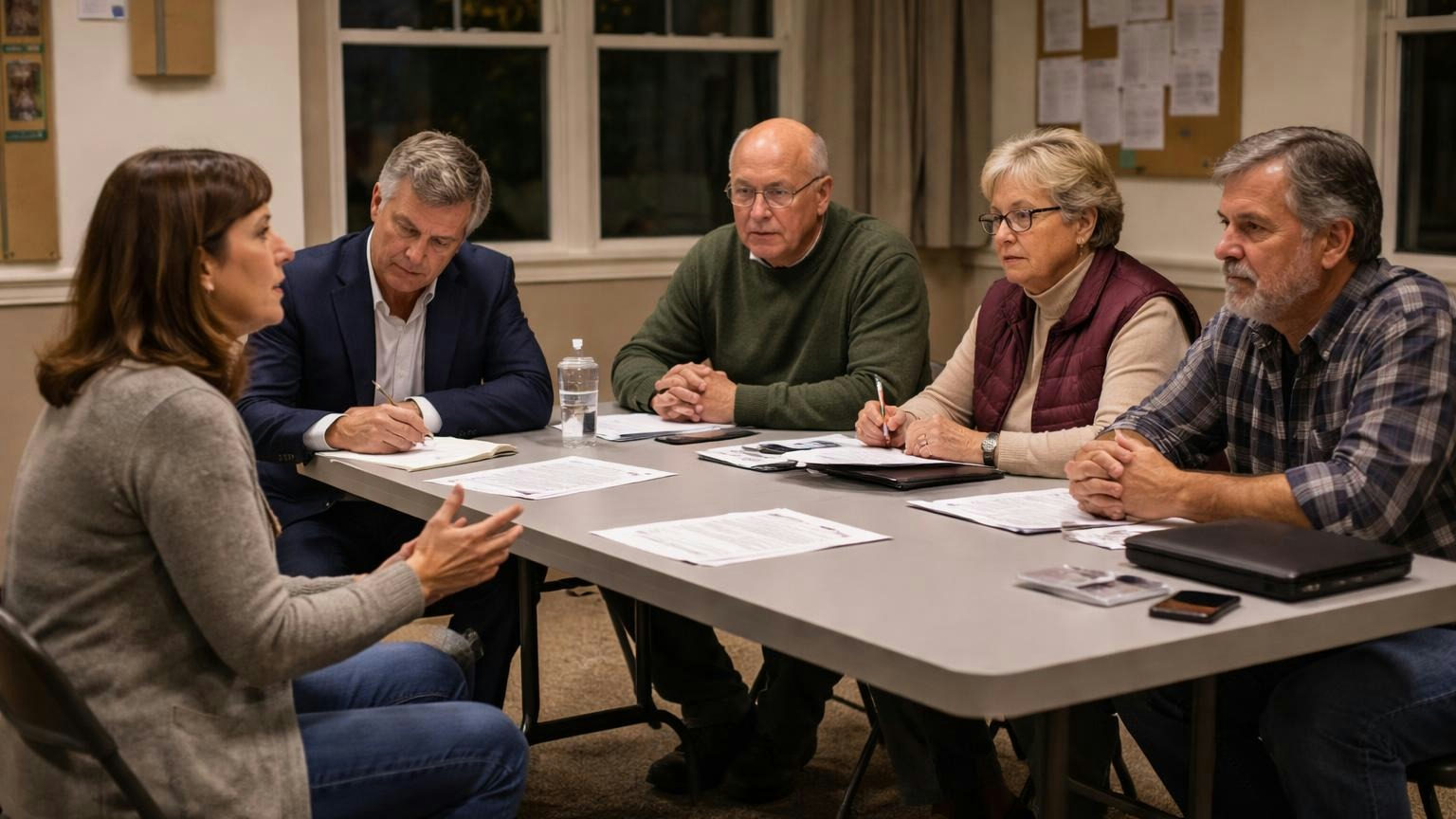
5. Fine only after notice, a chance to fix it, and a hearing. A board may charge for a violation only if the declaration or duly adopted rules expressly allow it (§ 55.1-1819(B)). The order is fixed (§ 55.1-1819(C)):
Before any Virginia HOA fine.
- Written notice: The alleged violation, to the meeting-notice address
- A chance: Reasonable time to correct it
- Hearing notice: 14 days ahead, certified or registered mail, or by hand
- The hearing: If still uncorrected, heard, with counsel if they choose
- The result: Within 7 days, certified or registered mail, or by hand
The hearing notice must also state the actions the association may take (§ 55.1-1819(C)). The charge is capped at $50 for a single offense or $10 a day for a continuing one, and a continuing charge runs for no more than 90 days (§ 55.1-1819(D)). Once the association files suit to collect the charges or stop the violation, or the owner sues to challenge them, no more charges accrue (§ 55.1-1819(F)). The section that lets other notices go by email does not reach enforcement, lien or foreclosure notices (§ 55.1-1832(H)).
$10 a day is the most a Virginia association can charge for a continuing violation, and only for 90 days. — Code of Virginia § 55.1-1819(D)
6. Collect dues by the statute's steps. Unless the declaration or rules say otherwise, a late fee may be charged only on an assessment unpaid 60 days after its due date, and may not exceed the penalty in § 58.1-3915 (§ 55.1-1824), a penalty that section sets at five percent unless a local ordinance under § 58.1-3916 provides otherwise (§ 58.1-3915).
To make its lien count, the association sends the owner a certified-mail notice at least 10 days before filing, then files a memorandum of lien with the circuit court clerk within 12 months of when the first unpaid assessment fell due (§ 55.1-1833(B)-(C)). Foreclosure is available only when the perfected liens total more than $5,000, not counting attorney fees and costs, and a nonjudicial sale starts with a notice giving the owner at least 60 days to pay (§ 55.1-1833(I)-(J)).
The steps before a Virginia lien sale.
- Day 60: A late fee becomes possible
- Ten days out: Certified notice of the lien
- Within 12 months: Memorandum of lien filed
- Over $5,000: Foreclosure becomes possible
- 60 days: Final notice to pay before sale
7. Budget every year, and restudy reserves every five. Before the fiscal year starts, the board makes the annual budget, or a summary of it, available to owners (§ 55.1-1826(A)). It conducts a reserve study at least once every five years, reviews the results at least once a year, and adjusts the budget and assessment as it sees necessary (§ 55.1-1826(B)). Where the study shows reserves are needed, the budget must show each capital component's replacement cost and remaining life, the reserve cash on hand, the year's planned contribution, how reserves are estimated, and the amount the study recommends against the cash actually held (§ 55.1-1826(C)).

8. Carry a fidelity bond, even with no manager. Any association collecting assessments must keep a blanket fidelity bond or employee dishonesty policy covering theft or dishonesty by its officers, directors and employees, and by any manager (§ 55.1-1827(B)). Coverage is the lesser of $1 million or the reserve balances plus a quarter of a year's assessment income, and never less than $10,000. The rule is not limited to managed associations: a volunteer treasurer's handling of the money is exactly what it insures against.

9. File the annual report, and keep a complaint procedure. The association files an annual report with the Common Interest Community Board, in the form and at the time its regulations set, with a fee (§ 55.1-1835). Under that Board's rules, each association keeps written procedures for resolving members' written complaints, keeps a record of each complaint for at least a year after acting on it, and gives complainants forms or procedures that name the state's Common Interest Community Ombudsman and explain the right to report a final adverse decision (§ 54.1-2354.4).
10. Give owners a free way to talk to each other. The board must set up a reasonable, effective and free way, fitting the community's size, for owners to communicate with each other and with the board about any association matter (§ 55.1-1817). It also posts signs on the common area at least 48 hours before any pesticide is applied there (§ 55.1-1818).
When a home sells The association prepares a resale certificate on the state form, with its governing documents, budget, reserve study and assessments (§ 55.1-2310), and its fees are capped by the Common Interest Community Board (§ 55.1-2316).
What the law will not let a board ban
Within reasonable rules on size, place and manner, an association cannot prohibit:
- The flag of the United States on property the owner owns or has exclusive use of (§ 55.1-1820).
- A home-based business inside the residence, unless the declaration says otherwise (§ 55.1-1821).
- At least one real estate sign on the owner's lot when selling (§ 55.1-1822).
- An electric vehicle charger for personal use on the owner's property, unless the recorded documents provide otherwise (§ 55.1-1823.1).
What the law does not require
- No management company. The Act's rules for a managing agent, such as holding funds in a separate trust account, apply only if a board hands one its money (§ 55.1-1827(A)), and the records clock gives a self-managed association twice as long (§ 55.1-1815(B)).
- No paper-only meetings. Any meeting may be held wholly or partly online once the board adopts guidelines, and notices, signatures and votes may be electronic unless the declaration forbids it, except for enforcement, lien and foreclosure notices (§ 55.1-1832). The association must offer a reasonable alternative, at its expense, to anyone who cannot or will not use electronic means.
- No yearly reserve study. Every five years, with an annual review of the results (§ 55.1-1826(B)).
What this means for a self-led board
Most of the Act is about process: who gets told, how far ahead, by what mail, and where the vote happens. A board that is right about a violation can still lose a fine it skipped a step on, and the prevailing party in an enforcement suit recovers its attorney fees (§ 55.1-1828(A)).
Six things to do this week:
- Find the association's fidelity bond or crime policy and check its limit against the reserve balance plus a quarter of a year's dues.
- Pull your violation letter and fine schedule; strike anything over $50 a violation, $10 a day, or 90 days.
- Write down the date of your last reserve study. If it is more than five years old, put a new one on the next agenda.
- Stop any secret or written ballot at board meetings, except for electing officers.
- Check your hearing notice: sent certified or registered mail, or by hand, at least 14 days ahead, naming the actions the board may take.
- Adopt a copy-cost schedule and put the records clock on the calendar: 10 business days' notice from a written request for a self-managed association.

The takeaway
Virginia does not ask a self-managed board to hire anyone. It asks the board to meet where owners can see it, vote where they can hear it, insure the money, and give every owner notice and a hearing before a fine. Keep that paper trail and the Act is on your side.
Frequently asked questions
Can a Virginia HOA fine a homeowner every day? Only up to $10 a day for a continuing violation, and for no more than 90 days, and only after written notice, a chance to fix it, and a hearing. A single offense is capped at $50 (§ 55.1-1819).
How much notice does a Virginia HOA get before showing its records? A member may examine and copy them on 10 business days' written notice in a self-managed association, or 5 in one with a manager, if the notice names the purpose and the records (§ 55.1-1815(B)).
Does a self-managed Virginia HOA need a fidelity bond? Yes. Any association that collects assessments needs one, covering the lesser of $1 million or its reserves plus a quarter of a year's assessments, and never less than $10,000 (§ 55.1-1827(B)).
What Does an HOA Board Actually Have to Do Legally in Colorado?
This is a plain-language guide, not legal advice. Your governing documents and an attorney licensed in Virginia have the final word.
Sources:
- Virginia Property Owners' Association Act, Code of Virginia Title 55.1, Chapter 18, as published by the Virginia General Assembly's Legislative Information System: law.lis.virginia.gov
- Code of Virginia § 54.1-2354.4 (association complaint procedures), §§ 55.1-2310 and 55.1-2316 (Resale Disclosure Act) and § 58.1-3915, from the same site.