
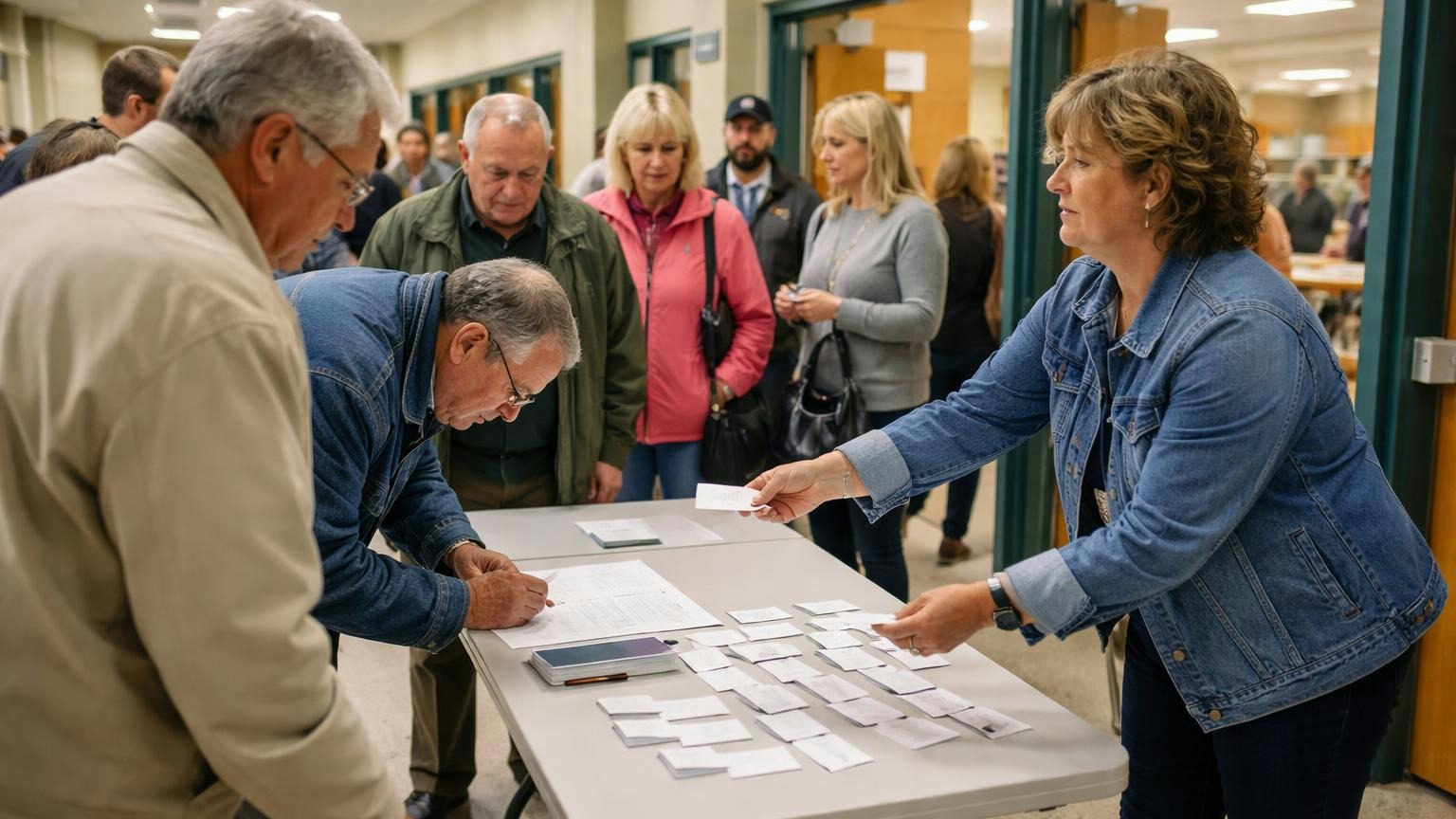
Picture an Ohio subdivision's annual meeting: a homeowner stands up and says the board breaks state law every time it decides things behind closed doors. In some states he would be right; in Ohio the law says the opposite: no owner other than a director may attend or take part in a board meeting unless the board expressly authorizes it (R.C. 5312.04(F)).
Ohio's HOA law is sixteen sections long and leaves much to your own documents. But what it does require is specific, and two duties catch volunteer boards off guard: crime insurance that has to cover the board's own treasurer, and bylaw changes that have no effect until they are on record at the county.
The short answer
- The duties: in Ohio, an HOA board legally has to record every bylaw amendment at the county, adopt a budget with reserves every year, assess every lot at least once a year, carry property, liability, directors-and-officers and crime insurance to the extent reasonably available, open the books, minutes and owner list to owners, hold an annual owners' meeting, charge interest on late assessments, and give notice and a hearing before any fine.
- The law: the Ohio Planned Community Law, Revised Code Chapter 5312, covers every planned community that is not a condominium. Where your recorded documents specifically say something different, the documents win.
- What it skips: no management company, reserve study, audit or open board meetings. A majority of the voting power can waive reserves in writing, one year at a time.
Last reviewed: October 7, 2026
Which law governs your community
Chapter 5312 applies to any planned community in Ohio (R.C. 5312.02(A)). A community of individual lots is a planned community if a deed, a common plan or a declaration requires any one of three things: that owners belong to an owners association, that the owners or the association hold property for the owners' benefit, or that owners pay to support property or facilities everyone can use (R.C. 5312.01(M)). Homes on lots, with dues for a pond, an entrance or a pool: you are almost certainly in. A condominium, as defined in R.C. 5311.01, is not, and this page does not cover one.
Where the chapter and a governing document specifically conflict, the document controls; where the document is silent, the chapter fills the gap (R.C. 5312.15). And nothing in the chapter invalidates a provision already in a document recorded before September 10, 2010, the day the law took effect (R.C. 5312.02(C)). Read your own declaration and bylaws next to this list.

The nine things the law actually requires
1. Record your bylaws and every amendment at the county. An amendment to the declaration or the bylaws is not effective at all until it is filed with the county recorder (R.C. 5312.05(A)), and the board records a bylaw amendment within 60 days after it is adopted (R.C. 5312.02(D)(3)). For communities that already existed on September 10, 2010, the law went further: the bylaws in effect that day had to be recorded within 180 days, bylaws adopted since then within 90 days, and until they are recorded, the board may not pursue any civil action against anyone based on them (R.C. 5312.02(D)(1), (2) and (5)). If your community predates 2010, check that last line first.
Amending takes 75 percent Unless your documents set a different number, owners amend the declaration and bylaws by the consent of 75 percent of the owners, in writing or at a meeting called for that purpose (R.C. 5312.05(A)).
2. Run the board the way the statute shapes it. The owners elect the board from among the owners and their spouses, and the board exercises the association's power (R.C. 5312.03(A)). A majority of the board may not come from the same lot unless the board authorized it by resolution beforehand. The board elects a president, secretary and treasurer from its members and may fill a vacancy for the rest of the term (R.C. 5312.04(A)-(B)). Your documents must stagger terms so that at least one-fifth expire every year (R.C. 5312.02(B)(3)).
The board may meet by phone or video if every director can hear or read, and respond to, every other in real time, and may act without a meeting only by unanimous written consent, filed with the minutes (R.C. 5312.04(D)-(E)).

3. Meet the owners at least once a year. Outside a developer's period of control, the board calls a meeting of the association at least once a year (R.C. 5312.04(C)). The president, a majority of the board, or owners holding 50 percent of the voting power (or a lower share your documents set) can call a special meeting. How notice is given is up to your bylaws; email notice works only for an owner who authorized it in writing first (R.C. 5312.02(B)(8)).
4. Adopt a budget every year, with reserves in it. The board adopts an estimated budget for revenue and spending every year (R.C. 5312.06(A)(1)). It includes reserves adequate to repair and replace major capital items in the normal course, without special assessments, unless owners holding at least a majority of the voting power waive the requirement in writing, annually. The board then assesses each lot's share of the common expenses at least once a year, based on that budget, allocated the way the declaration says or equally among all lots if it is silent (R.C. 5312.10(A)).
Two limits apply: the board may not charge assessments unless the declaration provides for or contemplates them, and cannot exceed a cap in the declaration until the owners amend it (R.C. 5312.10(C)).

5. Insure the association, including against your own treasurer. From the first sale of a lot to someone other than the developer, the association maintains, to the extent reasonably available and applicable (R.C. 5312.06(B)):
- property insurance on the common elements;
- liability insurance for the common elements;
- directors and officers liability insurance;
- blanket fidelity, crime or dishonesty coverage for every person who controls or disburses association money.
That last line is the one volunteer boards miss. It covers anyone who can sign a check, make an electronic transfer or withdraw money, and the statute names a management company's people, a bookkeeper, and the president, secretary, treasurer and any other board member. Coverage must equal the most money the association will hold at any one time plus three months of operating expenses. The policy names the association as the insured and must require the insurer to give the president or manager 10 days' written notice if it is cancelled or substantially changed.

Ohio does not assume a volunteer treasurer is a thief. It requires the association to be insured in case one is.
6. Keep four kinds of records, and open them to owners. The association keeps complete books of account, assessment collection records, association and board minutes, and owners' names and addresses (R.C. 5312.06(C)). Any owner may examine and copy them under reasonable standards the documents or board rules set, which may cover which documents, when and where, and a reasonable copying fee (R.C. 5312.07).
Unless the board approves, an owner may not see:
- records more than five years old;
- personnel matters, or communications with legal counsel about litigation;
- contracts under negotiation or under a confidentiality term;
- enforcement against other owners;
- anything state or federal law keeps private.
7. Charge interest on late assessments. This one is a "shall," not a "may." The board charges interest on any past-due assessment or installment, at a rate it sets, up to any maximum the law permits (R.C. 5312.10(B)). When a delinquent owner pays, unless your documents or rules say otherwise, the money goes first to interest, then late fees and enforcement assessments, then collection and legal costs, and last to the oldest unpaid assessments (R.C. 5312.11(B)).
Unpaid charges become a lien on the lot (R.C. 5312.12); the path is below, and the certificate is signed by the president or another designated representative. A filed lien lasts five years unless released or satisfied, and ranks ahead of later liens but behind real estate taxes, government assessments and a first mortgage recorded before it. An owner who believes the charge was wrong can sue in the court of common pleas to discharge it.
The collection path in Chapter 5312.
- Due date: The assessment falls due
- Day 10: Still unpaid, the amount can be liened
- Board vote: The board authorizes a certificate of lien
- Recorder: The certificate is filed, and the lien is effective
- Court: Foreclosure, like a mortgage
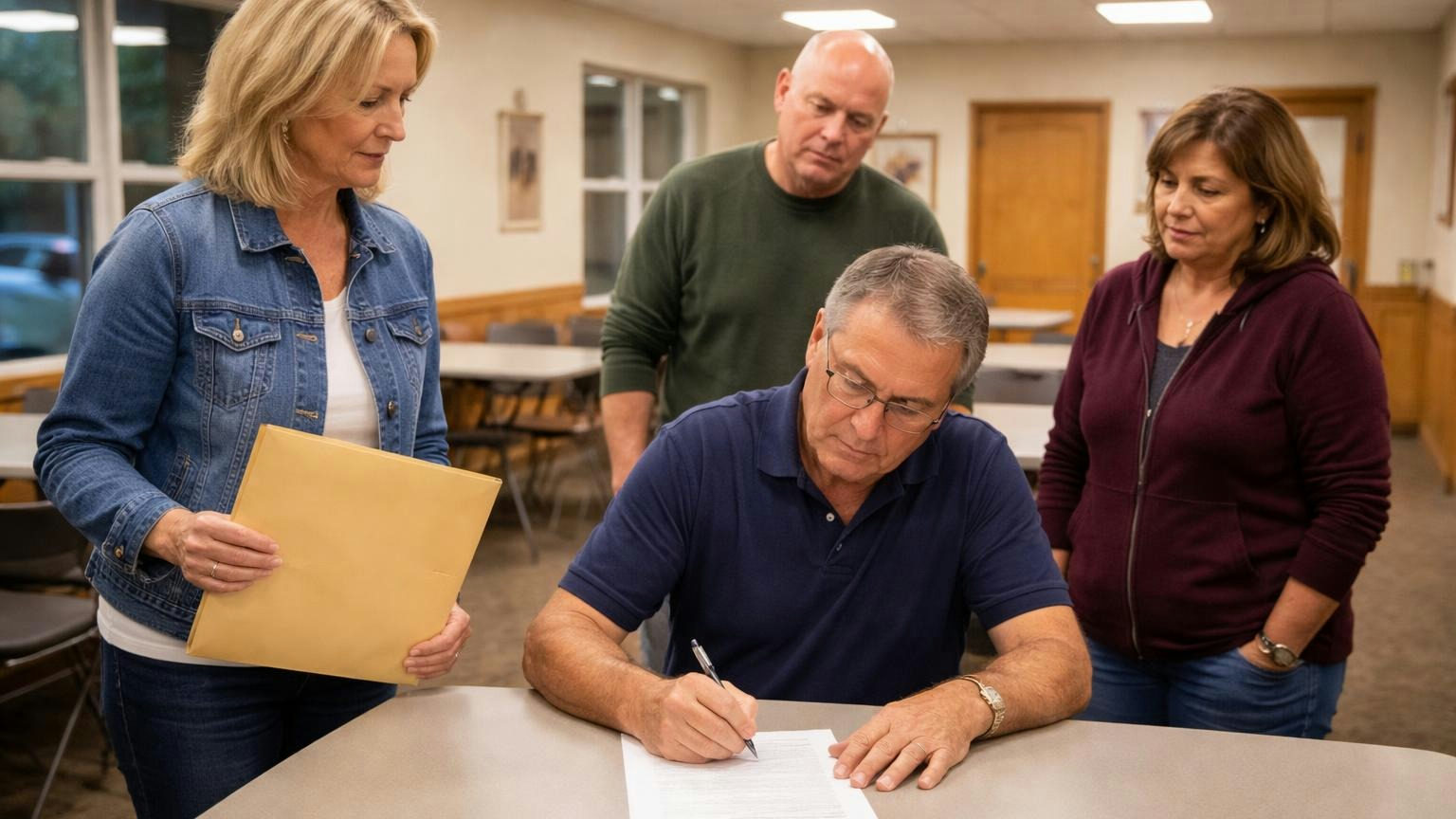
8. Give notice and a hearing before any fine. Before imposing an enforcement assessment or a charge for damage, the board sends the owner written notice, by email only to an address the owner provided in writing (R.C. 5312.11(C)). The notice carries five things: the violation or damage, the proposed amount, the owner's right to a hearing before the board, how to ask for one, and, where a continuing violation can be cured, a reasonable date to cure it.
The fine clock in R.C. 5312.11.
- Notice: The five-part written notice goes out
- 10 days: The owner's deadline to ask for a hearing in writing
- 7 days ahead: Written notice of the hearing's date, time and place
- Hearing: No charge until it is held
- 30 days after: Written notice of any charge imposed
If the owner does not ask in time, the right is waived and the board may impose the charge at once (R.C. 5312.11(D)). Notices go by hand, certified mail with a return receipt, or regular mail. The same five-part notice applies before any charge over an owner's solar panels (R.C. 5312.16).
9. Keep up the common areas, and follow fair housing law. Unless the declaration says otherwise, the association maintains, repairs and replaces the common elements, and each owner keeps up their own lot and home, including the utility lines serving it (R.C. 5312.08(A)). Owners must let the association's agents and employees through their lot and home for that work, and whoever causes damage doing it pays for it. The board must comply with state and federal law against discrimination on the basis of race, color, religion, sex, military status, national origin, disability, age or ancestry (R.C. 5312.04(G)). A provision limiting occupancy or use on the basis of race, color, national origin, religion, sex or familial status can be deleted as void by a simple majority vote of the board, without the owners (R.C. 5312.05(C)).
What the law does not require
- No management company. Hiring a manager is something the board "may" do (R.C. 5312.06(D)(1)); the bylaws only have to say whether one may be engaged (R.C. 5312.02(B)(6)).
- No open board meetings. Owners other than directors attend only if the board authorizes it (R.C. 5312.04(F)). A board can choose to open its meetings; the law does not make it.
- No reserve study and no audit. Chapter 5312 requires adequate reserves in the budget, not a study, and complete books, not an audit. Your declaration may still require either.
- No state registration. Nothing in the sixteen sections asks an association to register with the state. The association is organized as a nonprofit corporation under Chapter 1702 (R.C. 5312.03(B)).
What this means for a self-led board
Ohio leaves a great deal to your documents, so the board stands on them being in order. The duties most likely to slip are paperwork, not judgment, and two of them protect the board itself: the crime coverage, and the notice-and-hearing steps that let a fine stand.
Four things to do this week:
- Ask your insurance agent, in writing, for your fidelity or crime coverage limit, and compare it with the most money you ever hold plus three months of operating expenses.
- Look up your bylaws and every amendment at the county recorder's office, and record any that are missing.
- Check that your budget carries reserves, or that you hold this year's written waiver from a majority of the voting power.
- Rewrite your violation letter so it carries all five parts the statute requires.

The takeaway
Ohio gives a volunteer board real privacy and leaves much to its documents. In return it wants the association insured, its documents recorded, reserves budgeted, the books open, and every fine preceded by notice and a hearing. Get those right and the statute is on your side.
Frequently asked questions
Can Ohio HOA homeowners attend board meetings? Only if the board allows it. No owner other than a director may attend or take part in a board meeting unless the board expressly authorizes it (R.C. 5312.04(F)). The association's annual meeting is a separate meeting of the owners.
Does an Ohio HOA have to keep reserves? Yes, by default. The yearly budget must include reserves adequate to repair and replace major capital items, unless owners holding a majority of the voting power waive the requirement in writing, annually (R.C. 5312.06(A)(1)).
Does a self-managed Ohio HOA need crime insurance for its treasurer? Yes, to the extent it is reasonably available and applicable. Fidelity or crime coverage must protect against anyone who can sign checks or move association money, board members included, for the most money held at one time plus three months of operating expenses (R.C. 5312.06(B)(4)).
What Does an HOA Board Actually Have to Do Legally in Colorado?
This is a plain-language guide, not legal advice. Your governing documents and an attorney licensed in Ohio have the final word.
Sources:
- Ohio Planned Community Law, Ohio Revised Code Chapter 5312, sections 5312.01 to 5312.16, as published by the Legislative Service Commission: codes.ohio.gov, Chapter 5312