
A homeowner in a New York subdivision emails the treasurer asking to see the association's bank statements and every invoice from last year's paving job. The treasurer, a volunteer, assumes the board can say no: owners get the budget, and that is it. For a homeowners association incorporated under New York's Not-for-Profit Corporation Law, the law says otherwise. Members are entitled to review, on request to the board, invoices, ledgers, bank accounts, reconciliations, contracts, and any documents related to how dues were spent (N-PCL § 621(e-1)).
New York has no single HOA act. What a board must do comes from the corporation law most associations are formed under, plus the Condominium Act if the community is a condominium. Below are both, section by section, each linked to the text.

The short answer
- The duties: a New York HOA board must keep books, minutes and a member list and open them to members (in an HOA, the invoices and bank statements too), hold an annual members' meeting on 10 to 50 days' written notice (30 to 60 by mail other than first class), present a verified or certified annual financial report there, keep at least three directors, clear any related party deal as fair, and act with the care of an ordinarily prudent person.
- The law: the Not-for-Profit Corporation Law governs an HOA incorporated under it; a condominium also answers to the Condominium Act, Real Property Law Article 9-B, which adds an annual report to owners, a lien process and a 90-day foreclosure notice.
- What it skips: none of the sections on this page requires an audit (the report can be verified by two officers), a reserve study or a management company.
Last reviewed: October 8, 2026
Which law governs your community
Start with two documents: your certificate of incorporation and your declaration.
If the association was formed as a not-for-profit corporation, the Not-for-Profit Corporation Law (N-PCL) governs how it is run: meetings, votes, records, directors and officers. Section 621(e-1), the records right in the opening paragraph, is written for exactly this case: "a homeowners association incorporated pursuant to the provisions of this chapter" (N-PCL § 621).
If your declaration created a condominium, Real Property Law Article 9-B, the Condominium Act, applies too. It sets what your bylaws must contain (RPL § 339-v), how the books are kept (RPL § 339-w), and how unpaid common charges are collected (RPL § 339-z). A condominium's board of managers may also incorporate, and the Act allows it as long as the incorporation is consistent with the Act (RPL § 339-v(1)(a)). Then both laws apply.
Many of the N-PCL rules below are defaults: they bend where your certificate or bylaws set a different rule, and the section says so. Read your own documents next to this list.

The ten things the law actually requires
1. Seat the board for real terms, with real officers. The board has at least three directors; if nothing fixes the number, it is three (N-PCL § 702(a)). Directors serve the term your certificate or bylaws set, no more than five years, and one year if nothing sets it (N-PCL § 703(b)). Each holds office until a successor is elected and qualified (§ 703(c)). One person may hold more than one office, but not both president and secretary (N-PCL § 713(a)), and unless your documents say otherwise, officers are elected or appointed every year (§ 713(c)).
A condominium's bylaws must stagger the board so that at least one-third of the managers' terms expire each year, and must provide for a president, a secretary who records the board's and owners' meetings, and a treasurer who keeps the books (RPL § 339-v(1)).
2. Hold the annual meeting, and answer a members' call. Members meet every year to elect directors, on a date your bylaws fix (N-PCL § 603(b)). Missing the date is not, by itself, cause to dissolve the association, but the statute still calls for the meeting every year.
Members holding ten percent of the votes can demand a special meeting in writing, for a date two to three months out. The secretary must then give notice promptly; if the secretary has not within five business days, any member who signed the demand may send it (N-PCL § 603(c)).
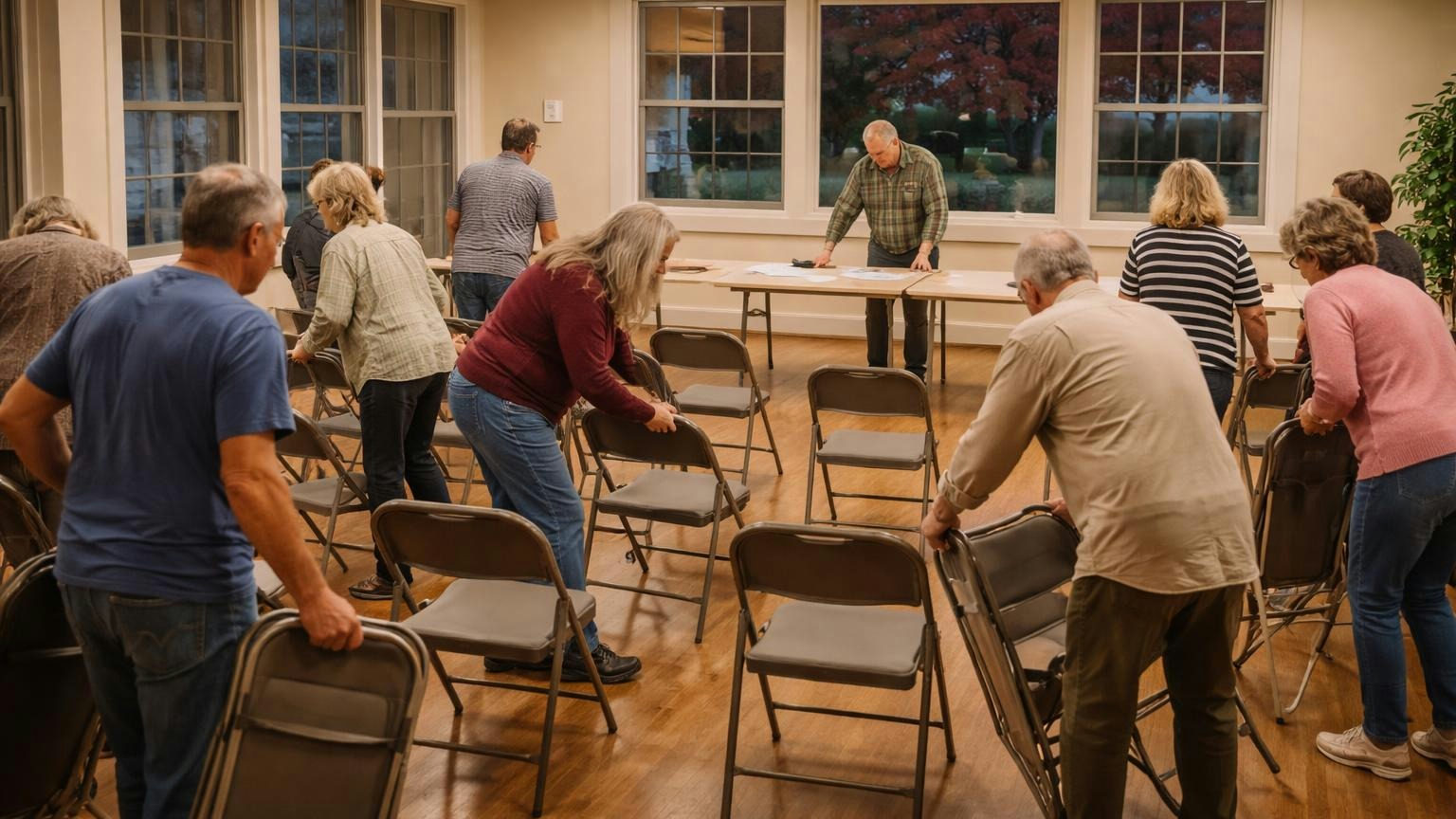
3. Send notice on the statute's clock. Written notice states the place, date and hour, and any electronic means by which members can take part; a special meeting's notice also states its purpose (N-PCL § 605(a)). Given personally, by first class mail or by email, it goes out not less than ten nor more than fifty days ahead; by any other class of mail, thirty to sixty days.
When email stops counting Email notice is not considered given if two notices in a row to a member bounce, or the association otherwise learns it cannot be delivered. And any member who asks in writing gets first class mail (N-PCL § 605(a)).
4. Count the quorum and the votes the statute's way. Unless your documents set another number, a quorum is members entitled to cast a majority of the votes (N-PCL § 608(a)). Your certificate or bylaws can lower it, but not below 100 votes or one-tenth of the total, whichever is less (§ 608(b)). A community that truly cannot reach a quorum can ask the supreme court to dispense with it, showing the reasonable efforts it made (§ 608(e)).
Unless your documents say otherwise, directors are elected by a plurality of the votes cast (N-PCL § 613(a)). A member may give a proxy by email to its holder (N-PCL § 609(b)), and unless your certificate or bylaws say otherwise, a proxy expires after eleven months unless it states a different period (§ 609(a)(2)).
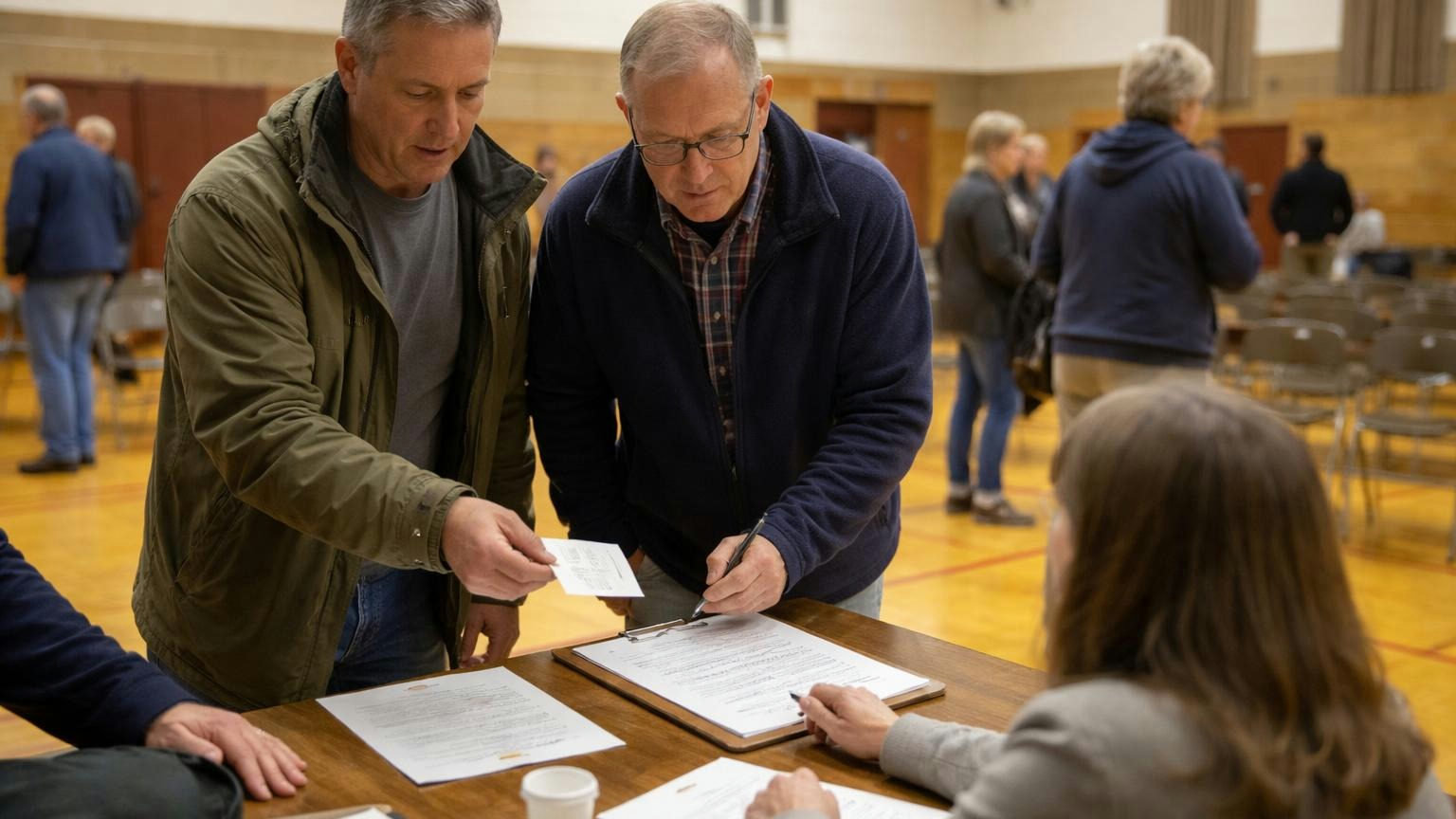
5. Keep the books, the minutes and the member list. The association keeps correct and complete books and records of account, minutes of the members', board's and any executive committee's meetings, and a list of members' names and addresses (N-PCL § 621(a)). They may be kept electronically, as long as they can be turned into written form within a reasonable time.
A condominium's board also keeps detailed, accurate records, in chronological order, of every receipt and expenditure, with the vouchers that authorized each payment, open to unit owners at convenient hours on weekdays (RPL § 339-w).
6. Open them to members. Three rights work together in Section 621:
- A member of record for at least six months may, on five days' written demand, examine the minutes of members' meetings and the member list in person or through an agent or attorney (§ 621(b)). The association may first ask for an affidavit that the inspection will not be used for a business or object other than the association's (§ 621(c)).
- The same member may ask in writing for the last fiscal year's balance sheet and profit and loss statement, and gets it after a reasonable time to prepare it (§ 621(e)).
- In an HOA incorporated under the N-PCL, members may also review, on request to the board, invoices, ledgers, bank accounts, reconciliations, contracts and any documents related to the spending of dues (§ 621(e-1)).
If the association refuses to show the minutes or the member list, the member can apply to the supreme court, which can order the inspection (§ 621(d)).

7. Report the year's money at the annual meeting. At the annual meeting, the board presents a report showing assets and liabilities, the year's principal changes in them, revenue, expenses and the number of members (N-PCL § 519(a)). It can be verified by the president and treasurer or by a majority of the directors, or certified by an independent accountant. The report is filed with the association's records, and a copy or summary goes into the minutes (§ 519(b)).
A condominium's board also renders a written report summarizing receipts and expenditures to every unit owner at least once a year (RPL § 339-w).

8. Clear every deal with a director, in the open. The association may not enter a related party transaction unless the board, or an authorized committee, determines it is fair, reasonable and in the association's best interest, and any director, officer or key person with an interest discloses the material facts in good faith (N-PCL § 715(a)). A paving contract with a company owned by a director, or by a director's brother, is exactly the case. And the interested director may not take part in the board's deliberation or vote on it, though the board may ask them to present information or answer questions before deliberation begins (§ 715(h)).
The related party path in Section 715.
- Disclose: The interested director tells the board the material facts
- Step out: The interested director takes no part in the deliberation or the vote
- Decide: The board finds the deal fair, reasonable and in the association's best interest
Condominiums carry one more duty that is easy to miss. At least once a year, each director receives a copy of Section 715, and the board gives members a report, signed by each director, listing every contract voted on that was a related party transaction: who got it, the amount, the purpose, how each director voted and the dates. With none, each director signs a statement that no action was subject to the report (N-PCL § 519-a).
9. Act like a careful person, and decide the way the statute allows. Directors and officers act in good faith with the care an ordinarily prudent person in a like position would use (N-PCL § 717(a)). In good faith, they may rely on reports from officers they believe reliable, from counsel or accountants, or from a board committee they do not serve on (§ 717(b)). That is the board's protection for hiring an engineer before spending reserves.
Unless your certificate or bylaws restrict it, the board can meet by phone or video if everyone can hear each other at the same time, and can act without a meeting only if every director consents, with the consents filed with the minutes (N-PCL § 708(b)-(c)). Otherwise a majority of the directors present, with a quorum, decides (§ 708(d)). Unless your bylaws say otherwise, regular meetings fixed by the bylaws or the board need no notice; special meetings do (N-PCL § 711(a)).

10. In a condominium, collect the way Article 9-B says. The board of managers has a lien on each unit for unpaid common charges with interest, ahead of every other lien except taxes, a first mortgage of record, and certain government-held mortgages (RPL § 339-z). A seller or buyer is entitled to a statement of unpaid charges, and is not liable for more than it shows. No owner escapes common charges by not using the common elements or by abandoning the unit (RPL § 339-x).
The collection path in Section 339-aa.
- Unpaid: A common charge falls due and goes unpaid
- Notice of lien: A verified notice is filed where the declaration is filed; it lasts until paid or six years
- 90 days: Written notice in 14-point type before any foreclosure
- Court: Foreclosure, in the manner of a mortgage
The 90-day notice goes to the unit and any other address of record, says the board intends to foreclose, and states the property address and the exact amount due (RPL § 339-aa). If no notice of lien has been filed within sixty days after charges fall due, any member of the board may file one.
These lien sections are in the Condominium Act. A homeowners association that is not a condominium collects under its own declaration, so read that before anyone files anything.
What the law does not require, and one thing it rules out
- An audit. The annual report can be verified by the president and treasurer, or by a majority of the directors; an accountant's certification is one option among three (N-PCL § 519(a)).
- A reserve study. None of the sections on this page requires one. The Condominium Act lists reserves among things a condominium's bylaws may provide for, not must (RPL § 339-v(2)(b)). Your own documents may still require reserves.
- A management company. The Condominium Act leaves it to the bylaws to say whether the board may hire a manager at all (RPL § 339-v(1)(a)).
- Electing every seat every year. Terms can run up to five years under the N-PCL (§ 703(b)); only in a condominium must at least a third expire each year.
- Ruled out: suing over the flag. In a condominium, no action or proceeding for any relief may be brought over displaying a United States flag no larger than four feet by six feet (RPL § 339-j).
What this means for a self-led board
New York does not ask a volunteer board for anything exotic. It asks for paper: a member list, minutes, a yearly report two officers stand behind, and an honest record of any deal that touches a director. The surprise is how much of that paper members can see. In an HOA, the bank statements and the paving contract are theirs to review on request.
The board that keeps those records in one place, current, never dreads the email from the opening paragraph. It forwards the folder.
In a New York HOA formed under the N-PCL, the bank statements are not the board's to keep private. They are the members' to review.
The takeaway: four things to do this week.
- Pull your certificate of incorporation and confirm whether you are an N-PCL corporation, a condominium, or both.
- Find the quorum and term numbers in your bylaws and compare them with Sections 608 and 703.
- Put last year's invoices, bank statements, reconciliations and contracts in one folder a member could review.
- Ask every director to disclose in writing any interest in a vendor or contract.

Frequently asked questions
Can New York HOA members see the association's bank statements? In an HOA incorporated under the Not-for-Profit Corporation Law, yes: members may review, on request to the board, invoices, ledgers, bank accounts, reconciliations, contracts and any documents related to the spending of dues (N-PCL § 621(e-1)).
Does a New York HOA need an audit? Not under the sections on this page. The annual report to members can be verified by the president and treasurer or by a majority of the directors, or certified by an independent accountant (N-PCL § 519(a)).
How much notice does a New York HOA owe for a members' meeting? Ten to fifty days when notice is given personally, by first class mail or by email; thirty to sixty days by any other class of mail (N-PCL § 605(a)).
What Does an HOA Board Actually Have to Do Legally in Florida?
This is a plain-language guide, not legal advice. Your governing documents and an attorney licensed in New York have the final word.
Sources:
- New York Not-for-Profit Corporation Law, as published by the New York State Senate: nysenate.gov, Not-for-Profit Corporation Law
- New York Real Property Law Article 9-B, the Condominium Act: nysenate.gov, Real Property Law