
The management company's proposal lands in the trustees' inbox with a line that sounds like law: "Massachusetts requires professional record-keeping and a fidelity bond, which we provide." Three volunteers who run a 14-unit condominium read it twice and start to wonder whether doing it themselves was ever allowed.
It was. The statute that governs Massachusetts condominiums says the association "may appoint a manager or managing agent or be self-managed by their elected trustees or managing board" (c. 183A, § 10(c)). The records and the fidelity coverage are real duties. Who does them is the board's choice.

The short answer
- What an HOA board legally has to do in Massachusetts depends on which kind it is. There is no general HOA act: a condominium board answers to Chapter 183A, and a neighborhood of houses answers mostly to its own recorded documents, plus a few statutes that reach every association.
- A condominium board must keep its records open in Massachusetts, report its finances within 120 days of year end, fund a segregated reserve, carry fidelity coverage above 10 units, and send delinquency notices by certified and first class mail once dues are 60 days late. Some of these the owners can relax by an annual 67 percent vote.
- Chapter 183A does not require a management company, a reserve study, open board meetings or a fine hearing. But if any association fails to deny an owner's electric-vehicle charger application in writing within 60 days, it is deemed approved unless the delay comes from a reasonable request for more information, and a house association's covenants can expire after 30 years unless someone records an extension.
Last reviewed: October 7, 2026
Which law governs: The two kinds of Massachusetts association
A condominium. Chapter 183A applies only when the owner of the land records a master deed stating that the property is a condominium governed by the chapter (§ 2). If your community has a recorded master deed and a "condominium trust" or "organization of unit owners", this is your statute. Its collection rules in subsection (c) override your master deed, trust and bylaws where they conflict, except as section 21 provides (§ 6(c)).
A neighborhood of houses. Massachusetts has no planned community act. If your association was created by deed restrictions or a declaration on a subdivision of houses and no master deed submits it to Chapter 183A, your powers come from those recorded documents. Three statutes still reach you: the 30-year limit on restrictions in Chapter 184, the solar rule in Chapter 184, and the electric-vehicle charger rule, which Chapter 183A applies to every "homeowners' association" by name (§ 10A).
The ten things a Massachusetts condominium board actually has to do
1. Keep the records, in Massachusetts, and open them to owners. The association keeps the recorded master deed, the recorded bylaws, the minute book and the financial records: receipts and expenditures, invoices and payment approvals, receivables, bank statements, reserve fund records, audits or reviews, contracts, and every current insurance policy (§ 10(c)). They are kept up to date, within the Commonwealth, and open to any unit owner or first mortgagee for reasonable inspection during regular business hours, with the right to photocopy at the requester's expense. Minutes go out by email on request. Everything is kept at least seven years, and records a manager holds belong to the association.

2. Finish a financial report within 120 days of year end, and share it. Whoever keeps the financial records prepares a report within 120 days after the fiscal year ends, with at least a balance sheet, an income and expense statement, and the balance in each fund (§ 10(d)). Every unit owner can have it within 30 days of its completion, and a mortgagee on request.
3. Have a CPA review the report if you have 50 or more units. For 50 or more units, an independent certified public accountant reviews the financial report under AICPA standards, annually, or less often by an owner vote, but never less than every two years (§ 10(d), (m)). Under 50 units, the statute requires a CPA review only if a majority in beneficial interest of the owners votes for one at a meeting. Any owner or mortgagee may commission a review or audit at their own expense, and the board must cooperate.
120 days after the fiscal year ends is the deadline for a Massachusetts condominium's financial report. — M.G.L. c. 183A, § 10(d)
4. Adopt a budget and assess at least once a year. Common expenses are assessed against every unit by its percentage interest, at least annually, on a budget adopted at least annually under the master deed, trust or bylaws (§ 6(a)). No owner can withhold dues by giving up the use of the common areas or claiming an offset (§ 7).
5. Keep an adequate replacement reserve, in its own account. Every condominium maintains "an adequate replacement reserve fund", collected as part of the common expenses and kept in an account separate from operating money (§ 10(i)). Every check on a reserve account must be signed by a board member, in addition to the managing agent if there is one, unless a written agreement with the agent says otherwise (§ 10(g)).
What Percentage Should Your HOA Reserve Fund Be Funded At? (The Balance Alone Won't Tell You)

6. Carry fidelity coverage once you pass 10 units. A condominium of more than 10 units carries blanket fidelity insurance against dishonest acts by anyone who handles the association's money, trustees included, of at least one-fourth of the annual assessments, not counting special assessments (§ 10(h)). The association is the named insured, and the policy requires ten days' written notice before cancellation or a substantial change.
Worth knowing One-fourth of the annual assessments is simple arithmetic. For example, a 14-unit condominium whose regular assessments total $84,000 a year needs at least $21,000 of fidelity coverage; special assessments do not count.
7. Name who oversees repairs, and tell every owner. The association designates a person or company to oversee maintenance and repair of the common areas and tells every unit owner, in writing, that name and phone number, and again whenever it changes (§ 10(k)).
8. Send the delinquency notices before you enforce the lien. The association has a lien on a unit for its assessments from the day each is due (§ 6(a)). Once any part of an owner's share is at least 60 days late, the association sends the owner a notice of the amount by certified and first class mail, and the first mortgagee the same if the lender has given its name and address (§ 6(c)). Thirty days before filing an action to enforce the lien, it sends that mortgagee a notice of intent the same two ways.
The reward is priority. The lien comes ahead of an earlier first mortgage for up to six months of regular budgeted assessments, plus the costs and reasonable attorneys' fees of the action. Special assessments, late charges, fines and interest do not get that priority. Skip the mortgagee notices and you keep the six months but lose the costs and attorneys' fees.

What the statute asks for, in order, when an owner stops paying.
- Day 60: Notice of the amount to the owner, certified and first class
- Also at 60 days: The same notice to the first mortgagee, if it gave its name and address
- Before suit: Notice of intent to the first mortgagee, 30 days ahead
- The action: Six months of assessments ahead of the mortgage
9. Answer a payoff request in ten business days. When someone asks in writing, the association furnishes a statement of the unpaid common expenses and other sums assessed against a unit, including the amount it claims has priority over a mortgage, within ten business days, for a reasonable fee (§ 6(d)). The statement binds the association and every owner, and once it is recorded it discharges the unit from any lien for other sums then unpaid. A number given in a hurry can be the most you ever collect.
10. Put five things in your bylaws. The bylaws must say at all times how common areas are maintained, repaired and replaced and how payment vouchers are approved; how owners' shares are collected; how personnel are hired, including whether a manager may be engaged; how rules are adopted and amended; and what use restrictions keep owners from interfering with one another (§ 11).
If you hire a manager: Four more rules
- You can leave. A management contract can be ended for cause on ten days' notice with a chance to cure, and without cause on no more than 90 days' notice (§ 10(e)).
- Monthly reports. A manager who handles the money reports receipts and expenditures to the board at least monthly (or as the owners vote, but never less than quarterly), with bank statements and reconciliations (§ 10(f)).
- Separate accounts. The reserve and every other fund the manager handles sit in separate accounts, never mixed with the manager's money and out of reach of its creditors (§ 10(f)).
- The records come back. At the end of the contract, the manager hands over every book, record, fund and account (§ 10(c)).

The 67 percent vote: What owners may relax
After the developer hands over control, the owners may, by an annual vote of 67 percent or more in beneficial interest, modify five of these rules: the CPA review schedule for 50 or more units (never beyond every two years), the manager's reporting schedule, the reserve check signatures, the fidelity coverage, and the reserve fund requirement (§ 10(m)). A simple majority in beneficial interest can undo the change at any time. The statute calls it an annual vote. Read plainly, a modification lasts a year, so a board still relying on a vote taken three years ago should take it again or ask its attorney whether the old vote still holds.
The statute calls it an annual vote. A rule the owners relaxed three years ago may be back.
Two rules that reach every association, condominium or not
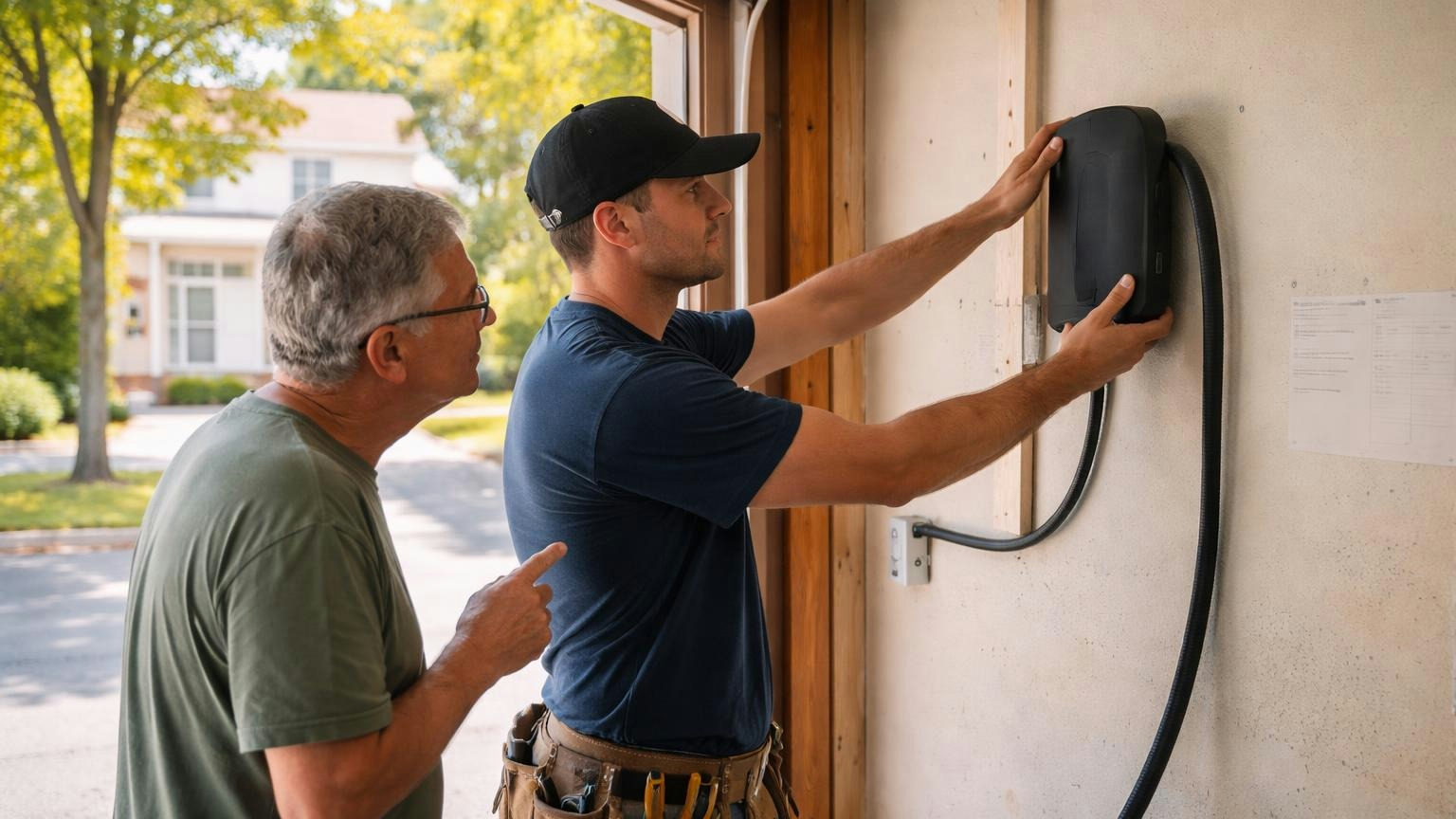
Electric-vehicle chargers. An association cannot prohibit or unreasonably restrict an owner from installing a charger on their own lot or in a space they have exclusive use of (§ 10A). It may set reasonable restrictions and require an application, which must not be wilfully avoided or delayed, and which is processed like an architectural request where the association also reviews those. The decision is in writing, and an application not denied in writing within 60 days is deemed approved, unless the delay comes from a reasonable request for more information. The owner pays for the charger, uses a licensed contractor or electrician, and connects it to their own electric account where possible.
Solar panels. A provision in a deed, declaration or other instrument about the ownership or use of property that forbids or unreasonably restricts a solar energy system is void (c. 184, § 23C).
For a neighborhood of houses: The 30-year clock on your covenants
A Massachusetts statute puts a 30-year clock on a subdivision's covenants: restrictions recorded in 1994 reached it in 2024, and nothing reminds the board when it runs out. A restriction imposed after 1961 cannot be enforced after 30 years unless one of two things happened (c. 184, § 27):
- A common scheme, extended. The restriction is part of a common scheme covering four or more contiguous parcels, the documents provide for extensions of no more than 20 years at a time, and owners of record of 50 percent or more of the restricted area recorded an extension before the 30 years ran out, and again before each extension expires.
- A recorded notice. For any other restriction, a notice of restriction was recorded before the 30 years expired, and again within every 20 years after.
The clock covers restrictions on how land is used and what is built on it (§ 26). Whether it reaches a duty to pay dues is a question for your attorney.

Restrictions imposed before 1962 have a 50-year limit, kept alive only by a recorded notice of restriction renewed every 20 years (§ 28). And no court enforces a restriction, extended or not, unless it is of "actual and substantial benefit" to whoever is enforcing it, with a presumption against that where any of the land lies in a city or town of more than 100,000 people unless one of the statute's exceptions, such as a common scheme of four or more contiguous parcels, applies (§ 30).
If no one recorded an extension or notice in time, the board may be enforcing rules a court would not.
What Chapter 183A does not require
- No management company. Chapter 183A says a condominium may be self-managed by its elected trustees (§ 10(c)).
- No reserve study. The statute requires an adequate, segregated reserve fund, not a study of how much is adequate. Your documents or your lender may ask for one.
- No open-meeting rule. Chapter 183A sets no open board meetings and no owner comment period; your trust and bylaws decide.
- No fine hearing and no late-fee cap. The association may levy "reasonable" fines and charge late fees or interest (§ 10(b)(5)); the steps before a fine are your documents' to set.
- No full audit. The statute asks for a CPA review, not an audit: at 50 or more units, or below that only if a majority in beneficial interest of the owners votes for one.
- No in-person meetings. The board may meet and vote by phone or video, and approve minutes by email, whatever the documents say (§ 24). Owner meetings may be held online if the board notifies every owner, gives the access details and takes reasonable measures so owners can follow and ask questions, and the board may let owners vote by mail or electronically, with a quorum present.

What this means for a self-led board
Chapter 183A sets few process rules for a self-managed condominium board and many money rules. A board that keeps the books in order, reports on time, segregates its reserve, insures whoever holds the checkbook and mails its notices on day 60 has done most of what Chapter 183A asks. A house association's biggest risk is quieter: a covenant that lapsed years ago.
Four things to do this week:
- Find last year's financial report and check it was finished within 120 days of year end and sent to owners.
- Ask your insurance agent for the fidelity policy and compare its limit with one-fourth of this year's assessments.
- If your owners ever relaxed a rule under § 10(m), find the date of the last vote; the statute calls it annual.
- House associations: find the date your restrictions were recorded and whether an extension or notice was recorded since.

The takeaway
A Massachusetts board does not need a management company to be legal. A condominium needs its records kept, its report finished in 120 days, its reserve in its own account, fidelity coverage above 10 units and its delinquency notices mailed on time. A house association needs to know whether its covenants are still in force. Both must answer a charger application in writing within 60 days, or it is deemed approved.
Frequently asked questions
Does Massachusetts require a condominium to use a management company? No. Chapter 183A says the association may appoint a manager or be self-managed by its elected trustees or managing board (§ 10(c)).
Does a Massachusetts condominium need a reserve study? The statute requires an adequate replacement reserve fund in a separate account, not a study (§ 10(i)). Owners can modify the requirement by an annual 67 percent vote (§ 10(m)). Your documents or lender may still require a study.
Do HOA covenants expire in Massachusetts? A restriction imposed after 1961 cannot be enforced after 30 years unless it was extended or a notice of restriction was recorded in time, and then only for 20 years at a time (c. 184, § 27).
This is a plain-language guide, not legal advice. Your governing documents and an attorney licensed in Massachusetts have the final word.
Sources:
- Massachusetts General Laws, Chapter 183A (Condominiums), §§ 2, 6, 7, 10, 10A, 11 and 24, as published by the General Court of the Commonwealth of Massachusetts: malegislature.gov
- Massachusetts General Laws, Chapter 184, §§ 23C, 26, 27, 28 and 30: malegislature.gov