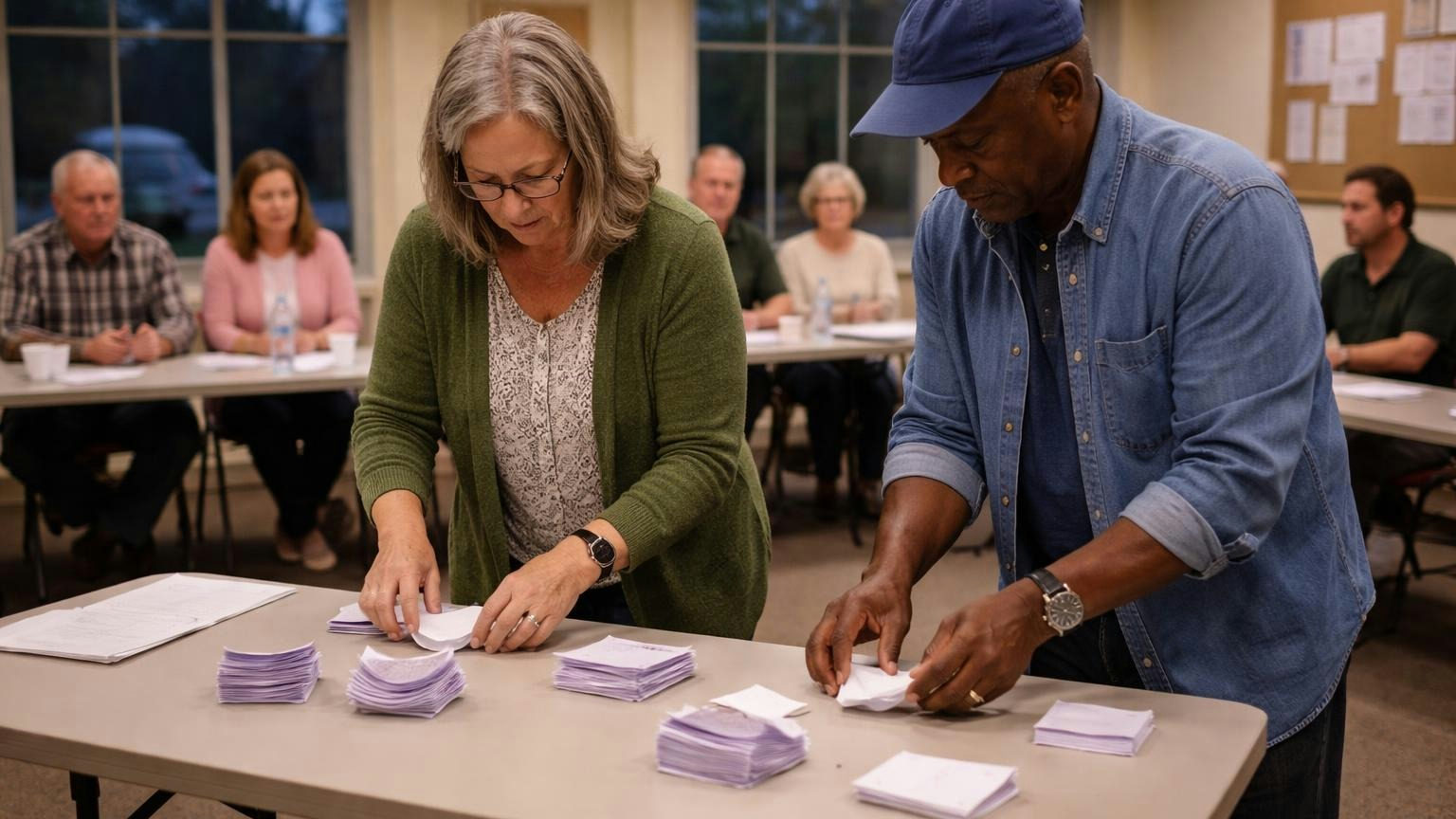
The annual meeting is winding down. The ballots are in a shoebox, and the board secretary, who is running for re-election, starts counting them with the manager from the management company. In Maryland, neither is allowed to. The state's Homeowners Association Act says elections, "including the collection and counting of ballots and the certifying of results," are run by independent parties: not candidates, and not the association's property management staff unless the association owns the management company (§ 11B-118). A bylaw that says otherwise is void.
Most Maryland HOA board legal requirements work the same way: the Act overrides the documents a board inherited.

The short answer
- A Maryland HOA board must meet in the open, let independent people run its elections, answer records requests on deadline, carry fidelity insurance, and give written notice and a hearing before any fine. If it maintains common areas, it also adopts its budget in the open and, once those areas cost $10,000 or more to repair and replace, funds reserves at its study's recommended amount.
- The Maryland Homeowners Association Act (Real Property Article, Title 11B) sets those duties for every homeowners association in the state after July 1, 1987, whatever its documents say. Condominiums and cooperatives fall under other laws.
- It does not require a management company or an annual audit. It caps the late fee, and a bylaw or rule the association has not filed in the county's HOA depository cannot be enforced until it is.
Last reviewed: October 6, 2026
Which law governs your community
The Act applies to every homeowners association that exists in Maryland after July 1, 1987 (§ 11B-102(a)). The test: a declaration recorded in the county land records that lets the association charge owners a mandatory fee (§ 11B-101(d) and (i)). It does not cover a condominium, a cooperative, or property used for nonresidential purposes (§ 11B-102(e)).
The Act's rights cannot be waived or varied by agreement (§ 11B-103). Its meeting rules apply "notwithstanding anything contained in any of the documents of the homeowners association" (§ 11B-111). When your bylaws and the Act disagree, the Act wins.
The twelve things the Act actually requires
1. Hold every meeting in the open, and close it only for eight reasons. Association, board and committee meetings are open to all members, with reasonable notice of regular meetings (§ 11B-111). Once owners other than the developer hold a majority of the votes, the board sets aside time for owner comment and holds at least one meeting a year with an open agenda. A closed session is allowed only for the eight purposes the statute lists, among them personnel, legal advice, litigation, a contract still in negotiation, and individual owners' assessment accounts. Nothing else may be discussed, and the next minutes record the session's time, place, purpose, each member's vote to close it, and the authority used.
A board can meet by phone or video if everyone can hear and be heard and the notice carries the link or dial-in (§ 11B-113.6). Email notices need board authorization, each owner's prior written consent, and an officer's or agent's written certification that the notice went out (§ 11B-113.1).

2. Let independent people run the election. Ballots are collected, counted and certified by people who are not candidates and have no conflict with any candidate (§ 11B-118). An owner can serve if they do not campaign and no more than 25 percent of eligible voters object; so can a hired vendor or election platform. An owner who runs the count in good faith has no personal liability.
The board may allow verified electronic votes and proxies, but if the documents require a secret ballot that electronic voting cannot guarantee, owners keep the option of an anonymous paper ballot (§ 11B-113.2).
3. Answer records requests within the statute's deadlines. Books and records are open to owners, their lenders and their agents during business hours, after reasonable notice (§ 11B-112(a)). Financial statements or minutes requested in writing go out within 21 days if under three years old, 45 days if older. Six kinds of record may be withheld, among them personnel files, a lawyer's written advice and closed-meeting minutes. A reasonable fee is allowed, but not for an owner examining the financial statements where they are kept (unless they are kept in a depository), or for receiving them electronically (§ 11B-112(b)).

4. Propose the budget 30 days ahead, and adopt it in the open. If the association maintains common areas, owners get the proposed budget at least 30 days before adoption (§ 11B-112.2). It covers at least income, administration, maintenance, utilities, general expenses, reserves and capital expenses. It is adopted at a noticed open meeting and sent to owners within 30 days. Mid-year spending that would raise assessments by more than 15 percent of the budget needs an amendment at a special meeting with at least 10 days' notice, unless it fixes a threat to health, safety or the property.
5. Keep a current reserve study by a qualified preparer. If the association maintains common areas whose components cost at least $10,000 in total to repair and replace, it needs a reserve study, updated at least every five years (§ 11B-112.3). The preparer must be a licensed architect or engineer, hold a reserve specialist or professional reserve analyst designation, or have prepared or helped prepare at least 30 studies in the prior three calendar years. The board uses it to build the budget, sends owners a summary, develops a funding plan with a qualified preparer using one of the methods the statute lists, and reviews progress at each annual meeting.

5 years is the longest an association has to repay reserve money it spends on something outside its funding plan. — Md. Code, Real Property § 11B-112.3(f)(4)
6. Fund the reserves at the amount the study recommends. The budget's reserve line is the most recent study's recommended amount, deposited in the reserve account by the last day of each fiscal year (§ 11B-112.2(d)). After an initial study, the association has five fiscal years to reach the recommended level. In financial hardship the board may fund less, but only by a two-thirds vote at a noticed regular or special meeting, one fiscal year at a time (renewal takes another two-thirds vote), never below what health, safety, structure and essential systems need, and only while documenting its efforts to catch up. A cap on assessment increases in your documents cannot block raising assessments to fund required reserves (§ 11B-117(a)(2)).
What Percentage Should Your HOA Reserve Fund Be Funded At? (The Balance Alone Won't Tell You)
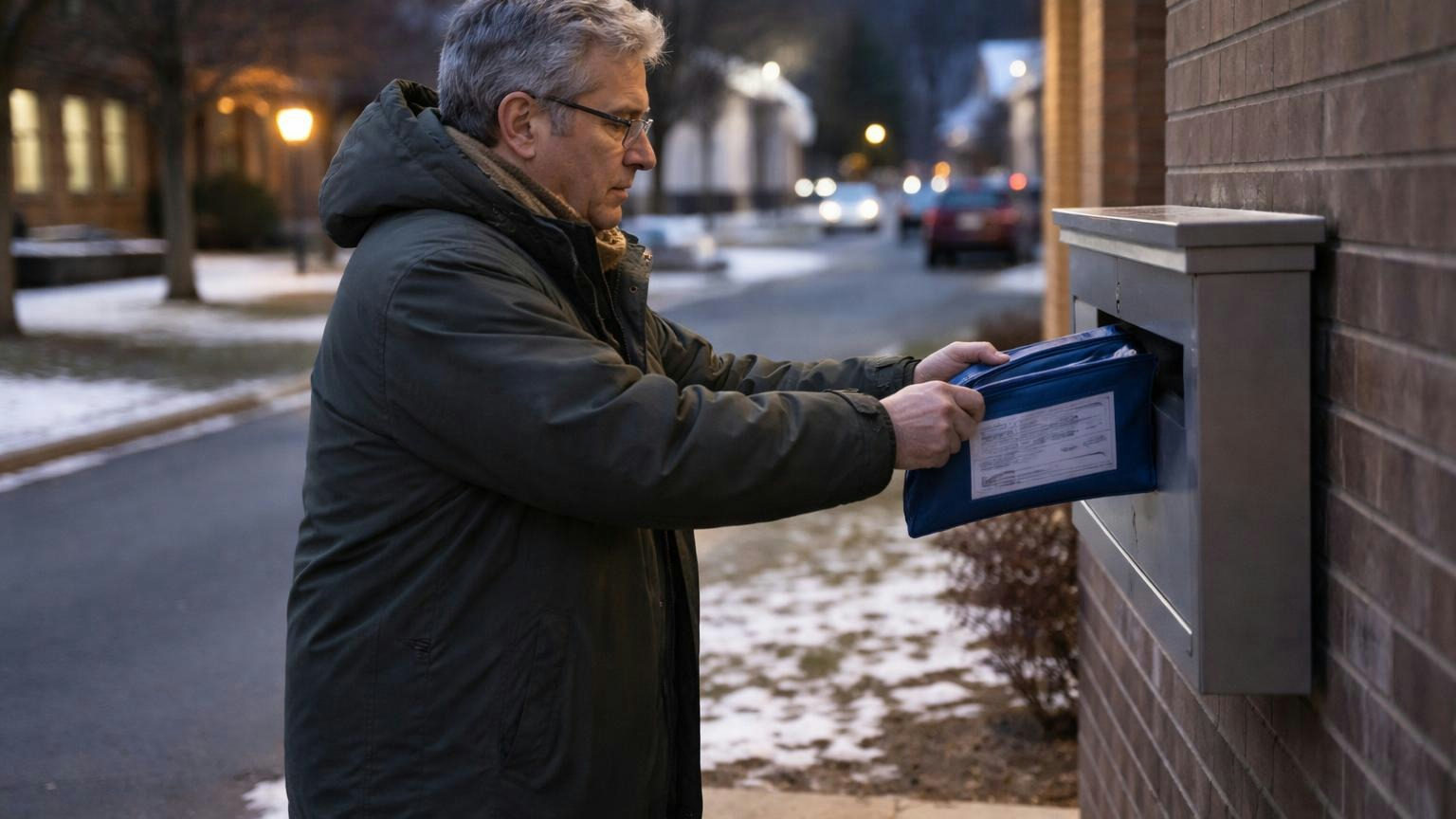
7. Carry fidelity insurance, every year. The board buys fidelity insurance or a bond by the time the developer sells the first lot, and keeps it every year after (§ 11B-111.6). It covers fraud, dishonesty or crime by any officer, director, manager or employee who handles the association's money. Coverage is at least the lesser of three months of gross fees plus all investment accounts, or $3,000,000. Only an association with four or fewer lot owners and three months of fees under $2,500 is exempt.
8. Charge late fees and card fees only within the caps. A late charge is allowed only if the declaration or bylaws provide for it, and it is capped at $15 or one-tenth of the overdue amount, whichever is greater (§ 11B-112.1). It can be charged once per late payment, and only after the payment is at least 15 calendar days late. A card fee cannot exceed what the processor charges, and every bill that allows card payment must say so (§ 11B-114).
Worth knowing The late-fee cap is the greater of the two numbers, not the smaller: on a $400 overdue installment, the most a Maryland HOA can charge is $40.
9. Put a lien on a lot only through the Contract Lien Act. Unpaid assessments are enforced by a lien under the Maryland Contract Lien Act (§ 11B-117(b)). That starts with a written notice of intent, served within two years of the missed payment by certified or registered mail or by hand, stating the amount and the owner's right to a hearing; the owner then has 30 days to ask the circuit court whether there is probable cause for the lien (§ 14-203). In a foreclosure, up to four months of regular assessments, capped at $1,200 with no interest, late charges, fines, attorney's fees or special assessments, comes ahead of a first mortgage recorded on or after October 1, 2011 (§ 11B-117(c)). If the lender asks for the details, the association must send them within 30 days after filing the lien or lose that priority.

10. File your bylaws and rules in the county depository. Within 30 days of adopting or amending its bylaws, rules or other listed disclosures, the association files them in the county clerk's HOA depository (§ 11B-113); one never filed is unenforceable until it is (§ 11B-112(c)). An owner who asks in writing gets the resale disclosures within 20 days, for a fee no higher than the association's cost, up to $250 (adjusted for inflation every two years), plus capped extra fees for a required inspection or faster delivery (§ 11B-106(c)). An association in Prince George's County also registers with the county's Community Association Registry (§ 11B-112.4).
11. Delete discriminatory covenants. The board strikes any recorded covenant restricting ownership by race, religious belief or national origin and records the amendment with the court clerk (§ 11B-113.3). It needs no owner vote, and once an owner asks in writing, it has 180 days.

12. Warn in writing, and offer a hearing, before any fine. A board may not fine an owner or occupant, suspend voting or take away any other right for a rule violation until it follows the Act's steps (§ 11B-111.10). First comes a written demand to stop that names the violation and what fixes it, with at least 15 days to fix a continuing violation. If the violation continues, or the same rule is broken again within 12 months, the board sends written notice of the right to a hearing, with at least 10 days to ask for one and the proposed sanction. A hearing is held in executive session at least 10 days after the owner asks, and the owner may present evidence and cross-examine witnesses; the result goes in the minutes, and the decision can be appealed to the courts. These steps apply to complaints arising on or after October 1, 2022, unless the declaration or bylaws say otherwise.
What the law will not let a board stop
Whatever the documents say, an association cannot stop owners from:
- Handing out their own flyers about the association wherever the board distributes its own, subject only to reasonable timing limits (§ 11B-111.3).
- Meeting in the common areas to discuss the association, under reasonable rules (§ 11B-111.4).
- Displaying a sign for a candidate for public office or a ballot question. The association may keep those signs off the common areas and, where local law sets no period, may limit the display window, but not to less than 30 days before the election and 7 days after it (§ 11B-111.2).
- Amending the documents with 60 percent. Owners in good standing (no more than 90 days behind) holding 60 percent of the votes can amend the governing documents, or fewer if the documents allow (§ 11B-116).

What the law does not require
- No management company. Nothing in Title 11B requires one; the fidelity rule names officers and directors, so it reaches self-managed boards too.
- No annual audit. Title 11B sets none, though your bylaws may.
- No owner vote to meet online. The board can authorize phone and video meetings itself (§ 11B-113.6(a)(4)).
- No floor nominations when every open seat already has a nominee, whatever the documents say (§ 11B-113.6(d)).
What this means for a self-led board
The Act has teeth. If a board cannot fill enough seats for a quorum, three or more owners can give 30 days' notice and ask the circuit court for a receiver, paid by the association (§ 11B-111.5). Violations fall to the Attorney General's Consumer Protection Division (§ 11B-115), and an owner can take a dispute there when a board fails to follow its own documents' election rules on notice, nominations, ballot format, proxies or quorum (§ 11B-115.1).
Four things to do this week:
- Ask your insurance agent for the fidelity policy and check its limit against three months of fees plus your investment accounts.
- Compare your last reserve study's recommended amount with this year's reserve line, and note the study's date.
- Ask the clerk of the circuit court whether your current bylaws and rules are in the HOA depository.
- Line up two owners who are not running and will not campaign for anyone to collect and count the next election's ballots.

The takeaway
Maryland lets a volunteer board run its community without a manager. In return it wants open meetings, an election nobody on the ballot touches, a reserve study funded and not just filed, fidelity coverage on whoever handles money, and every rule on file with the county. Those five are where the Act asks the most of a volunteer board.
Frequently asked questions
Can our board count its own election ballots in Maryland? Not if the counter is a candidate or has a conflict with one. Independent parties collect, count and certify; management company staff are not independent unless the association owns the company (§ 11B-118).
How much can a Maryland HOA charge as a late fee? $15 or one-tenth of the overdue amount, whichever is greater, once per late payment after 15 calendar days, and only if the declaration or bylaws allow it (§ 11B-112.1).
Does a Maryland HOA have to fund its reserves? Yes, if its common-area components cost at least $10,000 to repair and replace. The reserve line is the study's recommended amount, deposited by fiscal year end, unless the board votes a one-year hardship by two-thirds (§§ 11B-112.2, 11B-112.3).
This is a plain-language guide, not legal advice. Your governing documents and an attorney licensed in Maryland have the final word.
Sources:
- Maryland Homeowners Association Act, Md. Code, Real Property, Title 11B (§§ 11B-101 to 11B-119, including §§ 11B-111.8 to 11B-111.12), as published by the Maryland General Assembly: mgaleg.maryland.gov
- Maryland Contract Lien Act notice, Md. Code, Real Property § 14-203: mgaleg.maryland.gov