
The short answer
- An HOA five-year plan should hold six things on one page: the reserve balance today, the yearly contribution, every big item, the year each comes due, its cost then, and the dues path, each with a note of where the number came from.
- One board member drafts it, a second checks every number against its source, and the secretary files it with the minutes at the meeting that adopts the budget.
- Re-run it on one fixed date each year, before the budget is drafted, and give it five minutes at the annual meeting so owners see the road.
A treasurer builds the five-year page in the fall, the board adopts it with the budget, and then the treasurer moves away. A year later the new board finds it in a shared folder, out of date, with numbers nobody can trace.
Making the page is one good evening. Keeping it is the hard part.
The new board cannot tell which cost came from a contractor and which was a guess, so the page gets set aside and the budget gets built from last year's actuals again.
The page did not fail. Nobody owned it. Planning in years is a habit, not a project, and a habit needs three things: a person, a date and a place on the agenda.
The short version: A plan is a date, not a document
The page's six lines are simple: the balance today, the yearly contribution, every big item, its year, its cost in that year, and the dues path. What keeps them true is four rules.
The habit, in four rules.
- Who: One drafts, one checks, one files
- Where: A source beside every number
- When: One date, every year
- Show: Five minutes for owners
Who: One drafts, one checks, one files
The treasurer drafts. The treasurer already holds the bank statements and the budget, so the first pass belongs there. Where a manager prepares the budget, the manager can draft the page too; the board still owns it.
A second board member checks. Not just the math: the sources. They take each number and find where it came from: the statement, the study, the quote. A number nobody can trace gets a question mark, not a pass. On a one-page plan it can take as little as twenty minutes, and it is the step that makes the page trustworthy to the next board.
The secretary files it. The page is adopted at the same meeting as the budget, attached to those minutes, and kept with the budget, the reserve study and the quotes behind it. When the board changes, it is handed over with the bank records and the keys, not left to be found.

Where each number comes from: A letter beside every line
A page is only as good as its sources, so write the source beside each number. Use one letter per item:
- C: a contractor's written quote or bid
- R: the reserve study
- B: the board's own estimate, written down as one
| Line on the page | Where it comes from |
|---|---|
| Reserve balance today | The latest reconciled reserve account statement, not the budget |
| Yearly contribution | The reserve line in the draft budget |
| Each big item and its year | The reserve study, moved earlier where a walk-through shows it wearing fast (C, R or B) |
| Cost today | The newest quote if there is one (C), otherwise the study (R) |
| Cost in its year | Cost today grown by a rate the board writes down as an assumption |
| The dues path | The board's choice, after running the balance forward |
California already asks a board to look at these numbers often. Its boards must review a current reconciliation of the reserve accounts every month (Civil Code § 5500(b)), so a current reserve balance for the page is always close at hand.
A page full of B's is not a bad page. It is an honest one, and it tells the next board exactly which quotes to get first.

When: One date every year, set by the budget
Pick the date by working backward from the day the budget goes to owners. The page has to be re-run before the budget is drafted, because it decides the reserve line.
California is the example here because its rules are written down; the method of working backward from the day the budget goes to owners works anywhere.
Every year a California board whose major components are worth at least half its gross budget must review its reserve study, or have it reviewed, and consider and make the adjustments that review shows are needed, on top of a fresh inspection at least once every three years. — California Civil Code § 5550(a)
California also sets the window for the budget itself: the annual budget report goes to owners 30 to 90 days before the end of the fiscal year (Civil Code § 5300(a)). For a calendar-year community that is no later than early December, so the page is re-run in late summer or early fall.
One budget season, start to finish.
- Pull: The statement, the study, new quotes
- Re-run: Mark what changed
- Adopt: Page and budget together
- Send: Both go to owners
- Show: Five minutes at the annual meeting
Your state may set a different window, or none, and your governing documents may add their own; in California the 30-to-90-day window applies whatever the documents say (Civil Code § 5300(a)). Your governing documents and your attorney decide which dates bind you; the habit is the same.
Year two: What a re-run actually changes
Here is a made-up community of 120 homes, a year after it adopted its first page. Last year's page assumed costs grow 4% a year, an assumption of the example only, and set reserve contributions of $35,000 for 2027, then $5,000 more each year, from a reserve balance of $110,000 at the end of 2026. In last year's prices, its big items included $36,000 of work due in 2029 ($40,495.10 then) and the roads, $140,000 and due in 2030 ($163,780.20 then). Interest is left out.
Three things changed during 2027:
- The gate operator was replaced for $10,150, not the $9,360 on the page.
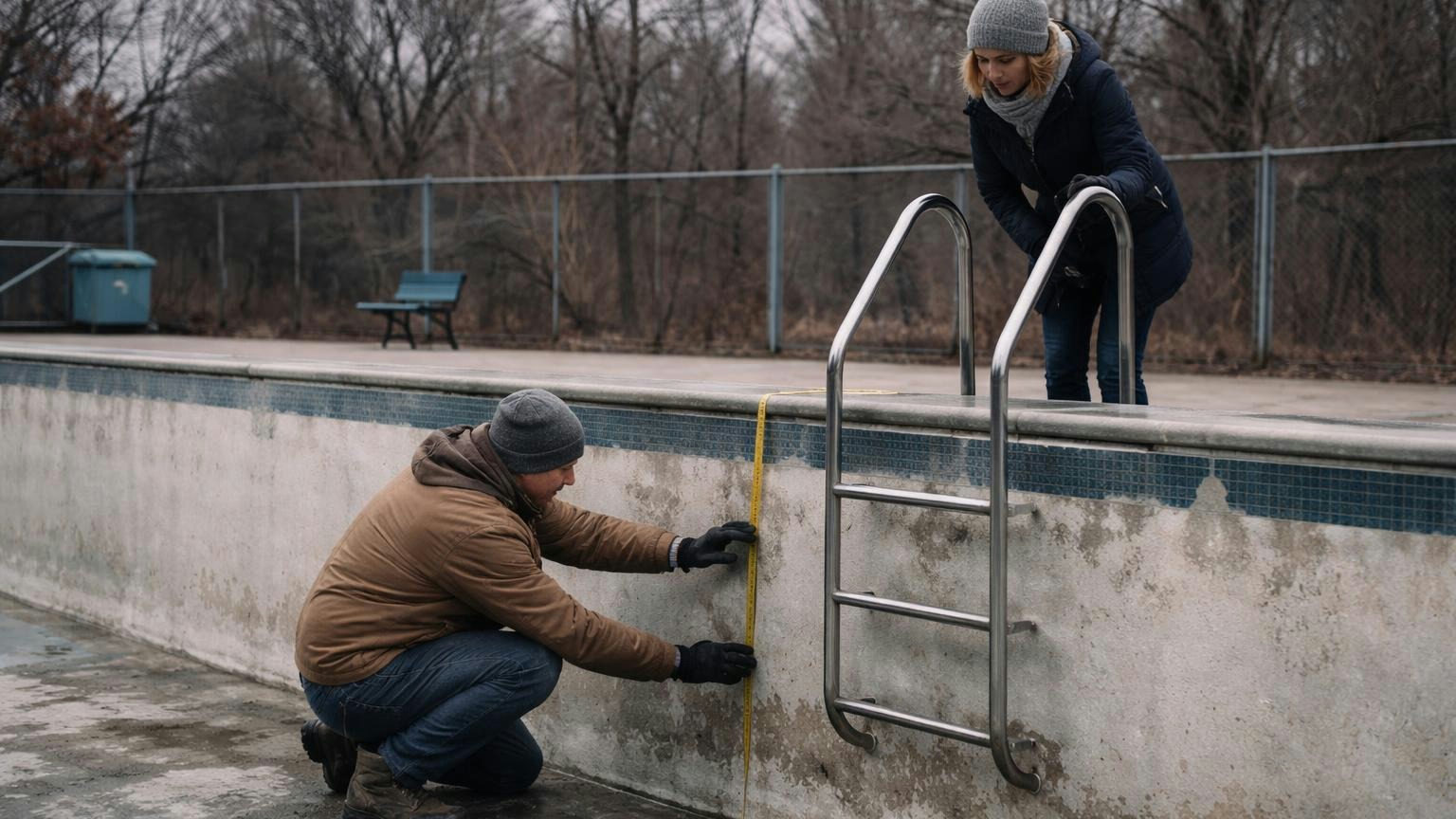
- A pool contractor quoted $56,000 for the 2028 resurfacing, not the page's $51,916.80. The letter beside it moves from R to C.
- A new item comes into view now that the page reaches 2032: a clubhouse heating and cooling system, $22,000 in today's prices, or $26,766.36 in 2032 at the same assumed 4%.
| Reserve balance at year end | Last year's page | This year's page |
|---|---|---|
| 2027 | $135,640.00 | $134,850.00 (gate paid) |
| 2028 | $123,723.20 | $118,850.00 |
| 2029 | $128,228.10 | $123,354.90 |
| 2030, the road year | $14,447.90 | $9,574.70 |
The road still gets paid for without a special assessment. But the cushion after it is $4,873.20 thinner, which is exactly the gate's overrun plus the pool quote's increase. The page shows the board that a year before the pool and three years before the road, while every choice is still open: keep the path, add to the 2028 contribution, or rebid the pool.
The page now reaches 2032, so it runs on two more years: $55,000 and $60,000 going in on the same path leave $97,808.34 after the heating system, still above zero.
Add a column to the page that says what changed since last year and why. Owners trust a page that shows its own corrections more than one that never seems to move.
Show: Five minutes at the annual meeting
Put the page on the annual meeting agenda as its own item, and keep it to five minutes.
Five minutes, one minute each.
- The road: The big items and their years
- The money: The balance and the tightest year
- The step: Next year's change, per home per month
- The changes: What moved since last year, and why
- The questions: And where the page is kept
In the example, the third minute is one sentence: next year's step is $5,000 across 120 homes, about $3.47 a month per home. The fourth minute is the pool quote and the gate.
Owners do not need to like the next raise. They need to have seen it coming.
The library's piece on how to present an HOA dues increase covers the night a raise is voted. The five-minute slot is what makes that night short: owners have heard about the road every year.
Check your habit before this year's budget season:
- One board member is named to draft the page, and one to check it.
- Every number on the page has C, R or B beside it.
- The re-run date is on the calendar, before the budget is drafted.
- The page is adopted and filed with the budget minutes.
- The page goes to owners with the budget.
- The annual meeting agenda has a five-minute item for it.
HOA Five-Year Plan: The Page Missing From Your Budget
Frequently asked questions
What should be in an HOA five-year plan?
Six things on one page: the reserve balance today, the yearly contribution, every big item due in the next five years, the year each comes due, its cost in that year, and the dues path that pays for them. Beside each number, note whether it came from a contractor, the reserve study or the board's own estimate.
Who should prepare the HOA five-year plan?
Usually the treasurer, or the manager where one prepares the budget, with a second board member checking every number against its source. The board adopts it with the budget, and the secretary files it with those minutes.
How often should the plan be updated?
Every year, on a fixed date before the budget is drafted. California boards whose major components are worth at least half the gross budget must review their reserve study every year (Civil Code § 5550(a)); elsewhere, your governing documents and your attorney decide what is required.
Do owners have to see the five-year plan?
That depends on your state and your documents. California sends a summary of the reserve funding plan with the annual budget report (Civil Code § 5300(b)(3)). Even where nothing requires it, five minutes at the annual meeting costs little and can head off the hardest questions later.
This article is general information, not legal advice. Your governing documents and your state's law decide what your association must do; the association's attorney can confirm them.